
TL;DR:
- Roof edge metal, or drip edge flashing, directs water away from the roof structure and resists corrosion, forming a crucial barrier against water intrusion and wind uplift. Proper installation sequence and material choice, as mandated by IRC 2024, ensure effective water management and wind resistance, especially at vulnerable roof perimeters. Regular inspections after storms and proper maintenance extend roof lifespan and prevent costly fascia rot and water damage.
Roof edge metal, known in the industry as drip edge flashing, is the corrosion-resistant metal strip installed along the perimeter of your roof to direct water away from the fascia and roof deck. The role of roof edge metal goes far beyond cosmetic trim. It forms the first line of defense against water intrusion, wind uplift, and structural decay at the most vulnerable points of any roofing system. Without it, every rainstorm sends water cascading directly behind your fascia boards, accelerating rot and inviting mold. For homeowners and property managers in storm-prone regions like Central Florida, this component is not optional. It is foundational.
How roof edge metal manages water and prevents damage
Roof edge metal works by creating a physical barrier that redirects runoff away from the roof deck and fascia. Water that travels down your shingles hits the metal flange, follows it outward, and drips clear of the wood structure below. Without this redirection, water pools at the edge, wicks behind the fascia, and begins rotting the decking from the outside in.
The installation sequence at each roof location matters as much as the component itself. Eave and rake installation follow different layering orders because they face different water threats. At eaves, drip edge installs under the underlayment so that gravity-driven runoff sheds outward. At rakes, it installs over the underlayment to block wind-driven rain from pushing water beneath the membrane. Reversing either sequence defeats the entire purpose of the flashing.
Placing drip edge incorrectly at eaves traps water between the metal and the underlayment, accelerating fascia rot rather than preventing it. This is one of the most common and costly installation errors in residential roofing. The physics are simple: water always finds the lowest path, and any gap or reversed layer becomes that path.
The IRC Section R905.2.8.5 mandates corrosion-resistant drip edge with a flange extending at least 2 inches onto the roof deck for all asphalt shingle roofs. This is not a suggestion. It is a building code requirement that applies to new construction and re-roofing projects across most jurisdictions.
Key water management functions of roof edge metal include:
- Directing runoff away from fascia boards and soffits
- Preventing water from wicking under shingles at the roof perimeter
- Protecting the roof deck from edge saturation and rot
- Channeling water into gutters rather than behind them
Pro Tip: After any heavy rain, check your gutters and fascia boards for signs of water staining or soft wood. If water is reaching the fascia, your drip edge may be missing, reversed, or improperly overlapped.
Does roof edge metal really improve wind resistance?
Wind uplift is the force that peels roofing materials away from the deck during storms, and the roof perimeter is where that force concentrates most. Shingle edges at rakes and eaves are the first points to lift under sustained wind pressure. Roof edge metal mechanically anchors those edges, reducing the chance of progressive failure across the entire roof surface.
Proper rake trim matching fascia length and deck thickness improves wind uplift resistance and prevents water intrusion at the gable ends. In Florida, where hurricanes and tropical storms regularly test roofing systems, this detail separates roofs that survive from roofs that fail. A loose or missing rake edge allows wind to get under the underlayment, lifting it in sheets and exposing the deck to rain.
Drip edge at rake edges prevents wind-driven rain infiltration and stops underlayment from lifting at the perimeter. This is especially relevant for gable-end roofs, where the rake edges face direct wind exposure with no hip geometry to deflect pressure. A properly fastened metal edge trim holds the shingle and underlayment sandwich together at the point where wind leverage is greatest.
Wind resistance benefits of roof edge metal include:
- Anchoring shingle edges against uplift forces at eaves and rakes
- Preventing underlayment from peeling back under sustained wind pressure
- Stiffening the roof perimeter to resist progressive edge failure
- Reducing wind-driven rain infiltration at gable ends
Edge metal at roof perimeters acts as a first line of defense against extreme weather and wind uplift, and proper selection and installation can reduce damage risk and insurance claims. For property managers overseeing multiple buildings in Brevard or Volusia County, that reduction in claims has direct financial value.
Types and materials of roof edge metal: choosing the right option
Not all drip edge profiles serve the same purpose. The three most common profiles are Type C, Type D, and Type F, each suited to different applications and roof conditions.
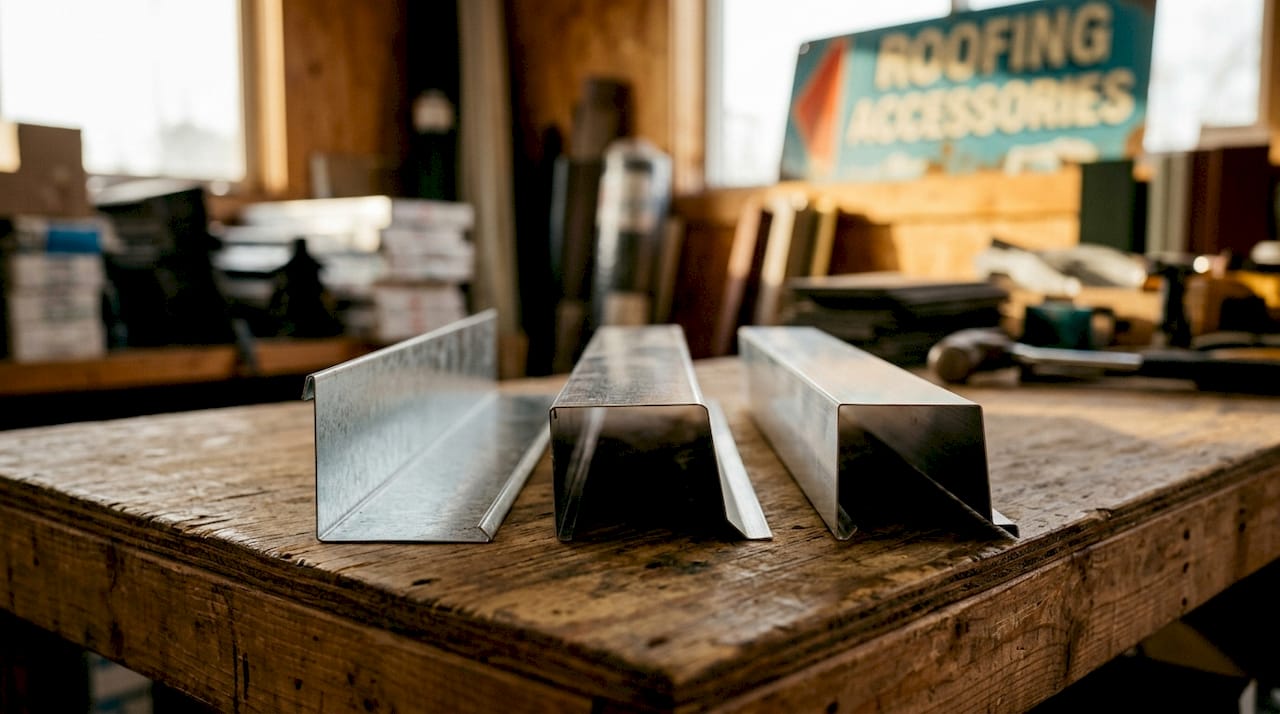
| Profile | Best Use | Key Feature |
|---|---|---|
| Type C (L-shaped) | New construction, standard eave and rake | Simple two-leg design; limited fascia coverage |
| Type D (T-shaped) | New construction with wider fascia boards | Extended lower leg for better water projection |
| Type F (extended flange) | Retrofit without shingle removal | Long upper flange slides under existing shingles |
| Gutter apron | Eave with gutters | Directs water into gutter, prevents fascia wetting |
Type F drip edge slides under existing shingles, allowing retrofit installation without removing the roofing. Type C lacks this extended upper flange and performs poorly in retrofit scenarios. If you are adding drip edge to an existing roof without a full tear-off, Type F is the correct choice.
Material selection matters just as much as profile. IRC 2024 specifies a minimum of 26-gauge galvanized steel or 0.016-inch aluminum for code compliance. Vinyl and plastic drip edge products fail this standard due to insufficient stiffness and durability. Aluminum is lightweight and corrosion-resistant, making it the most common choice for Florida’s humid climate. Galvanized steel offers greater rigidity for wider profiles. Copper is the premium option, with a lifespan exceeding 50 years, but it costs significantly more and requires compatible fasteners to avoid galvanic corrosion.
Matching your edge metal to your roofing material also prevents long-term problems. Copper drip edge pairs well with copper or lead flashing but reacts with aluminum gutters. Aluminum edge metal works with most asphalt shingle systems and is the standard choice for most residential re-roofing projects in Central Florida.
Installation best practices and code compliance for roof edge metal
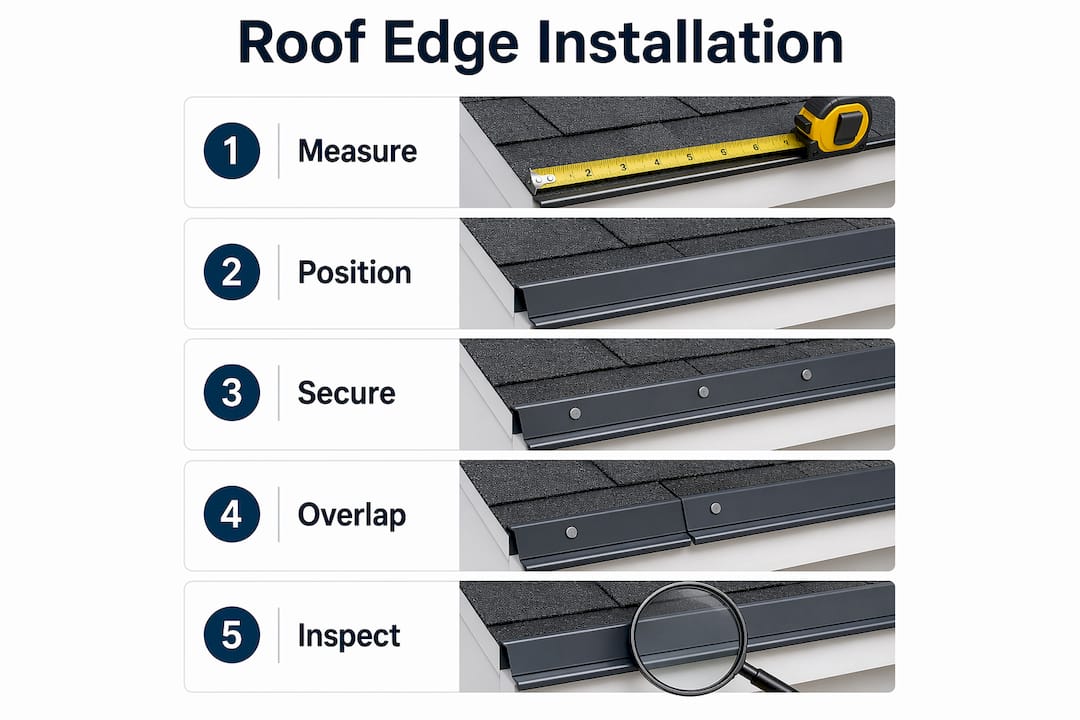
Correct installation follows a specific sequence that varies by roof location. Getting this sequence wrong produces the exact failures that edge metal is designed to prevent.
- Measure and cut drip edge sections to fit each run, allowing for a minimum 2-inch overlap at joints.
- Install at eaves first, placing drip edge directly on the roof deck under the underlayment, with the flange extending at least 2 inches onto the deck.
- Apply underlayment over the eave drip edge, lapping it down onto the metal flange.
- Install rake drip edge over the underlayment, nailing through both layers into the deck.
- Fasten with corrosion-resistant nails spaced no more than 12 inches apart, driven flush without overdriving.
- Seal end laps with roofing cement at joints to prevent water infiltration at overlaps.
The drip edge must extend a minimum of 1/4 inch past the fascia, with standard profiles projecting 3/8 to 1/2 inch to ensure water drips clear of the wood below. Undersized projection allows water to run back along the underside of the metal and contact the fascia anyway.
Common installation mistakes include installing drip edge over underlayment at eaves and butting end sections without overlap. Both errors lead to accelerated fascia rot and are among the most frequently cited deficiencies in roofing inspections. A professional roofer following IRC 2024 standards will avoid these errors by default.
Pro Tip: When inspecting a contractor’s work, check that the rake drip edge overlaps the eave drip edge at corners by at least 2 inches. This corner detail is where water infiltration most commonly begins when installation is rushed.
Maintenance and inspection tips for long-lasting roof edge protection
Roof edge metal does not require frequent maintenance, but it does require periodic inspection. Edges are susceptible to sustained wind pressure and are common intrusion points. Maintaining tight, gap-free metal edges reduces the risk of costly failures that compound over time.
Inspection and maintenance routines focusing on edge metal integrity significantly reduce long-term repair costs and extend system lifespan by catching failures early. For property managers, scheduling this as part of a biannual roof check protects the entire building envelope.
Signs that your roof edge metal needs attention:
- Visible rust streaks running down the fascia from the roof edge
- Sections of drip edge that are bent, lifted, or separated from the deck
- Fascia boards that feel soft or show water staining directly below the roof edge
- Gaps at corner joints or end laps where sections have pulled apart
- Shingles at the rake or eave that appear to be lifting or curling at the edge
After any storm or high-wind event, walk the perimeter of your property and look up at the roof edge line. Binoculars work well for this from ground level. If you see any lifted or displaced metal, contact a licensed roofer before the next rain event. A small gap in the edge metal can allow water to saturate the fascia and decking within a single storm cycle. Use your roof inspection checklist to track edge metal condition alongside other roofing components.
Key takeaways
Roof edge metal is a code-required, load-bearing component of every asphalt shingle roof, and its correct installation at both eaves and rakes determines whether your roof sheds water or absorbs it.
| Point | Details |
|---|---|
| Installation sequence is critical | Eave drip edge goes under underlayment; rake drip edge goes over it. Reversing either causes leaks. |
| Material must meet code | IRC 2024 requires minimum 26-gauge steel or 0.016-inch aluminum. Vinyl is not compliant. |
| Profile choice depends on application | Use Type F for retrofits; Type C or D for new construction; gutter apron where gutters are present. |
| Wind resistance starts at the edge | Properly fastened edge metal anchors shingles and underlayment against uplift at the most vulnerable perimeter points. |
| Inspect after every storm | Gaps, rust, and lifted sections at the roof edge signal damage that worsens with each rain cycle. |
What most homeowners get wrong about roof edge metal
Most homeowners I talk to think drip edge is decorative trim. They notice it only when it rusts or falls off. That misunderstanding costs real money. I have seen fascia boards so saturated with rot that they required full replacement, all because the drip edge was installed over the underlayment at the eave instead of under it. The shingles looked fine from the street. The damage was invisible until the fascia board crumbled during a re-roofing project.
The other mistake I see constantly is skipping the retrofit entirely. Homeowners add new shingles over old ones and never address the missing or deteriorated drip edge underneath. The new shingles look great, but the water pathway behind the fascia is still open. Type F profile exists precisely to solve this problem without a full tear-off, and most contractors who skip it are simply cutting corners on labor.
My honest advice: treat roof edge metal the way you treat smoke detectors. You do not think about it until something goes wrong, but the cost of ignoring it is catastrophic compared to the cost of doing it right. In Central Florida, where afternoon thunderstorms and hurricane season put roofs under constant pressure, the edge is where your roof either holds or fails. Selecting quality aluminum or galvanized steel profiles, verifying correct installation sequences, and inspecting after every significant wind event will add years to your roof’s service life and keep your insurance claims where they belong: at zero.
— Thomasroofingandrepair
Protect your roof edges with Thomasroofingandrepair
Thomasroofingandrepair installs and inspects roof edge metal as part of every complete roofing project across Brevard, Volusia, and Orange counties. Every installation follows IRC 2024 code requirements, uses corrosion-resistant materials rated for Florida’s climate, and includes proper sequencing at both eave and rake edges.

Whether you need a new roof with correctly installed drip edge flashing or a professional inspection after a storm, Thomasroofingandrepair delivers the craftsmanship and code knowledge your property requires. Get a free estimate from the roof installation team serving Central Florida, or contact the emergency repair service if storm damage has already compromised your roof edge protection.
FAQ
What is the role of roof edge metal on a house?
Roof edge metal, or drip edge flashing, directs water away from the fascia and roof deck at the roof perimeter. It also anchors shingle edges against wind uplift and is required by IRC building code on all asphalt shingle roofs.
Does drip edge go under or over the underlayment?
At eaves, drip edge installs under the underlayment so water sheds outward. At rakes, it installs over the underlayment to block wind-driven rain. Reversing either sequence causes water intrusion and fascia rot.
What materials are code-compliant for roof edge metal?
IRC 2024 requires a minimum of 26-gauge galvanized steel or 0.016-inch aluminum. Copper is also acceptable and highly durable. Vinyl and plastic drip edge products do not meet code due to insufficient stiffness.
How often should roof edge metal be inspected?
Inspect roof edge metal at least twice per year and after every significant storm or high-wind event. Look for rust, lifted sections, gaps at joints, and soft or stained fascia boards directly below the roof edge.
What drip edge profile works best for a retrofit installation?
Type F drip edge is the correct choice for retrofitting without removing existing shingles. Its extended upper flange slides under the shingle course, providing proper coverage without a full tear-off.