TL;DR:
- Proper deck preparation and seam work are critical to prevent long-term roof failures.
- Following all seven installation phases ensures hurricane-resistant, code-compliant commercial roofs in Florida.
- Immediate post-storm action and thorough inspections protect your investment from significant damage.
Commercial roofing mistakes are expensive. A property manager in Orlando who skips proper deck preparation or rushes through permitting can face structural failures, insurance claim denials, and costly emergency repairs that dwarf the original project budget. Central Florida’s intense heat, heavy rain seasons, and hurricane exposure make this even more unforgiving than most markets. This guide breaks down every actionable phase of the commercial roofing workflow, from initial inspection through post-storm response, so you can protect your investment, stay code-compliant, and avoid the pitfalls that catch even experienced property managers off guard.
Table of Contents
- Understanding the commercial roofing workflow essentials
- Step 1: Inspection, planning, and permitting for success
- Step 2: Tear-off, deck repairs, and surface preparation
- Step 3: Membrane installation, flashing, and drainage integration
- Step 4: Final inspection, storm protection, and maintenance workflow
- Our take: What Central Florida owners overlook about roofing workflow
- Get commercial roofing done right in Central Florida
- Frequently asked questions
Key Takeaways
| Point | Details |
|---|---|
| Follow a proven process | A step-by-step workflow increases code compliance and storm resistance for commercial roofs. |
| Prep is the weak link | Most commercial roof failures start with poor surface prep or overlooked seam work. |
| Respond fast to storms | Rapid storm response and documentation can save thousands on repairs and speed insurance claims. |
| Choose materials wisely | TPO offers energy and storm benefits for Florida, but EPDM may fit tighter budgets. |
| Certified installers matter | Certification is essential for warranty protection and passing inspections in Central Florida. |
Understanding the commercial roofing workflow essentials
A well-executed commercial roofing project is not just about laying material on a flat surface. It follows a deliberate sequence, and in Central Florida, that sequence is shaped by state building codes, hurricane wind loads, and moisture conditions that most other states never deal with. According to core roofing steps, there are 7 critical phases every installation must follow to meet Florida’s structural and hurricane requirements.
Those seven phases are:
- Inspection and assessment
- Planning and material selection
- Permitting and code compliance
- Tear-off and deck preparation
- Membrane installation
- Flashing and drainage integration
- Final inspection and warranty setup
Skipping or rushing any of these steps is where projects go wrong. In fact, poor preparation and seam work account for the majority of commercial roof failures. Florida’s Florida roofing code requirements include sealed deck mandates and wind resistance standards up to 130 mph, especially in high-velocity hurricane zones (HVHZ). These are not optional guidelines.
One of the most common decisions property managers face early is choosing between TPO and EPDM membranes. Here’s how they compare for Florida conditions:
| Feature | TPO | EPDM |
|---|---|---|
| UV resistance | Excellent | Moderate |
| Energy efficiency | High (reflective) | Lower (dark surface) |
| Seam method | Heat-welded | Adhesive or tape |
| Cost | Higher upfront | More affordable |
| Storm resilience | Strong with proper seams | Good, more flexible |
| Best for Florida | Energy-focused buildings | Budget-conscious projects |
“Sequence is everything. Skipping a single step in the commercial roofing workflow doesn’t just delay the project, it creates compounding failures that show up months or years later.”
Use the roofing checklist for property managers to track each phase before your contractor begins work.
Step 1: Inspection, planning, and permitting for success
With the workflow outlined, let’s start at the foundation. Your upfront inspection, planning, and permitting process sets the tone for everything that follows. Cut corners here and you’ll pay for it twice.
A qualified inspector evaluates several critical factors before a single material is ordered. These include drainage slope and ponding risk, deck condition and structural integrity, moisture levels (the deck must test below 15% moisture content), and existing storm vulnerabilities like deteriorated flashings or failed seams.
The inspection and planning details confirm that this phase, covering assessment, material selection, and permitting, can span anywhere from three days to several weeks depending on project complexity and local permit office timelines.
Here’s a typical planning and permitting sequence:
- Schedule a professional roof inspection and moisture scan
- Review findings and select materials (TPO vs. EPDM based on budget and energy goals)
- Obtain contractor bids and verify certifications
- Submit permit application with project drawings
- Receive permit approval and schedule project start
For inspecting commercial roofs, certified professionals use tools like infrared scanners to detect hidden moisture that standard visual checks miss entirely.
| Phase | Typical duration | Permit required? |
|---|---|---|
| Initial inspection | 1-2 days | No |
| Material selection | 1-3 days | No |
| Permit application | 1-4 weeks | Yes |
| Permit approval | 1-3 weeks | Required before work |
For accurate Florida roofing estimates and permits, always factor in local permit office wait times, which can vary significantly between Orange, Brevard, and Volusia counties.
Pro Tip: Always hire a certified installer, not just a licensed contractor. Manufacturer warranties are tied to certified labor. An unpermitted roof can trigger insurance claim denial when you need coverage most.
Step 2: Tear-off, deck repairs, and surface preparation
Once plans are set and permits in hand, the real hands-on process begins with removal and deck prep. This is the phase most property managers underestimate, and it’s where the majority of long-term failures are born.
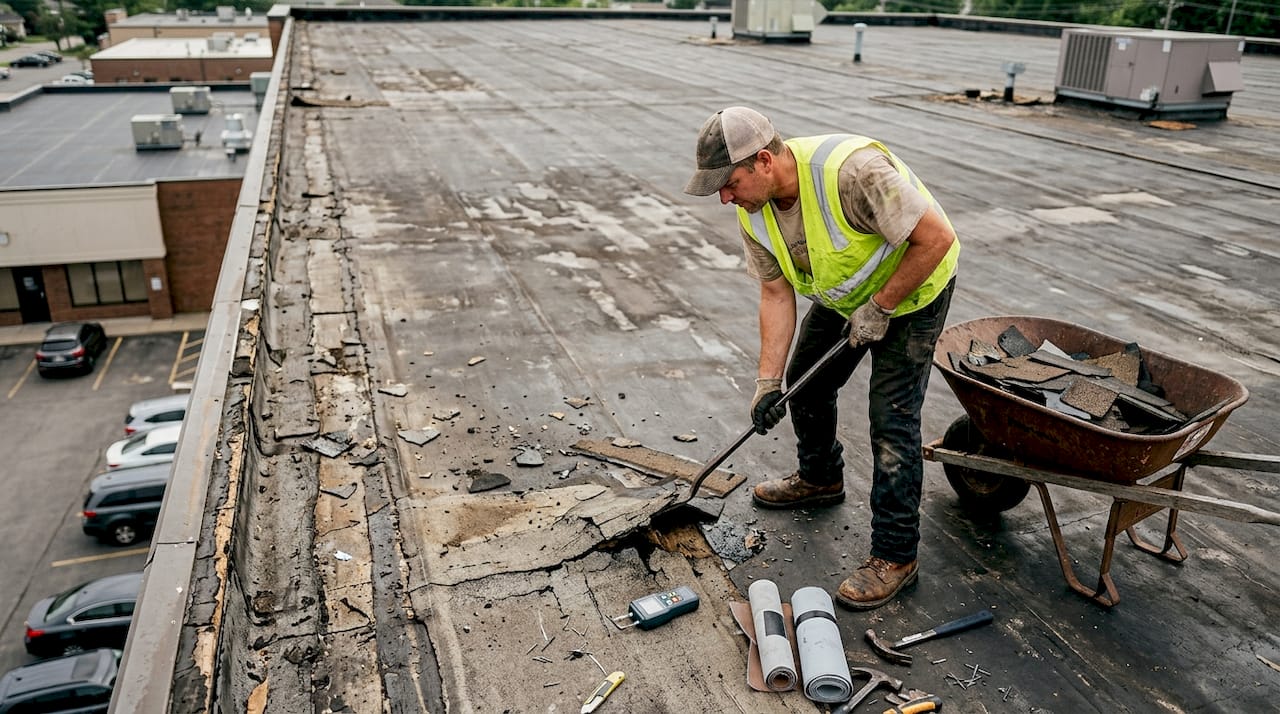
Proper surface preparation guide data shows that tear-off and deck repairs are critical because up to 80% of failures stem from prep and seam mistakes, and Florida’s code specifically requires sealed decks for hurricane compliance.
Here’s the correct sequence for this phase:
- Remove existing membrane layers down to the structural deck
- Inspect deck boards or concrete for rot, cracks, or soft spots
- Conduct moisture testing (target: below 15% moisture content)
- Repair or replace damaged deck sections before proceeding
- Install code-compliant underlayment and vapor barrier
If moisture testing reveals levels above 15%, the deck must dry completely before any new membrane is applied. Applying adhesive or membrane over a wet deck leads to bubbling, delamination, and eventual membrane failure, often within the first storm season.
“Getting the prep right prevents the majority of future roof problems. It’s not glamorous work, but it’s the most important work on the entire project.”
Use the roof deck prep checklist to document every repair made during this phase. This documentation matters for both manufacturer warranty validation and insurance claims after storm events.
Pro Tip: Photograph and record every deck repair with timestamps. If a storm damages your roof two years later, that documentation is what separates a paid claim from a denied one. Review the roof inspection benefits to understand how pre-project inspections create a defensible paper trail.
Step 3: Membrane installation, flashing, and drainage integration
With a prepared deck, it’s time for membrane installation, the signature step for durability and storm readiness. This phase determines how your roof performs under Florida’s summer storms and hurricane-force winds.
Choosing the right installation method matters as much as the membrane itself. The main options are:
- Fully adhered: Membrane is glued directly to the deck. Best for wind uplift resistance.
- Mechanically fastened: Screws and plates secure the membrane. Faster and cost-effective.
- Ballasted: Gravel or pavers hold the membrane down. Less common in Florida due to wind risk.
- Heat-welded seams (TPO): Seams are fused with hot air for a watertight bond. Preferred in hurricane zones.
For roof installation and repair options in Central Florida, fully adhered TPO with heat-welded seams is the most storm-resilient combination for most commercial properties.
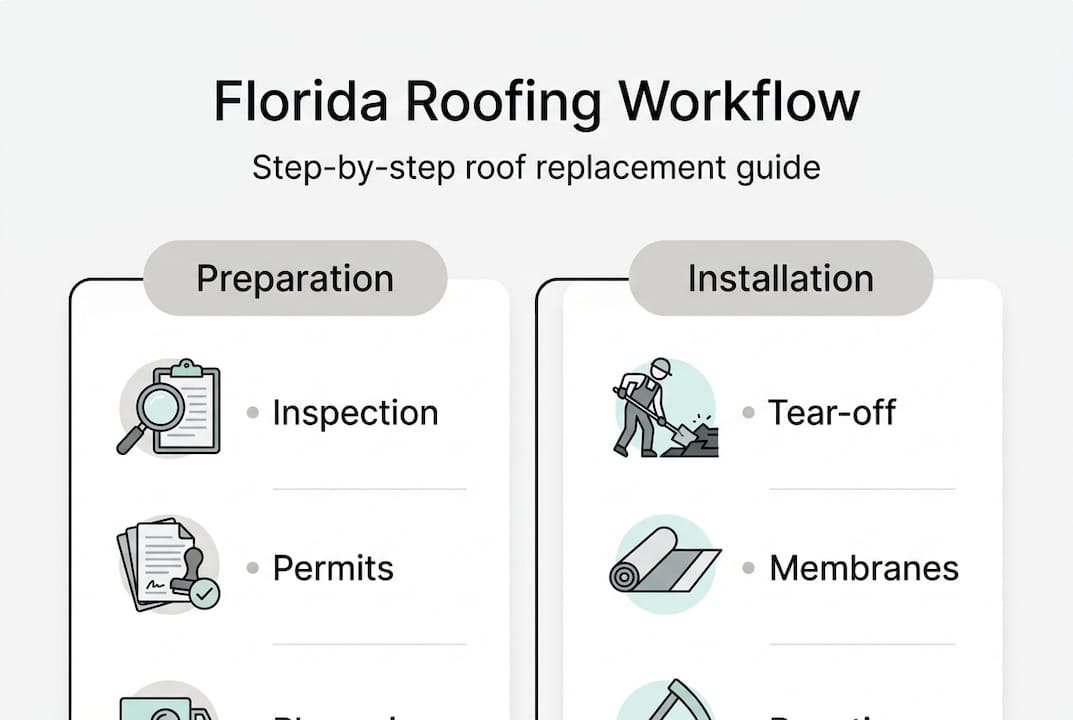
Proper membrane and flashing techniques also require careful attention to edge flashings, roof penetrations like HVAC units and pipes, and overflow scuppers that prevent ponding during heavy rain events.
Here’s the installation sequence:
- Roll out and position membrane sheets across the prepared deck
- Adhere or fasten membrane using the selected method
- Weld or seal all seams using heat gun or compatible tape
- Install metal edge flashings at all perimeter edges
- Flash all roof penetrations (HVAC, vents, drains)
- Confirm scupper and drain placement for proper water flow
Pro Tip: Seams and edges are where storm failures start. During installation, ask your contractor to show you each completed seam before moving to the next section. A proactive walk-through costs nothing and catches errors before they become leaks.
Step 4: Final inspection, storm protection, and maintenance workflow
After membrane and flashings are secured, what ensures your investment is hurricane-ready and built to last? The final phase closes out the project properly and sets up your long-term storm response strategy.
Post-installation checks should include:
- Adhesion pull test on membrane sections
- Flood test or water simulation to verify drainage
- Final code inspection and certificate of completion
- Warranty documentation from both manufacturer and contractor
- Baseline condition photos for future insurance reference
For storm readiness, the storm damage protocols outline a clear post-storm workflow: confirm building safety first, deploy emergency tarps over breached areas, then schedule a drone or infrared inspection to identify hidden damage before filing an insurance claim.
Common storm-related failures to watch for include:
- Membrane blow-off at unsealed edges
- Flashing separation at HVAC penetrations
- Ponding water from blocked scuppers
- Seam delamination from wind uplift
- Soffit and fascia damage from wind-driven debris
“71% membrane failures occur post-storm stress. Fast action after a weather event isn’t optional, it’s the difference between a repair and a full replacement.”
The emergency storm repair workflow and a solid roof maintenance guide together form your year-round protection plan. Schedule biannual inspections every spring and fall to catch issues before hurricane season peaks.
Our take: What Central Florida owners overlook about roofing workflow
After working with commercial property owners across Brevard, Volusia, and Orange counties, we’ve seen a consistent pattern. Most failures don’t come from cheap materials. They come from skipped prep steps and rushed seam work that nobody catches until a storm exposes the problem.
Property managers often focus on price and timeline, which is understandable. But the most expensive mistake you can make is hiring a contractor who moves fast through deck prep and membrane seaming to hit a deadline. Those shortcuts show up in the first major rain event.
Another overlooked gap is storm readiness planning. Most owners think about storm response after a storm hits. The smarter move is integrating storm protocols into your roofing contract before work begins. Ask your contractor upfront: What is your emergency response time? Do you carry materials for post-storm tarping? Are your crews trained in HVHZ-compliant repairs?
For deeper guidance, the deep roof inspection tips resource walks you through the pre-contract questions every property manager should ask. The answers reveal whether you’re hiring a true commercial roofing partner or just the lowest bidder.
Get commercial roofing done right in Central Florida
Every phase of the commercial roofing workflow, from inspection to storm response, requires the right team behind it. At Thomas Roofing and Repair, we support property managers and commercial owners across Central Florida with code-compliant installation, certified inspections, and fast emergency storm response.

Whether you need a full roof replacement process consultation, a new roof installation in Horizon West, or immediate emergency roof repair after a storm event, our certified crews are ready to respond. Contact us today to schedule your free commercial roof assessment and get a project quote built around your timeline and budget.
Frequently asked questions
How long does the commercial roofing process take in Central Florida?
The full process typically spans 1-3 days for planning and inspection, plus 1-8 weeks for installation depending on project size, material availability, and how quickly permits are approved by your local county office.
What is the most common cause of commercial roof failure in Florida?
Poor prep and seam work drive up to 80% of failures, particularly when deck moisture exceeds 15% before membrane installation begins. It’s a preventable problem that shows up long after the crew has left.
How do you protect a commercial roof after storm damage?
After confirming building safety, deploy emergency tarps immediately over any breached areas, then book a drone or infrared inspection to document all damage thoroughly before filing your insurance claim.
What membrane is best for Florida commercial roofs: TPO or EPDM?
TPO offers better UV and energy performance with heat-welded seams that hold up well in storms, while EPDM costs less upfront but retains more heat and relies on adhesive seams that can weaken over time in Florida’s climate.
What warranty protection should I expect from commercial roofing installers?
Expect a manufacturer system warranty plus contractor workmanship coverage. Only certified installers qualify for full manufacturer warranty eligibility, so always verify certification before signing any contract.
Recommended
- Why Invest in Commercial Roofing for Central Florida
- Commercial Roofing Orlando, FL | Repairs, Replacement & Installation
- Commercial Roofing Apopka, Florida | Thomas Roofing and Repair
- Commercial Roofing St. Cloud, Florida | Thomas Roofing and Repair
- Roofing Company Orlando, FL
- Roofing Company Titusville, FL
- Roofing Company DeLand, FL