
TL;DR:
- Annual roof inspections in Central Florida detect hidden damage caused by storms, sun, and humidity.
- Regular inspections save homeowners thousands by catching small issues early before costly repairs.
- Proper assessment helps extend roof lifespan and simplifies insurance claims by providing documented maintenance.
Most homeowners only think about their roof when water starts dripping through the ceiling. That mindset is exactly what leads to five-figure repair bills. In Central Florida, where summer storms, relentless humidity, and intense UV exposure are facts of life, waiting for visible damage is a gamble you can’t afford. Annual roof inspections are not a luxury or an upsell. They are the single most effective way to protect your home’s structure, preserve its value, and avoid the kind of emergency that turns a $200 fix into a $12,000 replacement. This article explains why, what’s involved, and what you gain.
Table of Contents
- Why annual roof inspections matter in Central Florida
- Top benefits of yearly roof inspections
- What happens during an annual roof inspection?
- How inspections help avoid costly repairs and extend roof life
- Our perspective: The real value of annual roof inspections
- Get expert roof inspections and protect your investment
- Frequently asked questions
Key Takeaways
| Point | Details |
|---|---|
| Annual inspections prevent damage | Proactively inspecting your roof every year stops costly issues before they start. |
| Central Florida roofs require special care | Unique weather conditions in Central Florida make regular roof checks essential to home safety. |
| Save money and increase home value | Routine inspections save on repairs and help maintain or boost your property’s value. |
| Documentation eases insurance claims | Having annual inspection records simplifies and speeds up insurance claims if needed. |
Why annual roof inspections matter in Central Florida
Central Florida is not a forgiving place for roofing materials. Between June and November, hurricane season brings wind, rain, and debris that test every seam, shingle, and flashing joint on your roof. Outside of storm season, the region’s intense sun bakes roofing materials day after day, causing them to crack, curl, and degrade faster than roofs in cooler climates. Add in the year-round humidity that promotes algae, mold, and moisture intrusion, and you have a recipe for accelerated aging.
The challenge is that most of this damage is invisible from the ground. A shingle might look fine from your driveway but have a cracked underlayer that lets moisture seep into your attic for months before you notice a stain on your ceiling. By that point, you’re not just replacing a shingle. You’re dealing with rotted decking, compromised insulation, and possibly mold remediation. Central Florida’s frequent storms and humidity accelerate roof wear, and that wear compounds quietly between inspections.
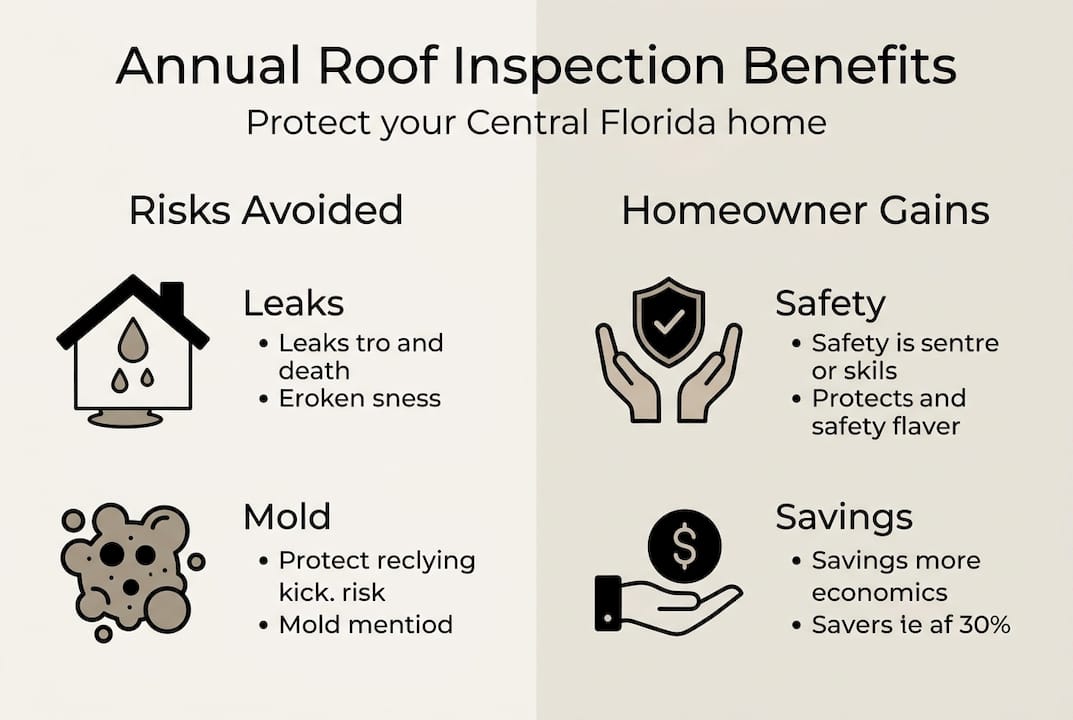
Annual inspections break that cycle. A trained inspector can protect your Central Florida home by catching minor issues before they grow. Loose flashing around a chimney, a few missing granules on asphalt shingles, or a small gap near a vent pipe are all easy and inexpensive to fix when caught early. Left alone through another storm season, they become entry points for serious water damage.
Here’s what inspectors typically flag during annual visits in this region:
- Lifted or missing shingles from wind exposure
- Cracked or deteriorating flashing around vents, chimneys, and skylights
- Clogged or damaged gutters that cause water to back up under the roofline
- Algae and moss growth common in Florida’s humid environment
- Soft spots or sagging that indicate moisture damage beneath the surface
The hurricane season risks facing Florida homeowners make proactive inspection especially important. A roof that looked fine in April may have hidden vulnerabilities that a summer storm will exploit.
Pro Tip: Schedule your annual inspection in late October or early November, right after hurricane season ends. You’ll catch any storm-related damage while it’s still minor and before winter rains add more stress.
Top benefits of yearly roof inspections
Understanding the necessity is one thing, but what do you actually gain from annual inspections? The answer goes well beyond peace of mind.
Safety comes first. A structurally compromised roof is a real hazard. Sagging decking, weakened trusses, or widespread moisture damage can put your family at risk, especially during a storm. Annual inspections catch structural issues before they reach a dangerous stage.
Water damage prevention saves serious money. Hidden leaks are the most expensive roofing problem homeowners face. Water finds its way into wall cavities, insulation, and framing long before it shows up as a ceiling stain. Annual inspections can save thousands by catching hidden leaks or storm damage early, before they require major structural repairs.
Your home’s market value stays protected. Buyers and appraisers look at roof condition closely. A documented history of annual inspections signals responsible ownership and can be a genuine selling point. It also reduces the chance of a buyer demanding a price reduction or repair credit at closing.
“A roof with a clean inspection history is one of the easiest ways to demonstrate that a home has been well maintained. It builds buyer confidence immediately.”
Insurance claims go more smoothly. When you file a claim after storm damage, insurers want documentation. An annual inspection report that shows your roof was in good condition before the storm makes it much harder for a claim to be disputed. You can also extend your roof lifespan significantly by addressing the small issues inspectors find each year.
Here’s a quick cost comparison that puts the value in perspective:
| Scenario | Typical cost |
|---|---|
| Annual professional inspection | $150 to $300 |
| Minor repair caught during inspection | $200 to $600 |
| Water damage repair from missed leak | $3,000 to $8,000 |
| Partial roof replacement | $6,000 to $15,000 |
| Full roof replacement | $12,000 to $25,000+ |
The math is straightforward. One skipped inspection can cost you ten times more than the inspection itself. For more answers on what inspections cover, the roofing FAQs from the National Roofing Contractors Association are a solid resource.
What happens during an annual roof inspection?
Armed with the benefits, it’s helpful to know what actually takes place during a professional inspection. Many homeowners picture someone climbing on the roof and glancing around for a few minutes. A thorough inspection is far more systematic than that.
A thorough inspection covers flashing, gutters, shingles, and attic signs of moisture, along with a full exterior and interior assessment. Here’s what a professional typically evaluates:
- Shingle condition — checking for cracking, curling, missing granules, and wind lift
- Flashing integrity — examining all metal seals around penetrations like chimneys, vents, and skylights
- Gutter system — looking for blockages, sagging, and improper drainage that could cause water backup
- Fascia and soffit — inspecting the boards and panels at the roof’s edge for rot or pest damage
- Attic inspection — checking for moisture stains, mold, inadequate ventilation, and insulation issues
- Structural assessment — identifying any sagging, soft spots, or signs of decking damage
In Central Florida specifically, inspectors also watch closely for algae streaks and moss, which are common due to the humidity. These organisms hold moisture against roofing materials and accelerate breakdown. Catching them early means a simple cleaning rather than a shingle replacement.
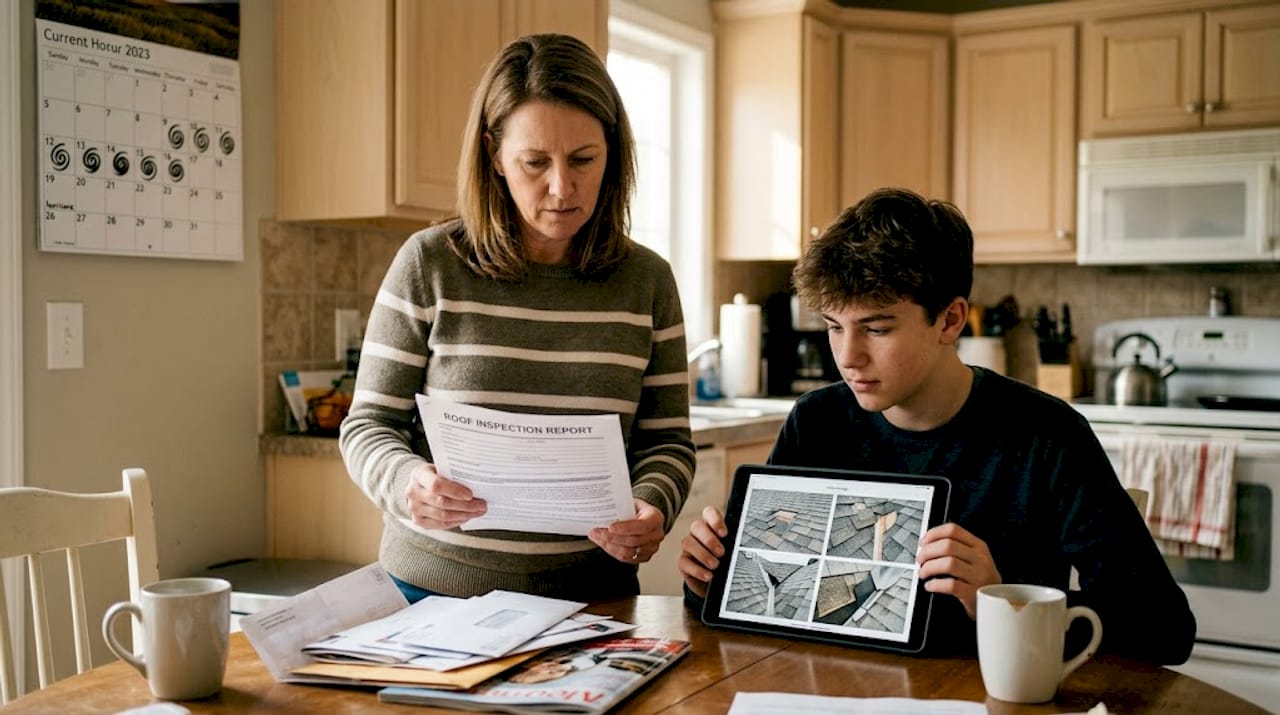
Most professional inspections also include photo documentation. You receive a written report with a prioritized list of findings, so you know exactly what needs attention now versus what to monitor. That report becomes part of your home’s maintenance record, which matters for warranty claims and future home sales.
For a deeper look at what detailed roof inspections involve, or to review a roof maintenance guide that walks through ongoing care, those resources can help you stay organized between annual visits.
Pro Tip: Ask your inspector for a copy of their inspection checklist before they start. Reviewing it afterward helps you understand every item that was evaluated and gives you a baseline for next year’s visit.
The roof inspection guide from HomeAdvisor also provides useful context on what to expect from a standard professional visit.
How inspections help avoid costly repairs and extend roof life
Once you see what an inspection covers, it’s easy to understand its impact on repair costs and roof longevity. The core principle is simple: small problems are cheap. Big problems are expensive. Annual inspections keep small problems from becoming big ones.
Consider a cracked roof tile near a valley where water naturally channels during rain. Left undetected, that crack lets water seep under the tile with every storm. Over six months, the moisture saturates the underlayment, begins rotting the decking, and eventually works its way into the attic framing. What started as a $75 tile repair becomes a $4,000 decking and framing job. That scenario plays out constantly in Central Florida, and it’s almost always preventable.
Routine inspections prevent 80% of major roofing issues, which means the vast majority of expensive repairs homeowners face are not inevitable. They’re the result of issues that went undetected too long.
After receiving your inspection report, here’s what to do:
- Address priority repairs immediately. Any item flagged as urgent should be scheduled within two to four weeks, especially before storm season.
- Plan for mid-priority items. These can typically wait a few months but should be budgeted and scheduled within the same year.
- Document everything. Keep your inspection reports, repair invoices, and photos in a single folder. This file is valuable for warranty claims, insurance, and home sales.
- Follow up on monitored items. Some findings are watch-and-wait. Note them and confirm they’re re-checked at next year’s inspection.
Your roof’s lifespan depends heavily on this kind of consistent attention. An asphalt shingle roof in Central Florida typically lasts 20 to 25 years. Neglect can cut that down to 12 to 15 years. Following roof maintenance steps and investing in expert maintenance can push that lifespan toward its upper limit and beyond.
For context on what inspections typically cost in your area, roof inspection costs from Angi provide current regional pricing data.
Our perspective: The real value of annual roof inspections
After working on roofs across Brevard, Volusia, and Orange counties for years, we’ve seen a clear pattern. The homeowners who face the largest, most disruptive repair bills are almost never the ones who were unlucky. They’re the ones who skipped inspections for two or three years in a row, usually because nothing looked wrong from the outside.
Here’s the uncomfortable truth: your roof does not give obvious warnings. It fails quietly, behind walls and above ceilings, until the damage is too large to ignore. A $150 annual inspection is genuinely the cheapest insurance you can buy for a $20,000 roof. We’ve watched homeowners spend $15,000 on repairs that a $200 inspection two years earlier would have reduced to a $400 fix.
Skipping inspections even once can expose your home to unseen risks that compound with every storm. The real enemy isn’t the hurricane. It’s the six months of slow moisture intrusion that the hurricane reveals. Reviewing the inspection benefits available to Central Florida homeowners makes it clear: this is not optional maintenance. It’s the foundation of responsible homeownership in this climate.
Get expert roof inspections and protect your investment
Your roof is one of the most important and most expensive components of your home. Annual inspections are the most cost-effective way to keep it performing at its best through Florida’s demanding weather seasons.

At Thomas Roofing and Repair, we serve homeowners across Central Florida with professional inspections, prompt repairs, and honest recommendations. Whether you need a post-storm assessment or a routine annual checkup, our team delivers clear findings and practical next steps. Our storm damage repair guide and examples of roof repairs show the kind of work we do every day for homeowners just like you. Contact us today to schedule your inspection and take the guesswork out of roof care.
Frequently asked questions
How often should I have my roof inspected if there hasn’t been a storm?
Yearly inspections are recommended in humid, storm-prone climates like Central Florida, even when no visible damage has occurred. Wear from heat, UV exposure, and humidity builds up year-round regardless of storm activity.
Is an inspection needed if my roof is only a few years old?
Yes. New roofs in Florida can still suffer storm or wind damage within the first few years, and installation defects are easier and cheaper to fix when caught early.
What do inspectors check during an annual roof inspection?
A proper inspection covers all major roof and attic components, including shingles, flashing, gutters, and signs of moisture intrusion or structural weakness.
How can an inspection help with insurance claims?
Up-to-date roof maintenance records ease the insurance claim process by providing documented proof of your roof’s condition before damage occurred, reducing disputes and speeding up settlements.
Recommended
- Why roof inspection matters: protect your Central Florida home
- Why Roof Inspections Matter for Central Florida Homes
- Benefits of Roof Inspection for Central Florida Homes
- Roof maintenance guide: protect your home & investment
- Roofing Company Orlando, FL
- Roofing Company Titusville, FL
- Roofing Company DeLand, FL