
Your Central Florida home is one of your biggest investments, yet many homeowners wait until visible damage appears before calling a roofing professional. By then, what started as a minor issue often becomes an expensive emergency repair. Regular roof inspections catch problems early, saving you thousands while protecting your property value. This guide explains when to schedule inspections, the specific benefits for your home, and modern options available to Central Florida residents in 2026.
Table of Contents
- When And How Often Should You Schedule Roof Inspections?
- Top Benefits Of Regular Roof Inspections For Your Central Florida Home
- How Different Roofing Materials Respond To Inspections And Hurricane Damage
- Modern Roof Inspection Methods: Traditional Versus Drone-Enabled
- Protect Your Central Florida Home With Expert Roof Inspections And Repairs
Key takeaways
| Point | Details |
|---|---|
| Early detection saves money | Catching minor damage before it spreads prevents repairs costing thousands of dollars. |
| Property value protection | Documented roof condition helps maintain and prove home value during appraisals or sales. |
| Inspection timing matters | Schedule based on roof age, material type, and after major weather events like hurricanes. |
| Material differences | Asphalt, tile, and metal roofs have different vulnerabilities requiring customized inspection focus. |
| Modern technology options | Drone inspections provide faster, safer assessments with detailed 3D data and imagery. |
When and how often should you schedule roof inspections?
Your inspection schedule depends on three critical factors: roof age, material type, and Central Florida’s weather patterns. Understanding these variables helps you plan proactive maintenance instead of reacting to leaks and damage.
For newer roofs up to 10 years old, annual inspections provide adequate monitoring. These roofs typically have fewer issues, but catching manufacturing defects or installation problems early protects your warranty. Between years 10 and 20, your roof enters its middle lifespan where wear accelerates. Semi-annual inspections during this phase identify deterioration before it becomes structural.
Central Florida’s hurricane season creates additional inspection needs beyond age-based schedules. After any major storm with sustained winds over 50 mph, schedule an immediate inspection regardless of when your last checkup occurred. Wind damage often hides beneath surface-level shingles or tiles, and inspection frequency recommendations vary based on weather conditions in hurricane-prone regions like ours.
Consider these timing recommendations:
- New roofs (0-10 years): Annual inspections
- Mid-life roofs (10-20 years): Semi-annual inspections
- Post-storm: Immediate inspection after hurricanes or severe weather
- Pre-season: Spring inspection before hurricane season begins
Pro Tip: Schedule your annual inspection in April or May, right before hurricane season peaks. This timing gives you opportunity to address any vulnerabilities before storm threats increase, and contractors have better availability than during the busy post-storm period.
Top benefits of regular roof inspections for your Central Florida home
Investing in routine inspections delivers multiple advantages that extend beyond simple damage detection. These benefits compound over time, protecting both your immediate budget and long-term property value.
Early problem identification stops minor issues from escalating into major repairs. A small section of separated flashing might cost $200 to fix during an inspection, but ignoring it allows water infiltration that leads to rotted decking, damaged insulation, and interior ceiling repairs totaling thousands. Regular inspections prevent costly damage by catching these problems at their most affordable stage.
Documented roof condition becomes crucial when selling your home or refinancing. Inspection reports provide objective proof of proper maintenance, helping justify your asking price and reassuring potential buyers. Insurance companies also value this documentation when processing claims, as it establishes a baseline condition before storm damage occurs.
Consider these specific advantages:
- Cost avoidance through early detection of flashing failures, missing fasteners, and seal degradation
- Property value preservation with documented maintenance history
- Peace of mind knowing your roof can handle Central Florida’s weather extremes
- Insurance claim support with pre-existing condition documentation
- Extended roof lifespan through timely minor repairs
Pro Tip: Keep a dedicated folder with all inspection reports, photos, and repair receipts. This documentation proves invaluable during insurance claims and adds credibility when listing your home for sale, often helping justify a higher price point.
How different roofing materials respond to inspections and hurricane damage
Your roof’s material directly impacts its vulnerability to storm damage and the inspection areas requiring closest attention. Understanding these material-specific risks helps you appreciate why customized inspections matter for Central Florida homes.
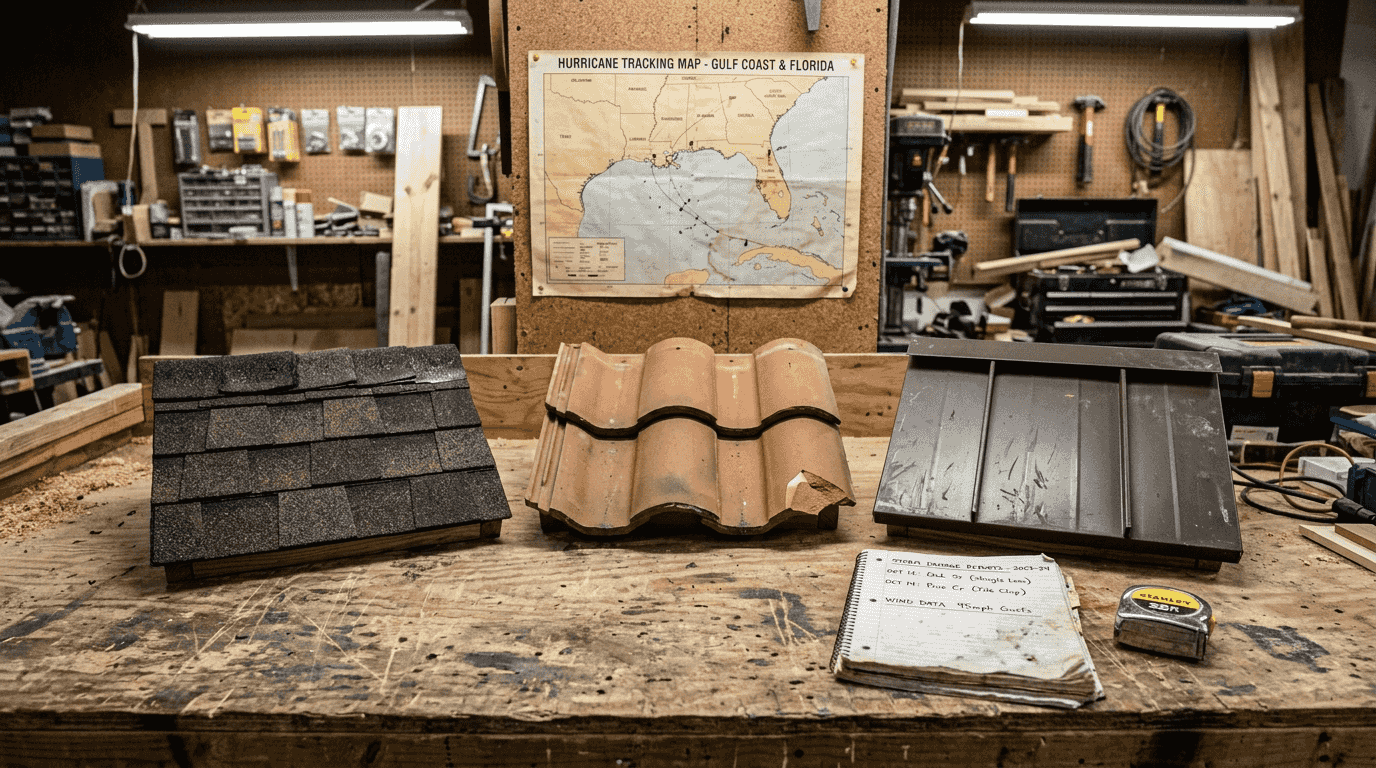
Asphalt shingles saw the most damage during recent hurricanes, with failure rates approaching 50% in some neighborhoods. These roofs require careful inspection of individual shingle integrity, seal strips, and edge fastening. Wind can lift improperly secured shingles, allowing water penetration even without visible surface damage.
Tile roofs showed strong improvement compared to performance in 2004 storms, thanks to updated installation standards. However, older tile installations still carry risk, particularly at hips, ridges, and valleys where flashing or coping failures occur most frequently. Inspectors focus on underlayment condition and tile attachment methods during these evaluations.
Metal roofs performed best during Hurricane Ian, with the lowest damage rates across all material types. While extremely durable, metal roofs still require inspection attention at panel seams, fastener points, and penetrations where sealant can deteriorate over time.
| Roof Material | Hurricane Damage Risk | Primary Inspection Focus | Recommended Frequency |
|---|---|---|---|
| Asphalt Shingle | High (up to 50% damage rate) | Shingle integrity, seal strips, edge fastening | Semi-annual |
| Tile | Moderate (improved but vulnerable at transitions) | Underlayment, flashing, attachment at hips/ridges | Annual |
| Metal | Low (best storm performance) | Panel seams, fasteners, penetration seals | Annual |
Pro Tip: If you’re choosing a new roof or replacement, consider metal or properly installed tile systems for superior hurricane resistance. The upfront cost premium pays dividends through reduced damage risk and lower inspection frequency needs.
Modern roof inspection methods: Traditional versus drone-enabled
Technology has transformed how professionals assess roof condition, offering homeowners faster, safer, and more detailed evaluation options. Understanding both traditional and drone inspection methods helps you make informed decisions about which approach suits your needs.
Traditional manual inspections involve technicians walking your roof surface, examining materials up close, and documenting issues by hand. This hands-on approach works well for detailed material assessment but requires appropriate weather conditions and carries inherent safety risks when accessing steep or high roofs.
Drone roof inspections offer significant time savings compared to manual methods, often completing comprehensive assessments in 30 minutes instead of several hours. Equipped with high-resolution cameras, drones capture detailed imagery from angles impossible for ground-based inspection, revealing hidden damage on steep slopes or around chimneys and vents.
Safety improvements represent another major advantage. Drone inspections provide objective and repeatable data including 3D models and thermal imaging, all without requiring anyone to climb onto potentially unstable or damaged roofing surfaces. This approach proves especially valuable immediately after storms when debris or structural compromise makes traditional access dangerous.
Key drone inspection advantages include:
- Comprehensive coverage in fraction of traditional inspection time
- Zero risk from falls or roof surface damage during assessment
- High-resolution imagery revealing subtle damage invisible from ground level
- 3D modeling showing exact damage locations and measurements
- Repeatable documentation enabling precise before/after comparisons
Pro Tip: Ask your roofing contractor if they offer drone inspection services, particularly if you have a steep-pitch roof, multi-story home, or need post-storm assessment. The detailed imagery and measurements these inspections provide often justify any additional cost through more accurate repair estimates and comprehensive damage documentation.
Protect your Central Florida home with expert roof inspections and repairs
Now that you understand when to schedule inspections, the benefits they provide, and modern assessment options available, taking action becomes your next step toward protecting your home investment.

Thomas Roofing & Repair specializes in comprehensive roof inspections tailored to Central Florida’s unique climate challenges. Our detailed reports document current condition, identify potential problems, and recommend prioritized repairs to extend your roof’s lifespan. We understand the specific vulnerabilities of different roofing materials in hurricane-prone regions and customize our maintenance approach accordingly. Whether you need routine preventive inspection or post-storm damage assessment, our experienced team provides the expertise Central Florida homeowners trust. When inspection reveals repair or replacement needs, we offer transparent pricing and quality workmanship backed by our service guarantee. Protect your biggest investment with professional care designed for Central Florida homes.
FAQ
How often should I schedule a roof inspection in Central Florida?
For roofs under 10 years old, annual inspections provide adequate monitoring of condition and early problem detection. Roofs between 10 and 20 years old benefit from semi-annual inspections as wear accelerates during this middle lifespan. Always schedule an immediate inspection after any major storm regardless of your regular schedule.
Can regular roof inspections really save me money?
Absolutely. A $200 inspection can prevent a $5,000 repair by catching small problems like separated flashing before they allow water damage to decking and interior spaces. Early detection stops minor issues from escalating into major structural repairs, making inspections one of the most cost-effective maintenance investments.
What types of roof damage are most common after Florida storms?
Shingle damage and edge lifting affect asphalt roofs most severely, while flashing or coping failures occur frequently across all material types at roof transitions. Wind-driven rain can penetrate even small openings, making post-storm inspection critical even when no obvious damage appears from ground level.
Do I need an inspection if my roof looks fine from the ground?
Yes, because many serious problems hide beneath surface materials or occur in areas invisible from ground level. Separated underlayment, damaged flashing around penetrations, and deteriorated sealants often cause leaks long before visible surface damage appears. Professional inspection catches these hidden issues before they compromise your home.
Are drone inspections as thorough as traditional manual inspections?
Drone inspections often provide more comprehensive documentation through high-resolution imagery and 3D modeling that captures details difficult to assess manually. For initial assessment and damage documentation, drones excel. Some situations requiring hands-on material testing may still benefit from traditional methods, and many contractors combine both approaches for optimal results.
Recommended
- Roof inspection benefits for Central Florida properties
- Roof Leak Detection: Protecting Central Florida Homes
- Roof Inspection Terminology – What Homeowners Must Know
- Role of Roof Maintenance for Central Florida Homes
- Roofing Company Orlando, FL
- Roofing Company Titusville, FL
- Roofing Company DeLand, FL