
TL;DR:
- Adaptive roofing responds to climate stresses by enhancing storm resistance, energy efficiency, and lifespan in Central Florida. It incorporates features like reinforced fasteners, reflective surfaces, secondary water barriers, and adaptive insulation to improve resilience beyond standard roofs. Implementing these solutions can reduce costs, qualify for grants, and provide long-term protection against the region’s severe weather threats.
Most homeowners think about their roof in simple terms: it’s either holding up or it isn’t. But that all-or-nothing thinking leaves a lot of money and protection on the table, especially in Central Florida where summer storms, relentless heat, and hurricane-season threats push roofs to their limits every single year. Adaptive roofing changes the conversation entirely. Instead of waiting for your roof to fail, adaptive solutions work with your local climate to reduce energy costs, resist storm damage, and extend the lifespan of your biggest investment. This guide breaks down what adaptive roofing actually means, why it matters here specifically, and how you can take action.
Table of Contents
- Understanding adaptive roofing: What it is and how it works
- Why adaptive roofing matters for Central Florida homes
- Key features of adaptive roofing for resilience and comfort
- How to upgrade: Steps for homeowners with aging or storm-damaged roofs
- Expert perspective: What most homeowners get wrong about adaptive roofing
- Ready to upgrade? Adaptive roofing solutions with Thomas Roofing and Repair
- Frequently asked questions
Key Takeaways
| Point | Details |
|---|---|
| Adaptive roofing defined | Adaptive roofing uses specialized materials and designs to handle Florida’s heat, storms, and humidity better than traditional roofs. |
| Storm resilience is key | Upgrades like reinforced tiles and high-wind metal roofs are vital for surviving Florida’s hurricane season and reducing insurance costs. |
| Smart upgrades add value | Features like reflective surfaces, secondary water barriers, and adaptive insulation improve comfort, durability, and long-term savings. |
| Grants and insurance savings | Central Florida homeowners may qualify for grants and discounts by choosing adaptive roofing solutions designed for local hazards. |
| Not all codes are enough | Meeting building code is a minimum—true adaptive solutions go further to protect against Florida’s unique climate challenges. |
Understanding adaptive roofing: What it is and how it works
Traditional roofing has one job: keep the rain out. It does that job passively. Whatever weather arrives, a standard roof either handles it or it doesn’t. Adaptive roofing takes a completely different approach. It’s designed to respond to climate stresses rather than simply endure them.
Think of it like the difference between a cotton T-shirt and a moisture-wicking athletic shirt. Both cover your body, but one actively responds to heat and sweat while the other just sits there. Adaptive roofing works the same way.
The core mechanisms that make adaptive roofing work
Climate-adaptive roofing solutions use several key mechanisms working together: passive adaptability like rainwater retention and evaporation for cooling (including systems like WaterRoofs), high solar reflectance materials that bounce heat rather than absorb it, adaptive insulation that shifts with temperature changes, enhanced wind-resistant designs with stronger fasteners and interlocking components, and smart materials that actually alter properties like thermal emittance or permeability depending on conditions.
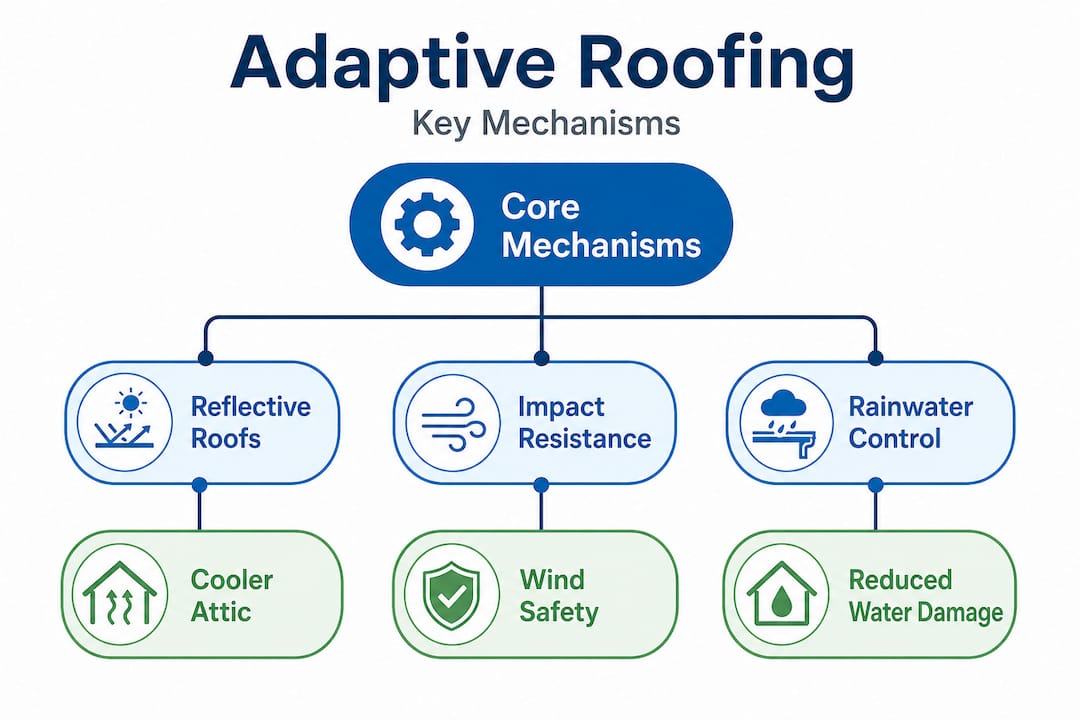
These aren’t all futuristic concepts. Many of them are available right now in the examples of roofing materials used for Central Florida homes today.
Here’s a quick comparison of static versus adaptive roofing:
| Feature | Static roofing | Adaptive roofing |
|---|---|---|
| Heat response | Absorbs and retains heat | Reflects or dissipates heat |
| Storm response | Passive resistance | Reinforced fasteners, interlocking design |
| Water management | Sheds water only | Retains, evaporates, or channels water |
| Energy efficiency | Fixed insulation value | Can respond to temperature changes |
| Lifespan (typical) | 15 to 25 years | 30 to 75+ years depending on material |
Key benefits that adaptive systems bring to your home include:
- Lower cooling costs because reflective surfaces reduce heat gain
- Better storm survival due to wind-rated fasteners and secondary barriers
- Fewer leaks from improved drainage design and waterproof underlayment
- Longer roof life since materials are chosen for UV, heat, and wind resistance
- Possible insurance savings through qualifying resilient upgrades
“The goal of adaptive roofing isn’t complexity for its own sake. It’s making your home smarter about the exact weather it faces every year.”
Understanding the reflective roofing benefits is especially relevant in Florida, where summer sun can raise attic temperatures above 150°F. Reflective coatings alone can bring that number down significantly, reducing the load on your air conditioning system.
Why adaptive roofing matters for Central Florida homes
Central Florida isn’t just hot. It’s a unique combination of intense UV radiation, humidity that never really lets up, frequent severe thunderstorms, and the seasonal threat of hurricanes and tropical storms. That combination accelerates roof aging in ways homeowners in other states simply don’t experience.
Asphalt shingles that last 25 years in Ohio may only hold up for 15 years here. Humidity seeps under flashing. Wind lifts edges that weren’t properly fastened. And once a storm tears off a section of roofing, the water damage that follows can cost tens of thousands of dollars in repairs.
Adaptive solutions directly counter these threats. Impact-resistant roofing in Florida using materials rated for 130 to 150 mph winds keeps your home protected when a named storm rolls through. Reinforced tile systems hold where standard tiles crack. Metal roofing reflects heat and resists wind simultaneously.
What the data says:
According to MDPI research on adaptive roof performance, optimized adaptive roof shapes in hot regions reduce indoor temperatures by roughly 2°C, homes with resilient features save up to 20% on homeowner’s insurance, metal roofs resist winds above 150 mph, and clay tiles can last 75 or more years with superior UV resistance compared to standard asphalt.
That insurance discount alone is significant. On a $2,500 annual premium, 20% saves you $500 every year. Over a 10-year period, that adds up to $5,000 in your pocket.
For Central Florida homeowners dealing with aging roofs or storm damage, hurricane-resistant upgrades like metal roofing, reinforced tile systems, secondary water barriers, and high wind-rated materials can also qualify for financial assistance through programs like My Safe Florida Home and SAMPL.
| Roofing material | Wind rating | Lifespan | Heat performance |
|---|---|---|---|
| Asphalt shingles | 60 to 130 mph | 15 to 25 years | Poor to average |
| Metal roofing | 150+ mph | 40 to 70 years | Excellent (reflective) |
| Clay/concrete tile | 130+ mph | 50 to 75+ years | Good (thermal mass) |
| Modified bitumen | 90 to 110 mph | 20 to 30 years | Average |
Understanding roofing code requirements in your county is the starting point, but as you’ll see, code compliance and true adaptive resilience are not the same thing.
Pro Tip: If you live near the coast in Brevard or Volusia County, your home may fall within a High Velocity Hurricane Zone (HVHZ), which means even stricter material and installation standards apply. Always confirm with your contractor before selecting materials.
Key features of adaptive roofing for resilience and comfort
Now that you understand the why, let’s get specific about what actually separates an adaptive roof from a standard replacement. When you’re shopping for a new roof or planning a significant repair, these are the features that matter most in Central Florida.
- Reinforced fasteners and components. Standard roofing uses basic nails or clips. Adaptive systems use ring-shank nails, hurricane straps, and interlocking tile systems that hold together under wind loads most storms can generate. This one upgrade alone dramatically reduces the chance of losing roofing material in a storm.
- High wind-rated materials. Not all shingles or tiles carry the same wind rating. Look for materials rated to at least 130 mph to meet current Florida standards, and consider upgrading to 150 mph-rated systems if budget allows.
- Reflective and UV-blocking surfaces. In Central Florida, a roof that absorbs heat is a roof that drives up your energy bill. Reflective metal roofing, light-colored tile, and cool-roof coatings can meaningfully reduce heat transfer into your living space.
- Secondary water barriers. This is one of the most underappreciated features in residential roofing. In storm-prone areas like Central Florida, avoiding complex rooflines that complicate drainage is critical, and adding a secondary barrier beneath your primary roofing layer prevents leaks from reaching your interior if the outer layer is compromised. It’s inexpensive relative to the protection it provides.
- Adaptive insulation layers. Modern insulation products can respond to temperature changes rather than providing a single fixed R-value. In a climate with both hot summers and mild winters, this flexibility helps year-round.
- Symmetric, drainage-optimized design. Complex rooflines with lots of valleys, dormers, and angles look elegant but create drainage problems and add flashing points where leaks are more likely to develop. Simpler, more symmetric designs perform better in heavy rain.
“While ‘adaptive roofing’ emphasizes dynamic response like phase-change materials and kinetic elements, practical residential applications in Florida focus on resilient, climate-suited materials like reflective metal and tile with storm reinforcements, prioritizing cost-effective longevity over complex active systems.”
This is an important point. You don’t need a cutting-edge experimental roof to benefit from adaptive principles. The most effective improvements for the vast majority of Central Florida homeowners are straightforward: better materials, stronger fastening, smarter drainage, and secondary protection layers.
If cost is a concern, roofing financing options can help spread the investment over time, and many adaptive upgrades pay for themselves through energy savings and insurance reductions.
Pro Tip: Before committing to a roofing contractor, ask specifically whether their installation plan includes a secondary water barrier and what wind rating their fastener system achieves. A contractor who can’t answer those questions confidently may not be the right fit.
How to upgrade: Steps for homeowners with aging or storm-damaged roofs
Knowing which features you want is only part of the process. Here’s a practical step-by-step approach to getting an adaptive roof installed on your Central Florida home.
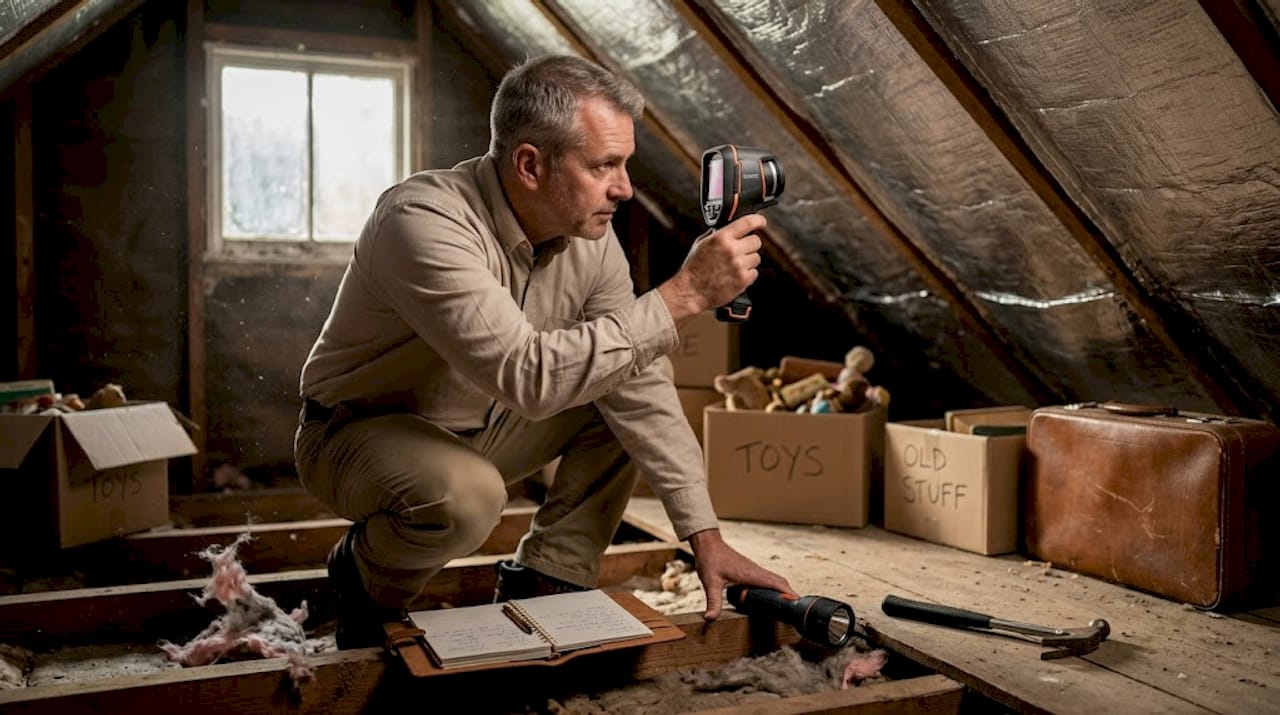
- Start with a professional inspection. Before you spend a dollar on materials, get a qualified inspector to assess your current roof. For aging roofs and storm-damaged homes, inspectors should examine flashing, underlayment, fasteners, and any areas showing signs of moisture intrusion. This report becomes your roadmap for what needs replacing versus what can be upgraded.
- Identify your priority features. Based on your roof’s condition and your budget, decide which adaptive features matter most. If your roof is over 20 years old, a full replacement is usually more cost-effective than repairs. If it’s younger with targeted storm damage, strategic upgrades may be the smarter choice.
- Check for grant and insurance eligibility. The My Safe Florida Home program and SAMPL resources can provide financial assistance for qualifying upgrades. Contact your homeowner’s insurance carrier before starting work, too. Many companies offer discounts for installing wind-mitigation features, and some will apply the discount retroactively if you submit a wind mitigation report after installation.
- Vet your contractor carefully. Florida’s roofing market attracts out-of-state storm chasers after every major weather event. Look for certified roofing advice from contractors with Florida licensing, verifiable local experience, and familiarity with HVHZ standards. Ask for references from recent jobs in your county.
- Review the installation plan before work begins. Make sure the written scope includes secondary water barriers, specific wind ratings for all materials, and fastener specifications. Get it in writing so there’s no confusion about what was agreed to.
- Schedule a wind mitigation inspection after installation. Once your new roof is complete, a certified wind mitigation inspector can document all the upgrades for your insurance company, maximizing the discount you qualify for.
Pro Tip: Timing your roof replacement for the fall or early winter, after hurricane season ends in November, often means better contractor availability and potentially more competitive pricing.
Expert perspective: What most homeowners get wrong about adaptive roofing
Here’s something we see consistently with Central Florida homeowners: they get excited about the concept of adaptive roofing, start researching options, and then get distracted by high-tech features they’ve seen in architectural blogs or social media posts. Phase-change materials, kinetic roof panels, living roofs covered in plants. It’s compelling content, but it’s rarely the right answer for a residential home in Brevard or Orange County.
The homeowners who get the best results aren’t the ones chasing the most sophisticated technology. They’re the ones who focus relentlessly on the basics done right. A secondary water barrier installed correctly during a re-roof costs a few hundred dollars more and can prevent $30,000 in interior water damage after a hurricane. That’s not glamorous. But it works.
The other mistake we see is treating code compliance as the finish line. Florida’s building code is rigorous compared to most states, but it sets a floor, not a ceiling. A roof that just meets code may still fail under a direct hit from a strong tropical storm. Going beyond code with materials rated for 150 mph or adding an extra layer of underlayment protection is where real resilience lives.
Insurance and grant opportunities are also left unclaimed more often than they should be. The local roofing trends we’re seeing in 2026 include more homeowners pursuing wind mitigation credits, but many still don’t realize the full scope of savings available when adaptive upgrades are documented properly.
The most impactful thing you can do as a Central Florida homeowner is invest in a higher-quality installation with proven, locally-tested materials rather than chasing the next innovation. A metal roof installed correctly by a certified local contractor will outperform a technologically advanced system installed poorly almost every single time.
Ready to upgrade? Adaptive roofing solutions with Thomas Roofing and Repair
Adaptive roofing doesn’t have to be overwhelming, and you don’t have to figure it all out on your own. At Thomas Roofing and Repair, we work with homeowners across Brevard, Volusia, and Orange County every day, helping them assess their current roof, choose the right adaptive materials, and navigate grants, insurance, and financing to make upgrades as affordable as possible.

Whether you’re dealing with an aging roof that’s been through one too many storms or you want to get ahead of hurricane season with a proactive upgrade, we’re ready to help. Explore our storm damage repair guide for an immediate next step if damage has already occurred, or learn about our emergency roof repair workflow for urgent situations. For homeowners planning a full replacement, our residential roofing solutions page walks through every option available. Reach out today for a free estimate and let’s build a roof that actually works for Central Florida.
Frequently asked questions
Do adaptive roofs cost more than standard roofs in Central Florida?
Adaptive roofs often have higher upfront costs, but resilient features save up to 20% on homeowner’s insurance annually, and materials like metal and clay tile dramatically reduce long-term repair and replacement expenses.
What types of adaptive roofing are best for Florida’s storm season?
Metal roofing, reinforced tile systems, and materials with secondary water barriers and high wind ratings between 130 and 150 mph provide the strongest protection during Florida’s hurricane and tropical storm season.
Are there grants available for upgrading to adaptive or resilient roofing?
Yes, programs like My Safe Florida Home and SAMPL can help fund qualifying upgrades to adaptive or resilient roofing systems, especially for wind-mitigation features.
Can adaptive roofing be installed on an older roof?
Many adaptive features like secondary water barriers and improved insulation can be added during a re-roof or major repair, making it possible to upgrade an older home without a full tear-off in some cases.
What if my roof is code-compliant? Is that enough?
Code compliance is the minimum standard required by law, but not all code-compliant roofs are hurricane-proof. True adaptive roofing goes beyond code with added resilience measures specific to Florida’s severe weather patterns.