TL;DR:
- Community-focused roofing involves multiple homeowners collaborating to improve energy efficiency and resilience. Group projects using reflective shingles can significantly lower cooling costs and reduce heat in Central Florida neighborhoods. Funding through nonprofits and grants supports these initiatives, fostering stronger, more unified communities.
Community-focused roofing ideas are collaborative strategies that improve neighborhood resilience, aesthetics, and energy efficiency through coordinated sustainable roof designs. In Central Florida, where summer heat and hurricane season push cooling costs and storm damage to extremes, these approaches matter more than anywhere else in the country. Coordinating roof upgrades across multiple homes or community buildings, using materials like ENERGY STAR® reflective shingles, and tapping programs like Cool Block projects can cut energy bills, strengthen neighborhoods against storms, and give entire streets a visual lift. The payoff is real, and it starts with knowing which ideas actually work.
1. What are the best community-focused roofing ideas for Central Florida?
Community-focused roofing, also called collaborative roofing design, treats a neighborhood’s rooftops as shared infrastructure rather than isolated home improvements. The core idea is simple: when homeowners and organizations coordinate upgrades together, everyone gets better materials, lower costs, and stronger results. Central Florida’s climate makes this especially urgent. The region faces intense UV exposure, hurricane-force winds, and summer temperatures that push attic heat to dangerous levels without proper roofing systems in place.
The most effective community roofing approaches combine sustainable materials, group purchasing, and shared design standards. They also tap funding sources that individual homeowners cannot access alone. Each idea below addresses a specific challenge Central Florida neighborhoods face.
2. Cool roofs and reflective shingles for neighborhood heat reduction
Cool roofs are the single most impactful technology for Central Florida communities. Reflective cool roofs can run more than 50°F cooler than conventional roofs on sunny summer afternoons. That temperature gap directly reduces the energy needed to cool homes below.
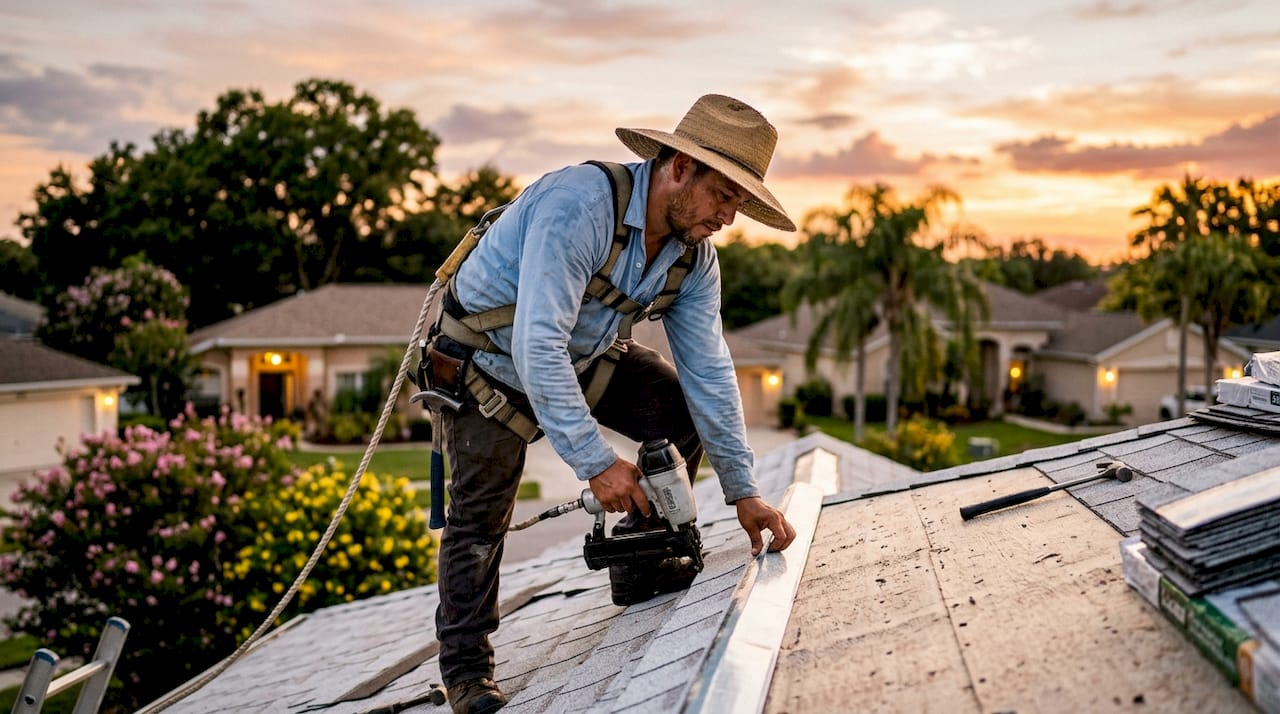
ENERGY STAR® rated reflective shingles are the most practical entry point for residential neighborhoods. They reflect solar radiation instead of absorbing it, which keeps attic temperatures lower and reduces the load on air conditioning systems. When an entire block installs reflective roofing together, the neighborhood also reduces its contribution to the urban heat island effect, which lowers ambient outdoor temperatures for everyone.
Pro Tip: Ask your roofing contractor specifically for ENERGY STAR® certified products, not just “light-colored” shingles. The certification guarantees a minimum solar reflectance index, which is the number that actually predicts cooling performance.
Cool roof coatings applied over aging shingles offer limited long-term benefit. Full roof replacement with integrated energy-efficient materials is the recommended path for lasting results in Florida’s climate. Coatings degrade faster under Florida’s UV intensity and do not address underlying structural issues.
3. Green roofs as community garden and recreation spaces
Green roofs install a layer of soil and vegetation over a waterproof membrane, turning a roof surface into a living space. They reduce stormwater runoff, lower building temperatures, and create usable outdoor areas for community interaction. In Central Florida, green roofs work best on flat or low-slope commercial and multi-family buildings rather than steep residential roofs.
The community benefit goes beyond energy savings. A green roof on a neighborhood community center or HOA building can host a shared garden, provide a shaded gathering area, and serve as a visible symbol of collective investment. Community green roofs on shared buildings generate more social return per dollar than individual home installations.
Green roofs do require structural assessment before installation. Not every existing building can support the added weight of soil and plants without reinforcement. A licensed roofing contractor should evaluate load capacity before any community green roof project moves forward.
4. Solar-integrated and BIPV roofing systems
Building-integrated photovoltaic systems, known as BIPV, embed solar cells directly into roofing materials rather than mounting panels on top of them. Systems like SolaGreen® combine solar energy generation with green roof habitat creation, delivering multi-functional benefits from a single roof surface. This makes them a strong fit for community buildings that want to generate electricity, manage stormwater, and support local biodiversity at the same time.
For Central Florida neighborhoods, BIPV systems on HOA buildings, community centers, or multi-family complexes can offset shared electricity costs. The savings can fund maintenance reserves or reduce HOA fees over time. The upfront cost is higher than standard roofing, but group purchasing across multiple units brings that cost down significantly.
The future of sustainable roofing points toward integrated systems that simultaneously generate energy, manage stormwater, and provide habitat. BIPV is the clearest path to that outcome for organized community roofing projects.
5. How to organize a group roof replacement project
Organized group roof replacement is the most direct way to reduce costs while improving outcomes across a neighborhood. Multi-home grouped projects reduce material and labor costs by 12–18% through bulk purchasing and coordinated logistics. That savings margin is large enough to upgrade to better materials without increasing individual homeowner budgets.
The steps to organize a successful group project are straightforward:
- Identify interested neighbors. Start with five to ten households on the same street or within the same HOA. A small pilot group is easier to coordinate and creates a visible result that attracts more participants.
- Appoint a project coordinator. A dedicated coordinator manages permits, contractor communication, and scheduling. Without this role, group projects stall on logistics.
- Request group bids from licensed contractors. Ask contractors to price the project as a single bulk job. Most will offer better rates for guaranteed volume.
- Agree on material standards. The group should align on minimum performance specs, such as ENERGY STAR® certification and wind resistance ratings appropriate for Florida’s hurricane zone.
- Coordinate permit applications. In Brevard, Volusia, and Orange counties, each property still requires its own permit, but a single contractor pulling multiple permits simultaneously saves time.
Pro Tip: Cool Block community programs have shown that group cooling projects reduce average monthly summer cooling costs by 23% per home and cut peak attic temperatures by 30°F. Use those numbers when pitching the project to skeptical neighbors.
Do not let cost savings push the group toward lower-quality materials. The 12–18% savings should fund better products, not cheaper ones.
6. Design ideas that strengthen neighborhood aesthetics
Coordinated roofing designs give neighborhoods a unified visual identity that increases property values and community pride. The design choices do not need to be identical across every home. They need to be compatible. A shared color palette, consistent architectural style, and matching trim details create cohesion without eliminating individuality.
Key design approaches for Central Florida neighborhoods include:
- Color coordination: Warm terra cotta, sandy beige, and charcoal gray tones complement Florida’s natural palette and age well under intense sun.
- Architectural consistency: Spanish tile profiles, metal standing seam, and dimensional asphalt shingles each suit different neighborhood styles. Choosing one profile per block creates a polished look.
- Rooftop shading structures: Solar pergolas and shade sails installed over patios or community spaces extend outdoor usability during Florida’s hottest months.
- Rooftop art installations: Some urban neighborhoods commission local artists to create murals or decorative elements on flat commercial roofs visible from upper floors or drones. This is a low-cost way to generate neighborhood identity.
Community roofing projects build social cohesion by generating visible improvements that inspire ripple effects of collaborative housing upgrades. A single well-executed roof replacement on a prominent corner property can motivate an entire block to follow.
7. Funding and partnership opportunities for local roofing initiatives
Funding is the most common barrier to community roofing projects, but several programs exist specifically to remove it. The key is knowing that most grants require organized nonprofits or community development corporations, not individual homeowners.
- EPA Thriving Communities grants: These grants require nonprofit-local contractor partnerships to secure funding. Individual homeowners cannot apply directly. Connecting with a neighborhood association or CDC is the first step.
- Manufacturer donation programs: GAF’s community contractor program has donated over 1,700 roofing systems nationwide since 2022, including full systems with long-term warranties. These programs partner with certified contractors to identify qualifying households.
- HOA reserve funds: Many Florida HOAs maintain capital reserves for exterior improvements. Coordinating a group roof replacement through the HOA allows access to those funds and simplifies contractor management.
- State and local utility rebates: Florida Power & Light and Duke Energy Florida both offer rebates for energy-efficient roofing upgrades. These rebates stack with group purchasing discounts.
“Grant funding is highly competitive and often only accessible through organized local nonprofits. Individual homeowners should seek support from neighborhood groups to apply.” — Roofs from the Heart / Southbridge CDC
Homeowners who want access to grant funding should contact their local CDC or neighborhood association before approaching contractors. The organization, not the homeowner, is the applicant of record for most programs.
Key takeaways
Community-focused roofing succeeds when neighborhoods combine sustainable materials, group purchasing, and organized funding to reduce costs and build lasting resilience against Central Florida’s heat and storms.
| Point | Details |
|---|---|
| Cool roofs cut heat significantly | Reflective roofs run more than 50°F cooler than conventional roofs, reducing cooling costs directly. |
| Group projects lower costs | Multi-home coordinated replacements reduce material and labor costs by 12–18% through bulk purchasing. |
| Coordination requires a leader | A dedicated project coordinator manages permits, contractors, and scheduling to keep group projects on track. |
| Grants need nonprofit partners | EPA Thriving Communities grants and similar programs require nonprofit or CDC involvement, not individual applications. |
| Visible projects inspire neighbors | A single successful community roof replacement creates a ripple effect that motivates broader neighborhood upgrades. |
Why I think Central Florida neighborhoods are leaving real money on the table
Most homeowners I talk to think of their roof as a solo decision. They get a few bids, pick a contractor, and move on. That approach works, but it leaves the biggest benefits unclaimed. The 12–18% cost savings from group purchasing alone can cover the upgrade from standard shingles to ENERGY STAR® certified products. That is not a marginal improvement. That is a fundamentally better roof for the same budget.
The social side of community roofing is underrated too. When one house on a block gets a new roof, neighbors notice. When five houses coordinate and the whole street looks sharper, something shifts. People start talking about other improvements. HOA meetings get more productive. That ripple effect is real, and it starts with one visible project done right.
Central Florida’s weather makes this more urgent than it is in most states. A roof that fails during hurricane season is not just a financial problem. It is a safety problem. Coordinated upgrades that meet current wind resistance standards protect the whole neighborhood, not just the homeowner who invested. That is the argument I would make to any skeptical neighbor: your roof affects mine.
The funding opportunities through programs like GAF’s community contractor initiative and EPA Thriving Communities grants exist precisely because the industry and government recognize that individual homeowners cannot always carry this alone. The barrier is not money. The barrier is organization. Find your neighborhood association, connect with a CDC, and start with one block.
— Thomasroofingandrepair
Thomasroofingandrepair: community roofing support in Central Florida
Thomasroofingandrepair works with homeowners and community organizations across Brevard, Volusia, and Orange counties on residential and commercial roofing projects built for Florida’s climate.

Whether your neighborhood is planning a group roof replacement or your HOA needs guidance on storm-ready roofing systems, Thomasroofingandrepair brings the local experience to get it done right. The team handles roof replacement in Central Florida for single homes and multi-property projects, with financing options available for qualifying homeowners. Request a free estimate and find out what a coordinated neighborhood project could look like for your street.
FAQ
What are community-focused roofing ideas?
Community-focused roofing ideas are coordinated approaches where multiple homeowners or organizations plan roof upgrades together to reduce costs, improve sustainability, and strengthen neighborhood aesthetics. They typically involve group purchasing, shared design standards, and access to grants not available to individual applicants.
How much can group roofing projects save?
Multi-home grouped roofing projects reduce costs by 12–18% on average through bulk material purchasing and coordinated contractor scheduling. Those savings are large enough to fund upgrades to better energy-efficient materials without increasing individual homeowner costs.
Are there grants available for community roofing in Florida?
Yes, programs like EPA’s Thriving Communities grants fund community roofing improvements, but they require nonprofit partnerships rather than individual homeowner applications. Homeowners should connect with a local CDC or neighborhood association to access these programs.
What roofing material works best for Central Florida communities?
ENERGY STAR® certified reflective shingles are the most practical choice for Central Florida neighborhoods. They keep roof surfaces more than 50°F cooler than conventional materials on hot days, which directly reduces cooling costs and urban heat island effects across the neighborhood.
How do I start a community roofing project in my neighborhood?
Start by identifying five to ten interested neighbors and appointing a project coordinator to manage logistics. Then contact a licensed local contractor for group bids and reach out to your HOA or a local CDC to explore available home renovation funding and grant opportunities.