
TL;DR:
- Roof system lifespan depends on material choice, installation quality, attic ventilation, and maintenance. Proper care and timely inspections can significantly extend a roof’s functional life, regardless of initial material.
Roof system lifespan is defined as the functional service life a roofing assembly provides before it requires full replacement. The industry term you will hear from inspectors and contractors is “service life,” and it covers far more than how a roof looks. According to the InterNACHI Standard Estimated Life Expectancy Chart, benchmarks range from 15 years for basic three-tab shingles to over 150 years for natural slate. What is roof system lifespan in practice? It is the point where repair costs, leak frequency, and structural risk make replacement the smarter financial choice. Material type, installation quality, attic ventilation, and maintenance history all determine where your roof lands on that spectrum.
What is roof system lifespan and how does material determine it?
The roofing material you choose sets the ceiling on how long do roofs last, and the gap between the shortest and longest options is dramatic. Asphalt shingles cover about 80% of American homes, making them the default starting point for most homeowners. Three-tab asphalt shingles last 15–20 years, while architectural shingles push that to 25–30 years. The average roof being replaced was just over 19 years old, which tells you most homeowners are replacing asphalt roofs near the end of their rated life.
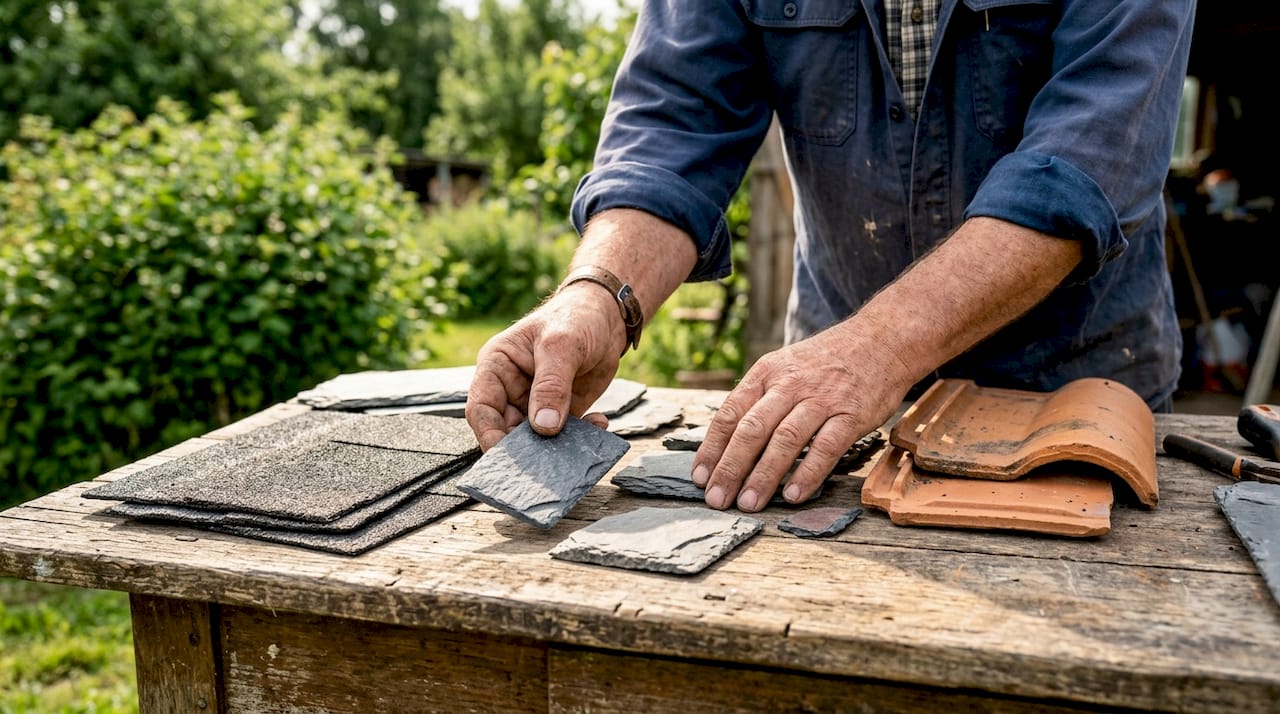
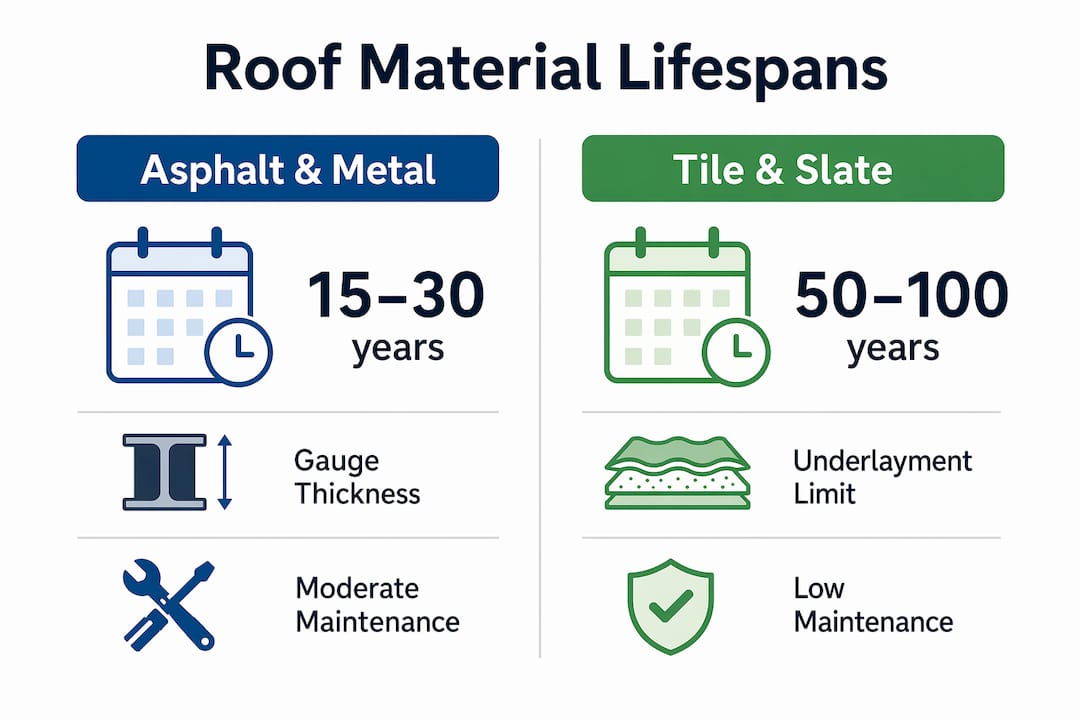
Premium materials extend that timeline significantly. Clay and concrete tiles last 50–100 years, natural slate reaches 75–150 years, and metal standing seam systems fall in the 40–70 year range. Flat roofing systems using TPO or EPDM membranes typically last 15–30 years, with seam quality being the primary variable.
Metal roofing carries a detail most homeowners miss. Gauge thickness directly controls durability: 29-gauge steel lasts 20–25 years, while 24-gauge standing seam can exceed 50 years. Choosing a thinner panel to save money upfront often means replacing the roof a full generation sooner.
Tile roofs present their own nuance. The visible clay or concrete tiles frequently outlast the underlayment beneath them. Underlayment on tile roofs typically needs replacement at 20–25 years, but this does not require tearing off the tiles. A lift-and-relay process replaces the underlayment while reusing the original tiles, saving significant cost. Not all slate performs equally either. Hard Vermont slate lasts over 125 years, while softer varieties last 50–75 years. Knowing your specific material matters when planning long-term budgets.
| Material | Typical lifespan | Maintenance level | Key durability factor |
|---|---|---|---|
| Three-tab asphalt shingles | 15–20 years | Low to moderate | Granule retention |
| Architectural asphalt shingles | 25–30 years | Low to moderate | Laminate layer thickness |
| Metal standing seam | 40–70 years | Low | Gauge thickness |
| Clay or concrete tile | 50–100 years | Low | Underlayment condition |
| Natural slate | 75–150 years | Low | Slate hardness and origin |
| TPO or EPDM flat systems | 15–30 years | Moderate | Seam and membrane quality |
Pro Tip: When comparing roofing bids, ask for the gauge specification on any metal option and the underlayment warranty on any tile option. These two numbers tell you more about long-term value than the sticker price alone.
For a deeper look at durable roofing options by material type, Thomasroofingandrepair has a dedicated resource covering performance expectations across Central Florida’s climate conditions.
What are the common signs your roof is reaching end-of-life?
Age alone does not determine when a roof needs replacement. Condition and performance history are the real indicators. A 22-year-old architectural shingle roof that has been well maintained may outperform a 15-year-old roof that was poorly installed and never inspected.
The most reliable end-of-life signals fall into three categories.
Shingle deterioration:
- Widespread granule loss, visible as bare patches or heavy granule buildup in gutters
- Curling at shingle edges or cupping across the shingle face
- Cracked or missing shingles across multiple roof sections
Biological and moisture damage:
- Moss, mold, or algae growth, which signals trapped moisture and accelerated material breakdown
- Persistent leaks after rain, especially in areas away from obvious penetrations
- Damaged or separated flashing around chimneys, skylights, and vents
Structural warnings:
- Roof deck sagging between rafters, which points to moisture damage in the structural layer
- Water stains on interior ceilings or attic sheathing, indicating active infiltration
Structural sagging and persistent leaks require urgent professional inspection. Waiting on these signs converts a manageable repair into a full replacement.
The repair versus replacement decision is not purely about age. Localized damage can often be repaired cost-effectively to extend the roof’s viable life. Widespread deterioration across multiple sections, however, makes repair a short-term patch on a long-term problem. Thomasroofingandrepair’s guide on repair versus replacement walks through this decision for Florida homeowners specifically.
Pro Tip: Take photos of your gutters after a heavy rain. Heavy granule accumulation is one of the earliest and most overlooked signs that asphalt shingles are nearing the end of their service life.
How do installation quality and attic ventilation impact roof lifespan?
Proper installation is the single biggest variable within a homeowner’s control at the time of purchase. Poor installation, inadequate ventilation, or skipped maintenance can reduce roof life by over 30%. That means a 30-year architectural shingle roof could fail at 20 years if the work was done incorrectly. The published lifespan estimates from NRCA and InterNACHI assume normal installation and maintenance conditions.
Attic ventilation controls heat and moisture buildup beneath the roof deck. Without proper airflow, summer heat in climates like Central Florida causes shingles to bake from below, accelerating granule loss and cracking. Moisture trapped in winter months promotes mold growth and wood rot in the decking.
The ventilation-warranty connection is one most homeowners do not know about until it is too late. Manufacturer warranties often require proper attic ventilation, and inadequate ventilation can void coverage entirely. That means a homeowner with a 30-year shingle warranty may have no recourse if the attic was never properly vented.
The most common installation mistakes that shorten roof life include:
- Improper nail placement. Nails driven too high or at wrong angles allow shingles to lift in wind.
- Skipping underlayment or using substandard material. Underlayment is the last line of defense before water reaches the deck.
- Inadequate flashing installation. Flashing failures around chimneys and vents are the leading cause of preventable leaks.
- Blocking soffit vents during installation. This cuts off the intake airflow the ventilation system depends on.
- Mismatched shingle exposure. Incorrect overlap reduces the waterproofing layer and accelerates wear.
Thomasroofingandrepair’s resource on roofing ventilation explains how attic airflow directly affects both shingle longevity and warranty validity for Florida homes.
What preventative maintenance practices extend roof lifespan?
Maintenance is where homeowners have the most ongoing control over roof system durability. A consistent maintenance routine can add years to any roofing system, regardless of material. The cost of routine upkeep is a fraction of early replacement.
Follow this annual maintenance sequence:
- Inspect twice a year. Schedule inspections in spring and fall. Spring catches winter damage; fall prepares the roof for storm season.
- Clear debris from the roof surface. Leaves and branches trap moisture and accelerate biological growth. Remove them promptly after storms.
- Clean and flush gutters. Clogged gutters force water back under shingles and against fascia boards. Clean them at least twice a year, more often under heavy tree cover.
- Trim overhanging branches. Branches that contact the roof abrade shingles and deposit debris. Keep them at least 6 feet clear of the surface.
- Repair minor damage immediately. A cracked shingle or lifted flashing costs very little to fix. Left alone, it becomes a leak that damages decking, insulation, and interior finishes.
- Check attic conditions. Look for daylight through the decking, moisture stains, or mold. These interior signs often appear before exterior damage becomes visible.
- Schedule a professional inspection every 3–5 years. A trained inspector identifies issues that are invisible from the ground, including fastener corrosion, membrane separation on flat roofs, and early flashing failure.
Pro Tip: After any hurricane or tropical storm, have a professional assess your roof before filing an insurance claim. Documented professional findings carry far more weight with insurers than homeowner photos alone.
Climate matters when building your maintenance calendar. Florida homeowners face UV intensity, high humidity, and hurricane season as compounding stressors. These factors accelerate granule loss on asphalt shingles and promote algae growth year-round. Thomasroofingandrepair’s roof maintenance tips for Florida homeowners address these regional factors with a season-specific checklist.
For a complete step-by-step process, the roof maintenance guide from Thomasroofingandrepair covers every stage from inspection through minor repair.
Key Takeaways
Roof system lifespan depends on material choice, installation quality, attic ventilation, and consistent maintenance. Neglecting any one of these factors can cut years off even a premium roofing system.
| Point | Details |
|---|---|
| Material sets the ceiling | Asphalt shingles last 15–30 years; slate and tile can exceed 75–100 years with proper care. |
| Installation quality is critical | Poor workmanship reduces roof life by over 30%, regardless of material quality. |
| Ventilation protects warranties | Inadequate attic ventilation voids most manufacturer warranties and accelerates shingle failure. |
| Condition beats age | Repair decisions should be based on damage extent, not age alone. |
| Maintenance adds years | Biannual inspections, gutter cleaning, and prompt minor repairs extend functional service life significantly. |
What I have learned after years of watching roofs age in Florida
The standard lifespan charts are useful starting points, but they tell an incomplete story. I have seen 18-year-old asphalt roofs in excellent condition and 12-year-old roofs that needed full replacement. The difference almost always comes down to two things: how well the roof was installed and whether anyone paid attention to it afterward.
The misconception I hear most often is that a roof is fine until it leaks. By the time water is coming through your ceiling, the damage has usually been building for months. Granule loss, lifted flashing, and blocked soffit vents are quiet problems that compound slowly. A homeowner who inspects twice a year catches these early. One who waits for a leak pays for it in decking replacement and interior repairs.
The tile underlayment issue is one that genuinely surprises property managers. They see beautiful clay tiles and assume the roof is decades away from any major expense. Then an inspector tells them the underlayment is 22 years old and needs replacement. The good news is that a lift-and-relay job costs far less than a full tear-off. The bad news is that most people never budgeted for it because no one told them it was coming.
My honest recommendation: treat your roof like a car. You would not skip oil changes and expect the engine to last. Biannual inspections and prompt minor repairs are the equivalent of routine service. The homeowners who do this consistently get the full rated life from their roofing systems. The ones who skip it rarely do.
— Thomasroofingandrepair
Thomasroofingandrepair: professional roof assessment for Central Florida homeowners
Knowing your roof’s condition is the first step toward protecting your home and your budget. Thomasroofingandrepair provides professional inspections, maintenance programs, and expert repair-versus-replacement guidance for homeowners across Brevard, Volusia, and Orange counties.

Whether your roof is approaching the end of its rated service life or you want to extend what you have, the team at Thomasroofingandrepair delivers honest assessments backed by real craftsmanship. For homeowners in the region, roof installation in Titusville and installation services in Palm Bay are available with free estimates and financing options. Contact Thomasroofingandrepair to schedule your inspection and get a clear picture of where your roof stands.
FAQ
What is the average roof lifespan for a US home?
The average roof being replaced was just over 19 years old, with asphalt shingles being the most common material at 15–30 years depending on type. Premium materials like slate and clay tile can last 50–150 years with proper maintenance.
How do I know if my roof needs repair or full replacement?
Replacement is the better choice when damage is widespread across multiple sections or when the roof is near the end of its rated service life. Localized damage, such as a few missing shingles or a single flashing failure, can typically be repaired to extend the roof’s functional life cost-effectively.
Does attic ventilation really affect how long a roof lasts?
Yes. Inadequate ventilation traps heat and moisture beneath the roof deck, accelerating shingle degradation and wood rot. Most manufacturer warranties require proper ventilation, and missing this requirement can void coverage entirely.
How often should a homeowner schedule a professional roof inspection?
Professional inspections every 3–5 years are the standard recommendation, with additional inspections after major storms. Homeowners should also do a visual check from the ground each spring and fall.
What roofing material lasts the longest?
Natural slate has the longest documented service life at 75–150 years, with hard Vermont slate exceeding 125 years. Clay and concrete tile follow at 50–100 years. Both require proper installation and periodic underlayment maintenance to reach their maximum lifespan.