
Central Florida homeowners face relentless weather challenges that demand more than standard roofing solutions. Hurricane-force winds, intense UV exposure, and strict building codes make certified roofing essential for long-term protection. This guide reveals how certified contractors and materials safeguard your investment while reducing costs and insurance headaches in ways most homeowners never realize.
Table of Contents
- Introduction To Roofing Challenges In Central Florida
- Understanding Florida Roofing Certification And Compliance
- The Certification Process For Roofing Contractors In Florida
- Benefits Of Using Certified Roofing Contractors
- Storm Resistance And Weather Protection Benefits
- Energy Efficiency And Cost Savings
- Maintenance And Longevity Support From Certification
- Common Misconceptions About Certified Roofing
- Conclusion: Making The Certified Roofing Choice In Central Florida
- Protect Your Central Florida Home With Certified Roofing Experts
- Frequently Asked Questions
Key takeaways
| Point | Details |
|---|---|
| Compliance assurance | Certified roofing meets 130 mph wind resistance mandated by Florida Building Code for hurricane protection. |
| Insurance advantages | Certified installations qualify for premium discounts and streamline claims processing after storm events. |
| Superior durability | Professional certification ensures proper installation techniques that extend roof lifespan by 15+ years. |
| Energy efficiency gains | Reflective certified materials reduce heat absorption up to 30%, lowering cooling costs significantly. |
| Long-term savings | Regular certified inspections cut repair costs 40% by catching problems early. |
Introduction to roofing challenges in Central Florida
Central Florida’s subtropical climate creates a perfect storm of roofing stress factors. Hurricane season brings sustained winds exceeding 100 mph, while year-round humidity accelerates material degradation. The intense summer sun beats down on roofs for 10+ hours daily, causing premature aging and thermal expansion stress.
Florida Building Code responds to these harsh conditions with mandatory wind resistance standards. Every roofing system installed in hurricane zones must withstand specific wind uplift forces based on location and building height. These regulations exist because standard roofing materials and installation methods simply cannot survive Central Florida’s weather extremes without proper engineering.
Choosing materials rated for tropical climates matters tremendously. Asphalt shingles designed for northern states fail rapidly under Florida’s UV intensity. Metal roofing without proper fastening patterns tears away during storms. Even minor installation errors create vulnerability points where wind and water infiltrate, causing thousands in damage.
Without compliance, you face serious consequences beyond roof failure. Insurance companies routinely deny claims when post-storm inspections reveal non-compliant installations. Property values drop when buyers discover roofing deficiencies during home inspections. Understanding roofing certifications benefits becomes critical for protecting your financial investment.
Pro Tip: Request documentation proving your contractor’s Florida state certification before signing any contract. Unlicensed installers cannot legally pull permits, leaving you liable for code violations.
Understanding Florida roofing certification and compliance
Florida Building Code establishes strict performance standards for roofing systems across different wind zones. The 130 mph wind resistance requirement applies to most Central Florida residential properties, with higher standards for coastal areas. These specifications cover everything from underlayment attachment to edge flashing details.
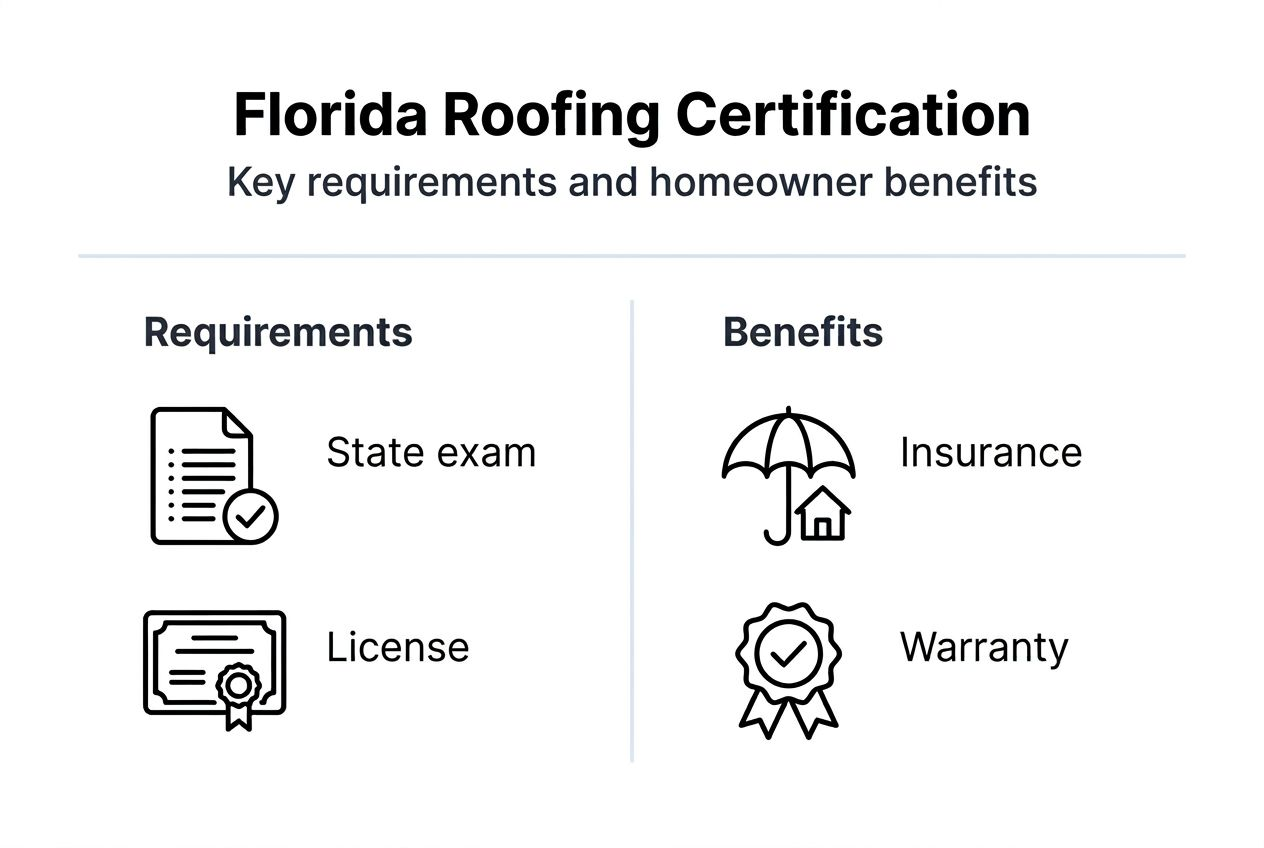
Certified roofing contractors must hold valid state licenses demonstrating competency through rigorous examination. The application process requires proof of four years’ hands-on experience plus passing comprehensive written and practical tests. This ensures contractors understand structural engineering principles, waterproofing techniques, and safety protocols specific to Florida conditions.
Insurance eligibility hinges directly on certification compliance. Most homeowners’ policies require proof that licensed professionals performed installations according to current building codes. During claims processing, adjusters verify contractor credentials and installation quality against these standards before approving payouts.
| Certification Level | Requirements | Benefits |
|---|---|---|
| State Licensed Contractor | 4-year apprenticeship, state exam, insurance | Legal permit pulling, basic code compliance |
| Manufacturer Certified | Additional training, warranty authorization | Extended material warranties, technical support |
| Premium Tier (Platinum) | Proven track record, continuing education | Highest warranty coverage, priority support |
Working with licensed roofers in Central Florida provides legal protection and quality assurance. Licensed contractors carry required liability insurance protecting you from accidents or property damage during installation. They also maintain workers’ compensation coverage, preventing homeowner liability for crew injuries.
The Florida roof certification requirements extend beyond initial installation to ongoing maintenance documentation. Certified inspectors must verify roof condition, remaining lifespan, and code compliance for insurance renewals and real estate transactions.
The certification process for roofing contractors in Florida
Becoming a state-certified roofing contractor demands extensive preparation and proven competency. Candidates must document 4,800 hours of verifiable roofing experience under licensed supervision before qualifying for examination. This apprenticeship requirement ensures fundamental skills development across diverse roofing systems and installation scenarios.
The state examination tests knowledge across multiple domains. Contractors must demonstrate expertise in building codes, structural requirements, safety regulations, business practices, and material science. Passing rates hover around 60%, reflecting the rigorous standards Florida maintains for construction trades.
Maintaining certification requires ongoing compliance with insurance and bonding requirements. Contractors must carry minimum liability coverage of $300,000 and workers’ compensation for all employees. Background checks screen for criminal history and previous license violations, protecting consumers from fraudulent operators.
Continuing education mandates keep certified contractors current with evolving building codes. Florida updates its building code every three years, incorporating lessons from recent hurricanes and advances in roofing technology. Contractors must complete approved coursework covering these changes to renew their licenses.
This rigorous oversight creates accountability throughout the roofing industry. The benefits of certified roofers stem directly from these ongoing competency requirements. You gain confidence knowing your contractor faces license suspension or revocation for substandard work or code violations.
Pro Tip: Verify your contractor’s license status online through the Florida Department of Business and Professional Regulation before any deposit payment. Active licenses confirm current insurance and compliance status.
Benefits of using certified roofing contractors
Certified contractors deliver measurably superior workmanship through standardized installation protocols. Their training emphasizes proper fastening patterns, flashing integration, and ventilation design that prevents common failure modes. These details make the difference between roofs that last 15 years versus 30+ years in Florida’s harsh climate.
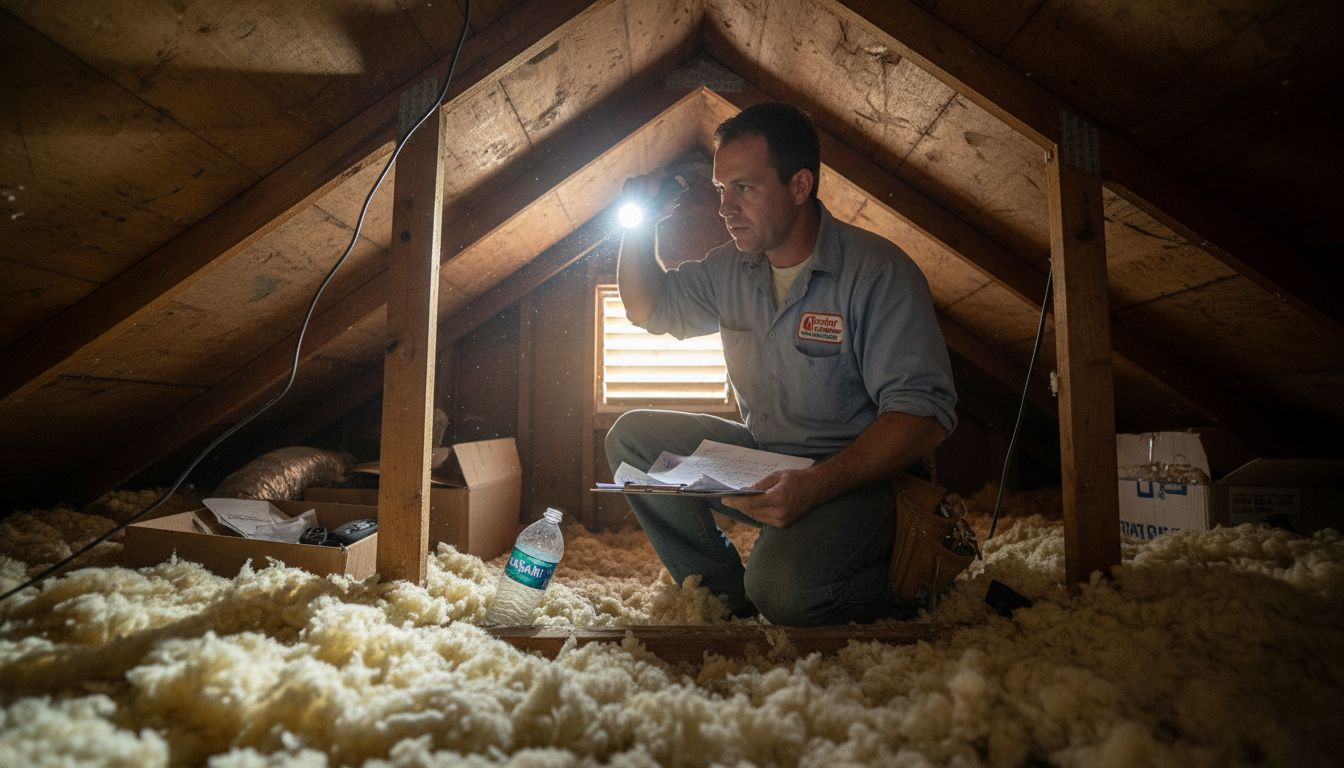
Warranty protection amplifies significantly when certified professionals handle installation. Manufacturer warranties typically require certified installer involvement to activate extended coverage periods. These warranties cover material defects and sometimes workmanship issues, providing recourse if problems emerge years after installation.
The contractor pool narrows dramatically at premium certification tiers. Less than 1% achieve top certifications like Owens Corning Platinum Preferred status. These elite contractors demonstrate exceptional safety records, customer satisfaction ratings, and technical expertise through years of proven performance.
Insurance claim processing runs smoother with certified installation documentation. Adjusters expedite approvals when contractors provide detailed installation records, material specifications, and photographic evidence meeting code requirements. This documentation becomes invaluable during disputes over storm damage coverage.
Certified contractors also maintain established relationships with material suppliers and local building departments. They secure better pricing through volume purchasing and navigate permit processes efficiently. These advantages translate to faster project completion and fewer bureaucratic delays for homeowners.
Choosing a roofing contractor with proper credentials protects you from liability exposures that emerge with unlicensed operators. If an uninsured worker gets injured on your property, you could face costly lawsuits and medical bills.
Storm resistance and weather protection benefits
Proper fastening techniques separate certified installations from amateur work during hurricane events. Certified contractors use specified nail patterns, adhesive strips, and mechanical attachments engineered for wind uplift resistance. These details prevent the progressive peeling failure that destroys improperly secured roofs.
Certified underlayment systems provide critical secondary protection against water infiltration. High-quality synthetic underlayments adhere directly to roof decking, creating watertight barriers even if shingles blow away. This redundancy prevents interior damage and mold growth during extended storm recovery periods.
Meeting local wind uplift codes through certification reduces hurricane damage risk substantially. Certified roofs satisfy wind uplift standards verified through engineering calculations and product testing. Insurance companies recognize this reduced risk through premium discounts and faster claim approvals.
| Installation Aspect | Non-Certified Approach | Certified Approach | Storm Performance Impact |
|---|---|---|---|
| Shingle Fastening | 4 nails per shingle, random placement | 6 nails in specified pattern per code | 50% better wind resistance |
| Underlayment | Basic felt paper, minimal overlap | Synthetic with sealed seams | Prevents 90% of water damage |
| Edge Securement | Standard drip edge | Reinforced starter strips, metal edge | Eliminates peel-back failure |
| Valley Treatment | Open valleys, minimal flashing | Closed-cut with ice/water shield | Stops leak entry points |
Roof deck attachment receives special attention in certified installations. Contractors verify that roof sheathing connections to trusses meet uplift requirements before applying any roofing materials. Weak deck attachment causes catastrophic failure regardless of shingle quality.
Ventilation design integrated into certified installations prevents moisture accumulation that degrades materials from inside. Proper intake and exhaust ratios maintain attic temperatures within safe ranges, extending shingle lifespan and preventing mold growth. Understanding storm damage repair information helps you recognize when professional assessment becomes necessary.
Pro Tip: After major storms, photograph your roof from ground level before climbing. Document any visible damage for insurance claims while prioritizing safety over immediate inspection.
Energy efficiency and cost savings
Reflective roofing materials certified for Florida climate dramatically reduce cooling loads during brutal summer months. Light-colored shingles and metal roofing with specialized coatings reflect up to 30% more solar radiation than standard dark materials. This reflection prevents heat transfer into living spaces, cutting air conditioning runtime substantially.
Energy-efficient roof installations incorporate proper ventilation design that removes trapped heat. Ridge vents paired with soffit intake create continuous airflow through attic spaces, preventing heat buildup that radiates downward. This passive cooling strategy reduces electricity bills by 15 to 25% during peak summer months.
Certified installations ensure insulation compatibility through proper ventilation clearances. Contractors maintain required air gaps between insulation and roof decking, preventing moisture accumulation that degrades insulation performance. This attention to detail preserves R-values and energy efficiency throughout the roof’s lifespan.
Material selection guidance from certified contractors optimizes cost-benefit calculations. They analyze your home’s orientation, tree coverage, and exposure patterns to recommend products delivering maximum energy savings. Cool roof coatings, radiant barriers, and enhanced ventilation systems each provide measurable returns on investment.
Utility rebate programs often require certified installation for eligibility. Many Florida utilities offer incentives for energy-efficient roofing upgrades, but documentation from licensed contractors becomes mandatory for rebate processing. Working with certified professionals ensures you capture all available financial incentives. Regular roof maintenance in Central Florida preserves these energy efficiency benefits over time.
Maintenance and longevity support from certification
Scheduled inspections by certified professionals detect minor issues before they escalate into major failures. Trained inspectors recognize early warning signs like granule loss, fastener backing out, or flashing separation that homeowners typically miss. Addressing these problems costs hundreds instead of thousands when caught early.
Certification supports accurate condition reporting required for insurance policy renewals and claim processing. Inspectors document remaining useful life, compliance status, and maintenance history using standardized reporting formats. This documentation becomes critical during coverage disputes or property sale negotiations.
Certified roofs demonstrate significantly extended lifespans compared to non-certified installations. Industry studies show properly installed and maintained roofs last 40 to 60% longer than average installations. This longevity stems from quality materials, proper installation techniques, and proactive maintenance addressing issues promptly.
Implementing a maintenance schedule preserves warranty coverage and maximizes roof performance. Follow these steps:
- Schedule professional inspections annually and after major storms to document condition.
- Clean debris from valleys, gutters, and roof penetrations quarterly to prevent water pooling.
- Trim overhanging branches that scrape shingles and deposit moisture-retaining debris.
- Address identified issues immediately rather than deferring repairs that compound damage.
- Maintain documentation including inspection reports, repair invoices, and material warranties.
Regular certified roof inspections reduce repair costs 40% by preventing progressive deterioration. Small repairs performed promptly prevent water infiltration that damages underlying structures. This proactive approach saves thousands compared to reactive emergency repairs.
Understanding roof inspection benefits Central Florida helps you prioritize preventive maintenance. Professional inspectors use moisture meters, thermal imaging, and drone photography to assess conditions invisible from ground level.
Common misconceptions about certified roofing
Many homeowners believe certification only increases costs without delivering tangible value. This perspective ignores long-term financial impacts of installation quality on repair frequency and insurance outcomes. While certified installations cost 10 to 15% more upfront, they reduce lifetime ownership costs by 30 to 50% through fewer repairs and longer service life.
Non-certified roofing creates substantial insurance claim denial risks after storm events. Adjusters routinely investigate contractor credentials and installation compliance during damage assessments. Discovering non-compliant work provides grounds for claim rejection, leaving homeowners facing complete replacement costs out of pocket.
Some believe any experienced roofer can match certified contractor quality without formal credentials. This misconception overlooks the ongoing education and accountability requirements maintaining certification. Certified contractors stay current with evolving codes, new materials, and installation techniques through mandatory continuing education.
Certification increases upfront cost but decreases long-term expenses by minimizing repair frequency and improving insurance outcomes.
Another common myth suggests certification only matters for insurance purposes without real performance benefits. Reality shows certified installations outperform non-certified work across every measurable metric including wind resistance, water infiltration prevention, and material longevity. The rigorous standards underlying certification directly translate to superior real-world performance.
Homeowners sometimes assume all roofing contractors carry proper licensing and insurance automatically. Florida statistics reveal thousands of unlicensed operators working illegally throughout the state. These contractors undercut legitimate businesses on price while exposing homeowners to liability and substandard work. Understanding the importance of professional roofers protects you from these risks.
Conclusion: Making the certified roofing choice in Central Florida
Certified roofing addresses Central Florida’s unique challenges through engineered solutions and proven expertise. Hurricane-force winds and intense solar exposure demand installation quality that only certified contractors consistently deliver. The comprehensive training, ongoing education, and accountability requirements underlying certification ensure your roof performs as designed.
Compliance with Florida Building Code standards protects your insurance coverage and property value. Certified installations provide documentation satisfying insurer requirements and building department inspections. This compliance prevents coverage denials and facilitates smooth real estate transactions when you eventually sell.
Investing in certified roofing protects long-term financial interests through reduced repair costs and extended service life. The 10 to 15% premium for certified installation pays back multiple times through lower maintenance expenses and energy savings. Premium materials and expert installation techniques deliver measurable returns throughout decades of ownership.
Certified contractors provide warranty security and professional accountability that unlicensed operators cannot match. Their established reputations, financial stability, and regulatory oversight create recourse if problems emerge. This peace of mind proves invaluable when major roofing investments protect your family and possessions.
Protect your Central Florida home with certified roofing experts
Ready to invest in roofing that withstands Central Florida’s toughest weather? Thomas Roofing and Repair brings certified expertise to every installation and repair project across Brevard, Volusia, and Orange counties. Our licensed professionals ensure all work exceeds Florida Building Code standards while maximizing your roof’s performance and longevity.

Whether you need complete roof installation in Horizon West or reliable roof repair in Titusville, our team delivers solutions customized for local climate challenges. Regular inspections maintain your roof’s certified status while catching problems early. Discover more about roof inspection benefits and schedule your free assessment today.
Frequently asked questions
What does roofing certification mean in Florida?
Certification confirms that contractors hold valid state licenses and roofing systems meet Florida Building Code wind resistance requirements. It ensures proper installation techniques, quality materials, and insurance eligibility for homeowners.
How often should I have my certified roof inspected?
Schedule professional inspections every one to two years to maintain warranty coverage and catch developing issues early. Additional inspections become critical after hurricanes or severe thunderstorms that may cause hidden damage.
Does certified roofing cost more upfront?
Certified installations typically cost 10 to 15% more initially than non-certified work. However, this premium pays back through 40% lower repair costs, extended lifespan, and better insurance claim outcomes over the roof’s lifetime.
Can non-certified contractors install roofs meeting Florida code?
Non-certified contractors often lack proper licensing, insurance, and training to ensure code compliance. They cannot legally pull permits, and their work frequently exhibits higher defect rates leading to insurance claim denials after storms.
What are the energy savings benefits of certified roofing?
Certified roofs incorporate reflective materials and proper ventilation reducing cooling costs up to 30% during Florida summers. Professional installation ensures insulation compatibility and airflow design that maintains energy efficiency throughout the roof’s lifespan.
Recommended
- Why Invest in Commercial Roofing for Central Florida
- Roofing certifications: 30% fewer defects & better claims
- Commercial Roofing Orlando, FL | Repairs, Replacement & Installation
- Central Florida roofing code requirements 2026: 130 mph standard
- Roofing Company Orlando, FL
- Roofing Company Titusville, FL
- Roofing Company DeLand, FL