
TL;DR:
- Re-roofing involves complete removal and replacement of shingles, while overlay installs new shingles over old ones.
- Most codes limit homeowners to two shingle layers, making full tear-off necessary if two layers exist.
Re-roofing is defined as the complete removal of existing shingles followed by full replacement of all roofing materials, while a roof overlay installs new shingles directly on top of the existing layer without any tear-off. These two methods differ significantly in cost, lifespan, code compliance, and long-term value. Understanding re-roofing versus overlay explained in plain terms helps you avoid a costly mistake. The wrong choice can shorten your roof’s life, violate local building codes, or hide serious structural damage for years. This guide breaks down every factor you need to make the right call for your home.
What is the difference between re-roofing and overlay?
Re-roofing and overlay follow completely different installation processes, and those differences affect everything from your wallet to your warranty.
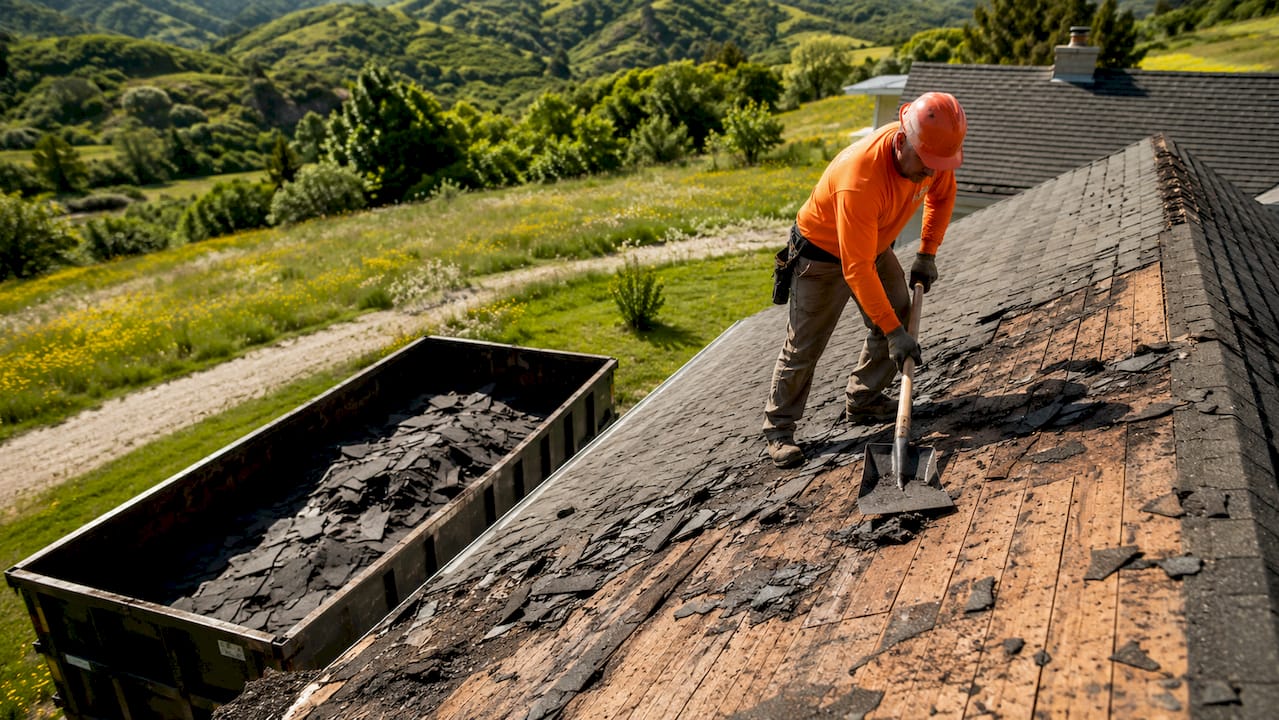
Full tear-off (re-roofing) removes every layer of old shingles down to the roof deck. The contractor inspects the deck for rot, soft spots, and water damage before installing new underlayment, drip edges, flashings, and shingles. Full deck inspection during tear-off reveals hidden rot and soft spots, allowing repairs that extend the roof’s service life. That inspection step alone justifies the higher upfront cost for many homeowners.
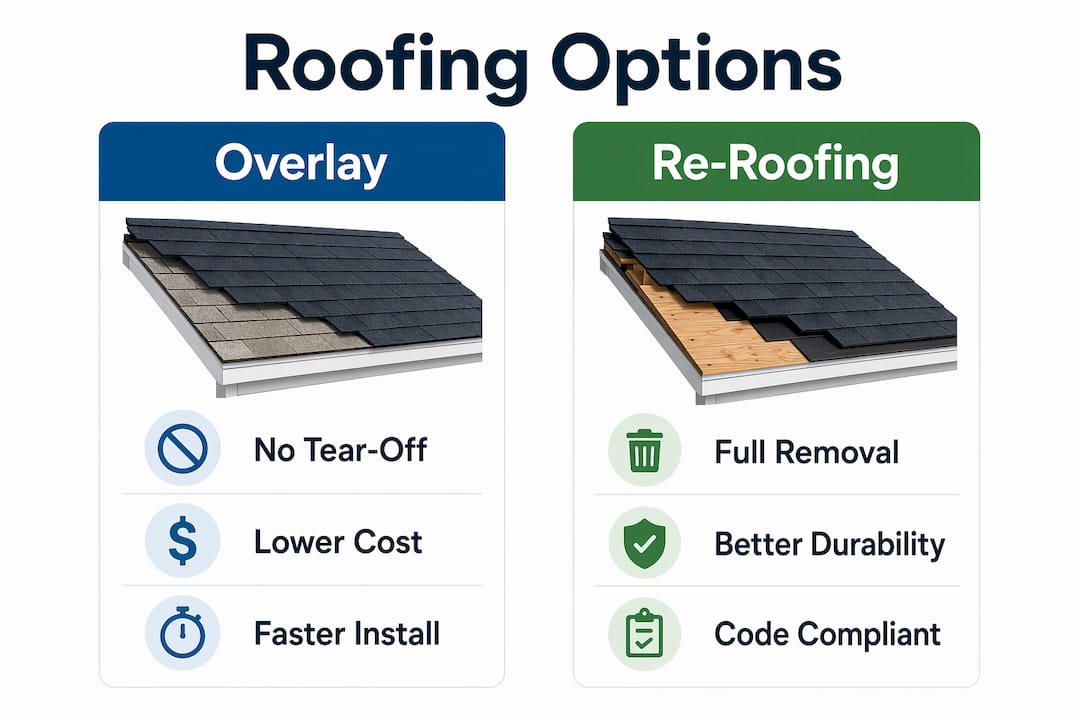
Overlay roofing skips the removal entirely. New shingles go directly over the existing layer. The process is faster and generates less waste, which is why overlay costs 20%–40% less than a full tear-off. On a typical 2,000-square-foot home, that translates to $3,000–$6,000 in upfront savings.
| Factor | Overlay | Full Re-Roofing |
|---|---|---|
| Tear-off required | No | Yes |
| Upfront cost | 20%–40% lower | Higher |
| Installation time | 1–2 days | 2–4 days |
| Deck inspection | Not possible | Full inspection |
| New flashings installed | No (reuses existing) | Yes |
| Typical lifespan | 15–20 years | 25–30 years |
One detail most homeowners miss: new flashings and underlayment installed during a full tear-off improve waterproofing reliability significantly. Overlays reuse existing flashings, which may already be worn or improperly sealed.
Pro Tip: Get a written breakdown of labor and disposal fees in any roofing quote. These two line items reveal the true cost difference between overlay and tear-off options on your specific home.
How do building codes affect your overlay or re-roofing choice?
Building codes set hard limits on overlay eligibility, and ignoring them creates legal and safety problems.
Most jurisdictions, including those following California’s model code, allow a maximum of two shingle layers on any residential roof. If your home already has two layers, a full tear-off is required by code before any new shingles go on. There is no workaround. Homeowners should verify structural capacity and local code compliance before scheduling an overlay to avoid violations and safety risks.
Central Florida follows its own wind and load standards. Thomasroofingandrepair recommends checking Central Florida roofing code requirements before committing to either method, especially in Brevard, Volusia, and Orange counties where 130 mph wind standards apply.
Structural load is the other major concern. Overlay adds noticeable weight to the roof structure, and older homes may need reinforcement before a second layer is safe. A contractor who skips a structural assessment before recommending overlay is cutting corners.
Ventilation is a code-adjacent issue that deserves equal attention. Overlay traps heat and moisture between the old and new shingle layers, worsening any existing ventilation problems. Poor ventilation accelerates shingle degradation and can lead to mold growth in the attic. If your home already has ventilation issues, updating your roof ventilation system before or during a re-roofing project is the right move.
Pro Tip: Ask your contractor to pull the permit and confirm your local code’s layer limit before any work begins. A permit protects you legally and confirms the job meets current standards.
What are the long-term costs and performance differences?
The upfront savings from overlay look attractive. The long-term math often tells a different story.
A roof overlay typically lasts 15–20 years, while a full tear-off and replacement with the same shingles lasts 25–30 years. The lifespan gap exists because heat builds up between the old and new shingle layers, accelerating material breakdown. In Florida’s climate, where summer temperatures push attic heat to extreme levels, that degradation happens faster than in cooler states.
Here is how the lifetime cost comparison plays out for a typical homeowner:
- Overlay upfront cost: Lower by $3,000–$6,000 on a 2,000-square-foot home.
- Overlay replacement cycle: You will need a new roof in 15–20 years instead of 25–30 years, meaning one additional replacement over a 30-year period.
- Future tear-off penalty: Removing two layers costs 30%–50% more in disposal fees than a single tear-off. That cost erases much of the original savings.
- Hidden damage risk: Overlay masks underlying problems like rot or mold for up to 15–20 years. When those problems surface, the repair bill is far larger than if they had been caught during a tear-off inspection.
- Warranty coverage: Most shingle manufacturers, including GAF and Owens Corning, offer full system warranties only on complete tear-off installations. Overlay jobs often receive limited or no manufacturer warranty coverage.
“Even though overlay is cheaper upfront, the shorter lifespan and risk of hidden damages often mean higher lifetime costs.” — Re-Roof vs Roof-Over: When Overlay Makes Sense
The cost-per-year calculation favors re-roofing in most scenarios. Spreading a higher upfront cost over 30 years produces a lower annual cost than two overlay cycles plus the added tear-off expense.
When should you choose overlay, and when is full re-roofing the right call?
The right choice depends on your roof’s current condition, your budget timeline, and how long you plan to stay in the home.
Overlay is a reasonable option when:
- Your roof has only one existing shingle layer (code allows a second)
- The current shingles show no curling, cracking, or granule loss
- The roof deck has no soft spots, rot, or water damage
- Ventilation is adequate and functioning correctly
- You plan to sell the home within 5–10 years and need a cost-effective refresh
- Your budget cannot support a full tear-off right now
Full re-roofing is the better choice when:
- Your roof already has two shingle layers
- There is visible or suspected deck damage, rot, or mold
- You plan to stay in the home for 15 or more years
- You want full manufacturer warranty coverage
- Ventilation problems need to be corrected at the same time
- You are dealing with storm damage that requires a full roof inspection before any new materials go on
Roofing experts advise that overlay suits only limited circumstances and locks in existing defects on many roofs. If your roof has any active leaks, uneven surfaces, or unknown history, overlay is not the right answer regardless of budget.
Overlay is suitable only when the existing roof is in excellent condition with no leaks and proper ventilation. That standard eliminates most roofs that are old enough to need replacement in the first place. A professional inspection before making any decision is not optional. It is the only way to know which category your roof falls into.
Key Takeaways
Re-roofing delivers better long-term value than overlay in most cases, but overlay remains a legitimate short-term option for roofs in excellent condition with a single existing shingle layer.
| Point | Details |
|---|---|
| Cost difference | Overlay costs 20%–40% less upfront but typically costs more over a 30-year period. |
| Lifespan gap | Overlay lasts 15–20 years; full re-roofing lasts 25–30 years with the same shingles. |
| Code limits | Most codes allow only two shingle layers; overlay is illegal if two layers already exist. |
| Hidden damage risk | Overlay cannot reveal deck rot or mold, which can compound into major repairs later. |
| Future tear-off cost | Removing two layers after an overlay increases disposal costs by 30%–50%. |
Why I always lean toward the full tear-off
After working with hundreds of homeowners across Central Florida, I have seen the overlay conversation play out the same way too many times. A homeowner gets two quotes, sees the overlay price, and chooses it because the savings feel real and immediate. Five years later, they are calling about a leak. The contractor pulls back the new shingles and finds rot that was sitting there since before the overlay went on.
Overlay is not a bad product. It is a misapplied one. The problem is that most roofs needing replacement are not in the “excellent condition” category that makes overlay a sound choice. They have years of wear, minor leaks that were never fully traced, and ventilation that was never quite right. Overlay covers all of that up and hands the problem to your future self.
The homes where overlay genuinely makes sense are the minority. They have one clean shingle layer, a dry deck, solid ventilation, and an owner who is selling within a decade. Outside of that profile, the full tear-off is the decision you will not regret. The advantages of roof replacement go beyond just shingles. You get a fresh deck, new flashings, updated underlayment, and a warranty that actually protects you.
My honest advice: get the inspection first. Do not let the price quote drive the method. Let the roof’s actual condition drive it.
— Thomasroofingandrepair
How Thomasroofingandrepair can help you decide
Choosing between overlay and full re-roofing is not a decision you should make from a quote alone. Thomasroofingandrepair serves homeowners across Brevard, Volusia, and Orange counties with licensed inspections, honest assessments, and quality installations for both methods.

Our team inspects your existing roof deck, checks your shingle layer count, and reviews local code requirements before recommending any approach. Whether you need a roof installation in Titusville or a full roof replacement in Central Florida, Thomas Roofing and Repair provides free estimates with no pressure. Contact us today to schedule your inspection and get a clear, code-compliant recommendation for your home.
FAQ
What is the main difference between re-roofing and overlay?
Re-roofing removes all existing shingles before installing new materials, while overlay adds a new shingle layer directly on top of the old one. Re-roofing allows full deck inspection; overlay does not.
How much cheaper is a roof overlay compared to full replacement?
A roof overlay typically costs 20%–40% less than a full tear-off, saving $3,000–$6,000 on a 2,000-square-foot home due to reduced labor and disposal fees.
How many shingle layers does building code allow?
Most building codes allow a maximum of two shingle layers on a residential roof. If your home already has two layers, a full tear-off is required before any new shingles can be installed.
Does a roof overlay last as long as a full replacement?
No. A roof overlay typically lasts 15–20 years, while a full tear-off replacement with the same shingles lasts 25–30 years. Heat trapped between layers accelerates shingle breakdown, especially in hot climates like Florida.
Is overlay a good idea if I plan to sell my home soon?
Overlay can be a practical choice if your existing roof has one clean shingle layer, no deck damage, and you plan to sell within 5–10 years. For long-term homeowners or roofs with any existing damage, full re-roofing delivers better value and protection.
Recommended
- Roof Replacement Coverage: What Central Florida Owners Need
- Roof Replacement in Central Florida – What Homeowners Need to Know
- Alternatives to Insurance Roof Replacement: 2026 Guide
- Roof Overlay Guide: Save More on Your Central Florida Roof
- Roofing Company Orlando, FL
- Roofing Company Titusville, FL
- Roofing Company DeLand, FL