
TL;DR:
- Built-up roofing (BUR) is a durable, multi-layered waterproofing system with a lifespan of 20 to 40 years when properly maintained. It consists of a base sheet, multiple bitumen and reinforcing plies, and a protective surfacing like gravel, offering redundancy and high puncture resistance. BUR best suits high-traffic or harsh-weather flat roofs, with higher upfront costs but lower long-term replacement expenses due to its extended longevity.
Built-up roofing (BUR) is a multi-layered waterproofing system made from alternating plies of bitumen and reinforcing fabric, applied directly over flat or low-slope roof decks to create a single, continuous membrane. It is one of the oldest and most proven commercial roofing systems in North America, with a track record stretching back more than 100 years. BUR lasts 20 to 40 years with proper maintenance, outperforming most single-ply alternatives. For property managers, contractors, and homeowners weighing flat roofing options, understanding how BUR is built and where it performs best is the foundation of a smart decision.
What is built-up roofing made of?
A built-up roofing system is constructed from three distinct component types: a base sheet, multiple ply layers, and a protective surfacing material. Each component plays a specific role, and the combination is what gives BUR its reputation for toughness.
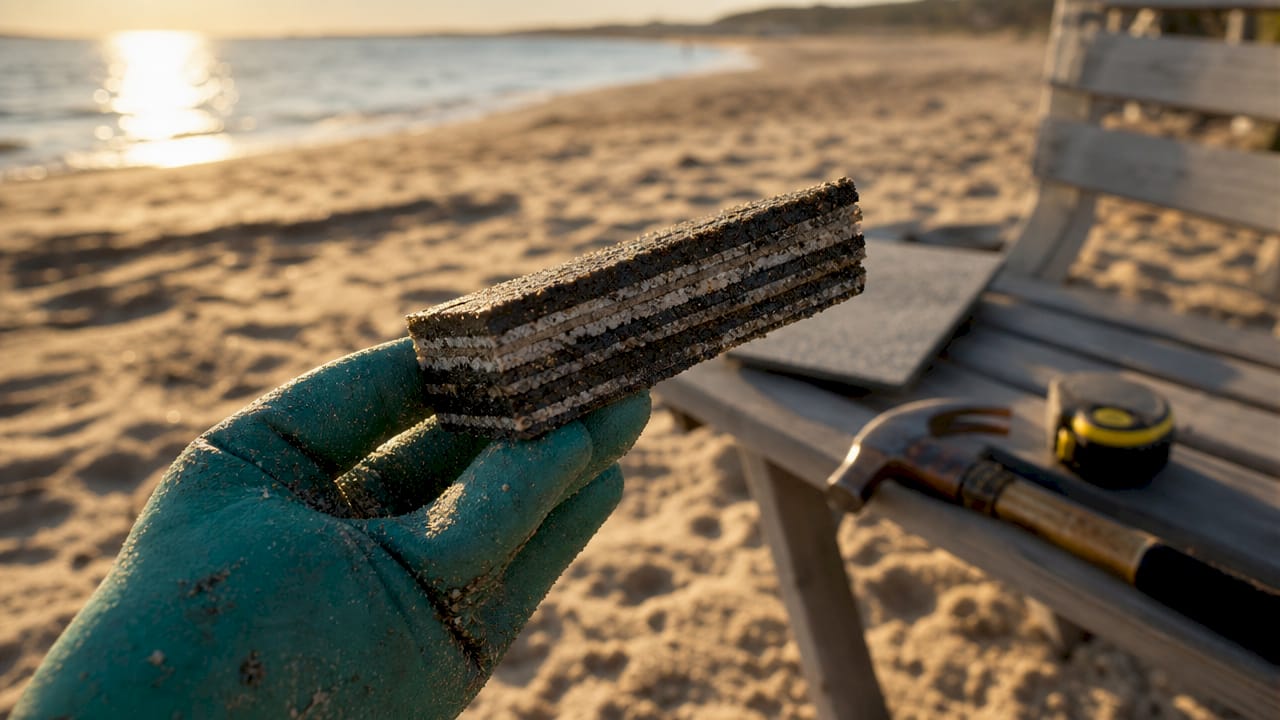
The base sheet anchors the system to the roof deck. Above it, alternating layers of bitumen (either hot asphalt or coal tar) and reinforcing felts or fiberglass fabrics are applied in sequence. A standard BUR uses 3 to 4 ply layers, with each ply adding roughly 1/16 inch of thickness and a corresponding increase in puncture resistance. That may sound thin per layer, but the cumulative effect is a membrane that handles mechanical stress far better than a single sheet ever could.
The surfacing layer sits on top and does two jobs at once. Gravel or crushed stone is the traditional choice, and it protects the roof from UV damage and physical wear from foot traffic or debris. Some modern BUR systems substitute a mineral-surfaced cap sheet, which offers similar UV protection with a cleaner visual finish.
Here is a breakdown of the core BUR components:
- Base sheet: The first layer, mechanically fastened or adhered to the roof deck
- Bitumen layers: Hot asphalt or coal tar applied between each ply to bond and waterproof
- Reinforcing felts or fabrics: Fiberglass or organic felt plies embedded in the bitumen
- Cap sheet or aggregate surfacing: Gravel, slag, or mineral-surfaced cap sheet on top
| Component | Material Options | Primary Function |
|---|---|---|
| Base sheet | Organic felt, fiberglass | Deck adhesion and moisture barrier |
| Bitumen | Hot asphalt, coal tar, cold adhesive | Waterproofing and ply bonding |
| Reinforcing ply | Fiberglass mat, polyester felt | Tensile strength and puncture resistance |
| Surfacing | Gravel, slag, mineral cap sheet | UV protection and mechanical wear resistance |
Pro Tip: Ask your contractor to specify the number of plies in writing before work begins. A 4-ply system costs more upfront but delivers measurably better redundancy and a longer service life than a 3-ply build.
How does built-up roofing compare to single-ply systems?
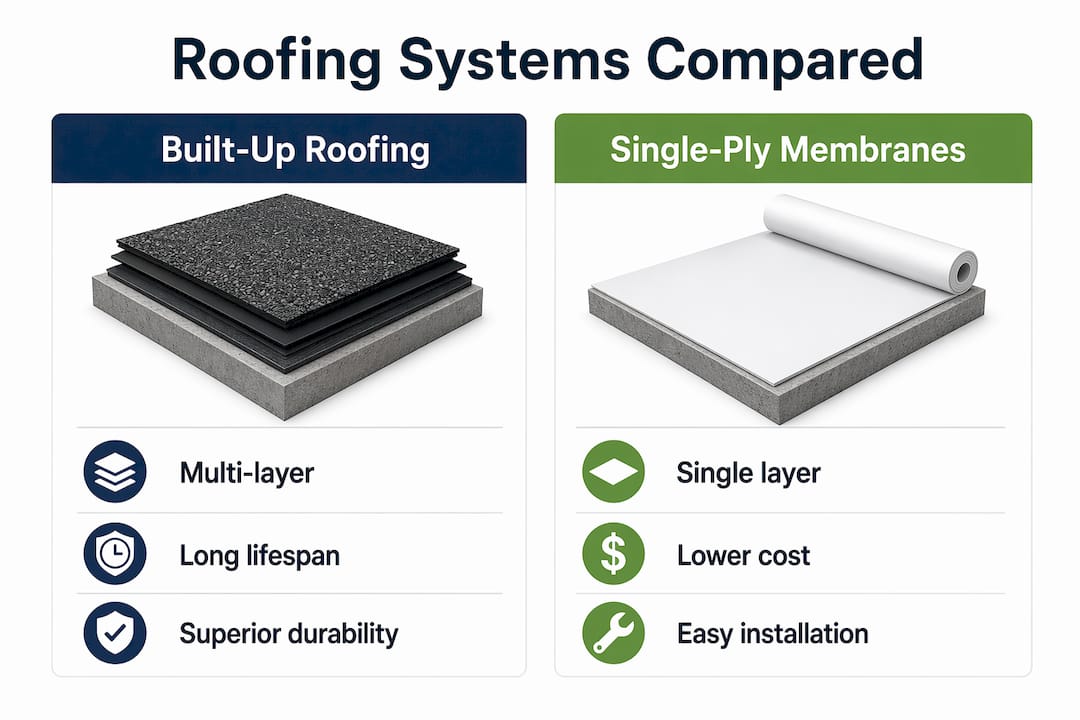
The most common flat roofing alternatives to BUR are single-ply membranes, primarily TPO (thermoplastic polyolefin) and EPDM (ethylene propylene diene monomer). Each system has a distinct profile of strengths and trade-offs.
Lifespan is the clearest differentiator. BUR systems last 20 to 40 years, while single-ply membranes typically deliver 15 to 25 years of service. That gap matters enormously when you calculate total cost of ownership over a 40-year building life. A single-ply roof may need full replacement twice in the same period a BUR system runs without major intervention.
Redundancy is BUR’s structural advantage. Because the membrane is built from multiple bonded layers, damage to the uppermost ply does not immediately compromise waterproofing. A single-ply membrane has no such backup. One puncture or seam failure can allow water infiltration immediately. For roofs with regular HVAC maintenance traffic or rooftop equipment, that redundancy is not a luxury. It is a practical necessity.
Cost tells a more nuanced story. BUR installation runs $4 to $12 per square foot, with most projects landing between $7.62 and $9.44 per square foot. TPO and EPDM installations typically cost less upfront. However, BUR’s long service life and redundancy produce lower lifetime costs compared to cheaper single-ply alternatives. The math favors BUR for owners who plan to hold a property long-term.
| Feature | Built-Up Roofing (BUR) | Single-Ply (TPO/EPDM) |
|---|---|---|
| Lifespan | 20 to 40+ years | 15 to 25 years |
| Waterproofing redundancy | Multi-layer backup | Single membrane, no redundancy |
| Puncture resistance | High (multi-ply) | Moderate |
| Installation cost | $4 to $12/sq ft | $3 to $8/sq ft |
| Weight | Heavy (structural check needed) | Light |
| Best for | High-traffic, harsh-weather roofs | Budget-conscious, lighter loads |
Pro Tip: If your building has rooftop HVAC units that require regular service visits, BUR is worth the premium. Foot traffic from technicians is one of the leading causes of single-ply membrane failures.
What does built-up roofing installation involve?
BUR installation is a sequential, labor-intensive process that rewards experience and punishes shortcuts. Understanding the steps helps you evaluate contractor proposals and spot red flags before work begins.
- Deck preparation: The roof deck is inspected, cleaned, and confirmed structurally sound. Because BUR systems are significantly heavier than single-ply alternatives, especially with aggregate surfacing, a structural load assessment is required before installation proceeds.
- Base sheet application: The base sheet is mechanically fastened or adhered to the deck, creating the foundation layer and an initial moisture barrier.
- Hot mopping: Hot asphalt or coal tar is mopped onto the base sheet. A reinforcing felt or fiberglass ply is immediately embedded into the hot bitumen before it cools. This step repeats for each ply layer, typically 3 to 4 times.
- Surfacing application: Once the ply layers are complete, the top surface is finished with embedded gravel, slag, or a mineral cap sheet.
- Flashing and edge work: All penetrations, drains, and perimeter edges are flashed and sealed to prevent water entry at the most vulnerable points.
Moisture control during installation is not optional. Trapped moisture during hot mopping causes blistering and delamination over time, both of which shorten the roof’s service life significantly. Experienced contractors schedule BUR work during dry weather windows and test substrate moisture levels before applying any bitumen.
Pro Tip: Request that your contractor perform a moisture scan of the existing deck before installation begins. A nuclear moisture meter or infrared scan costs very little relative to the damage that wet substrate causes inside a finished BUR system.
What are the advantages and drawbacks of built-up roofing?
BUR is the go-to roofing system for buildings that demand heavy-duty durability and resistance to environmental and mechanical stress. That reputation is earned, but it comes with real trade-offs worth knowing before you commit.
Advantages of built-up roofing:
- Multiple waterproofing layers provide redundancy that single-ply systems cannot match
- Gravel surfacing delivers built-in UV protection without additional coatings
- Thick multi-ply construction resists punctures from foot traffic and rooftop equipment
- BUR is favored for roofs with heavy HVAC maintenance traffic because the layers maintain waterproofing under repeated mechanical stress
- Long service life of 20 to 40 years reduces replacement frequency and total lifecycle cost
Drawbacks to consider:
- Higher upfront installation cost compared to TPO or EPDM
- Significant weight requires structural verification before installation
- Hot asphalt application produces fumes and requires experienced crews
- Repairs require skilled labor to match existing ply layers correctly
“Property owners who value long-term investment returns favor BUR despite its higher initial cost because it reduces the frequency and scale of replacements.” — Commercial Roof Guide
BUR is the right choice for flat or low-slope roofs on commercial buildings, apartment complexes, and any structure where rooftop access is frequent. It is less suited to steep-slope residential roofs or projects where budget constraints make the upfront cost prohibitive. For a broader look at flat roofing options and how BUR fits among them, the comparison is worth reviewing before finalizing any decision.
How to maintain and extend the life of a built-up roofing system
A well-maintained BUR system can push well past the 30-year mark. Neglect, on the other hand, accelerates failures that are expensive to reverse. The maintenance tasks themselves are straightforward, and most can be handled on a predictable schedule.
Twice-yearly inspections are the baseline. Walk the roof in spring and fall, looking specifically for blistering, surface cracking, gravel displacement, and standing water. Blisters indicate trapped moisture or adhesion failure and should be addressed before they grow. Standing water that persists more than 48 hours after rain signals a drainage problem that accelerates membrane degradation.
Gravel surfacing requires periodic redistribution. Wind and foot traffic push aggregate away from high-traffic areas, leaving the bitumen exposed to UV radiation. Redistributing gravel or adding fresh aggregate to bare spots is a low-cost task that directly extends roof life.
Minor punctures and cracks are repairable with compatible bitumen patching compounds. The key is catching them early. A small repair costs a fraction of what a water-infiltration event costs once it reaches the building interior.
- Inspect twice yearly and after major storms
- Clear drains and scuppers of debris after every heavy rain event
- Redistribute or replenish gravel surfacing in worn areas annually
- Patch any exposed bitumen or small punctures immediately
- Document all repairs with photos and dates for warranty and insurance purposes
Pro Tip: Schedule your BUR inspection in October before Florida’s cooler, drier season. You will have ideal conditions for any repairs, and you will catch storm-season damage before it compounds over winter.
For a full maintenance framework that applies to BUR and other flat systems, the step-by-step roof maintenance process from Thomasroofingandrepair covers the complete inspection and repair cycle in detail.
Key takeaways
Built-up roofing delivers the best long-term value on flat and low-slope roofs where durability, redundancy, and resistance to foot traffic outweigh the higher upfront installation cost.
| Point | Details |
|---|---|
| Multi-layer construction | Standard BUR uses 3 to 4 plies, each adding puncture resistance and waterproofing depth. |
| Lifespan advantage | BUR lasts 20 to 40 years, significantly longer than most single-ply membranes. |
| Redundancy benefit | Damage to the top ply does not compromise waterproofing, unlike single-ply systems. |
| Installation demands | Moisture control and experienced labor are critical to avoid blistering and delamination. |
| Maintenance extends life | Twice-yearly inspections and gravel upkeep can push BUR well past the 30-year mark. |
Why I recommend BUR for the right building, not every building
After working with property owners across Central Florida on dozens of flat roof projects, the pattern is consistent. Owners who choose BUR for the right reasons rarely regret it. Owners who choose it because a contractor pushed it without assessing the building’s actual needs sometimes end up with a heavier, more expensive system than the structure required.
The buildings where BUR genuinely earns its cost are those with regular rooftop traffic, harsh UV exposure, and owners who plan to hold the property for 20 or more years. In Central Florida, where summer heat and storm season put real stress on roofing membranes, the redundancy of a multi-ply system is not theoretical. It is the difference between a minor repair and a major water damage claim.
The one caution I give every property manager considering BUR is this: get a structural assessment first. The weight of a fully aggregated BUR system is not trivial, and I have seen projects stall because the deck was not rated for the load. That assessment costs very little and prevents a much larger problem.
Installation quality is the other variable that determines whether a BUR system hits 20 years or 40. Experienced installation teams who understand moisture management and proper ply sequencing are not interchangeable with general roofing crews. Ask for documented BUR experience before signing any contract.
— Thomasroofingandrepair
Get expert BUR installation from Thomasroofingandrepair
If you are evaluating built-up roofing for a flat or low-slope property in Central Florida, Thomasroofingandrepair brings the hands-on experience that BUR installation demands. Serving Brevard, Volusia, and Orange counties, the team handles everything from structural assessment through final surfacing, with a focus on moisture control and proper ply sequencing that separates a 40-year roof from a 20-year one.

Whether you need a new BUR installation, a repair on an existing system, or a comparison of flat roofing options for your property, Thomasroofingandrepair delivers honest assessments and quality workmanship. Explore professional roof installation services and request a free estimate to get started. For property managers overseeing multiple buildings, the commercial roofing overview covers every system type relevant to your portfolio.
FAQ
What is the built-up roofing definition in simple terms?
Built-up roofing is a flat roof system made from alternating layers of bitumen and reinforcing fabric, topped with gravel or a cap sheet. The layered construction creates a single waterproof membrane with built-in redundancy.
How long does a built-up roofing system last?
A properly installed and maintained BUR system lasts 20 to 40 years, with well-maintained roofs frequently exceeding 30 years. Regular inspections and gravel upkeep are the primary factors that push systems toward the upper end of that range.
Is built-up roofing a good choice for residential properties?
BUR suits flat or low-slope residential roofs, particularly on multi-family buildings or homes with rooftop decks. It is less practical for steep-slope residential roofs, where lighter systems like asphalt shingles are more appropriate.
What are the main advantages of built-up roofing over single-ply?
BUR offers multi-layer waterproofing redundancy, superior puncture resistance, and a longer service life of 20 to 40 years compared to 15 to 25 years for single-ply membranes like TPO or EPDM. The trade-off is higher upfront cost and greater structural weight.
How much does built-up roofing installation cost?
BUR installation costs range from $4 to $12 per square foot, with most projects averaging $7.62 to $9.44 per square foot depending on ply count, surfacing type, and local labor rates.