TL;DR:
- Proper roofing selection ensures storm resistance, code compliance, and long-term cost savings for multi-family properties.
- Storm damage response involves safety, documentation, emergency tarping, and professional inspection to support insurance claims.
- Regular maintenance, including inspections and gutter cleaning, extends roof lifespan and prevents costly repairs.
When a major storm tears through Central Florida, property owners and managers face a decision that affects the safety of dozens of residents, the terms of their insurance coverage, and hundreds of thousands of dollars in long-term costs. The right roofing system does more than keep the rain out. It keeps premiums manageable, passes code inspections, and holds up through hurricane season after hurricane season. This guide walks you through the evaluation criteria, material options, storm recovery steps, and maintenance strategies that matter most for multi-family properties across Brevard, Volusia, and Orange counties.
Table of Contents
- Key evaluation criteria for multi-family roofing solutions
- Best multi-family roofing materials for Central Florida
- Storm damage recovery: proven steps for multi-family roofs
- Comparing roofing solutions: cost, durability, and code compliance
- Maintenance tips for long-lasting multi-family roofs
- Getting it right: what most property managers miss about multi-family roofing
- Partner with Florida’s trusted roofing experts
- Frequently asked questions
Key Takeaways
| Point | Details |
|---|---|
| Know your roofing options | Comparing materials like TPO, EPDM, metal, and shingles helps find the best fit for local regulations and property needs. |
| Follow proper storm recovery | A sequence of safe access, documentation, professional tarping, and inspection protects your investment after damage. |
| Understand Florida’s 25% rule | This rule can limit how much of your roof needs updating during repairs, affecting cost and code compliance. |
| Maintenance extends roof life | Annual inspections, gutter cleaning, and sealing vulnerable areas help your roof last longer and cost less over time. |
Key evaluation criteria for multi-family roofing solutions
Before evaluating specific roofing solutions, it’s crucial to understand what sets the best systems apart in Central Florida’s unique climate.
Multi-family properties carry more complexity than single-family homes. You’re managing more square footage, more residents, more liability, and more regulatory exposure all at once. Getting the evaluation right from the start saves you from costly corrections later.
What to prioritize when selecting a system:
- Wind and weather performance: Florida’s coastal and inland weather patterns demand roofing systems rated for high wind uplift. Systems must handle sustained winds, heavy rainfall, and intense UV radiation year-round.
- Building code compliance: Florida enforces strict roofing codes, and understanding those rules is not optional. Specifically, the 25% roofing rule limits code-upgrade obligations to only the repaired, replaced, or recovered portion of the roof when statutory conditions are met, which can significantly reduce project scope and cost.
- Total lifecycle cost: Upfront price is only part of the equation. Factor in insurance premium impact, expected maintenance costs, and replacement frequency over a 20 to 30 year horizon.
- Slope and design compatibility: Flat or low-slope roofs common on apartment complexes require different systems than pitched roofs on townhouse-style units.
- Warranty terms: Look for manufacturer warranties that cover both materials and workmanship, and confirm your contractor is certified to issue them.
- Contractor licensing and insurance: Florida law requires roofing contractors to be licensed. Working with an unlicensed crew voids warranties and creates liability exposure for property managers.
Check your local wind code requirements before finalizing any material selection, as Central Florida properties must meet the 130 mph wind standard in most jurisdictions.
Pro Tip: Request a detailed scope of work from any contractor before signing. Vague proposals lead to disputes and budget overruns. A professional will specify materials by brand, weight, and code rating.
Best multi-family roofing materials for Central Florida
With your evaluation criteria in mind, let’s break down the leading roofing materials for multi-family buildings in this region.
No single material works best for every property. The right choice depends on your roof slope, budget timeline, and the type of multi-family structure you manage.
Asphalt shingles remain popular for pitched roofs on townhouse-style properties and smaller complexes. They carry the lowest upfront cost and are easy to repair after localized storm damage. However, in Florida’s intense heat and UV exposure, their lifespan is shorter than in cooler climates, typically 15 to 20 years rather than the 25 to 30 years marketed in northern states.
TPO and PVC membranes dominate the large flat-roof market for a reason. These single-ply systems reflect heat, resist ponding water, and bond well to a variety of substrates. TPO in particular has become the go-to choice for apartment building rooftops in Central Florida due to its balance of performance and cost.
EPDM rubber roofing is another low-slope option. It’s flexible, performs well in fluctuating temperatures, and has a long track record. The challenge is installation precision. EPDM installation quality depends heavily on substrate preparation, seam placement, and the use of manufacturer-approved adhesives and tape. Flashings at penetrations and parapets are the most common failure points if installation is rushed or done by an inexperienced crew.
Metal roofing offers the longest lifespan of any option here, often 40 to 50 years with minimal maintenance. It handles wind uplift better than almost any other system and qualifies for insurance discounts in many Florida counties. The tradeoff is higher upfront cost, which can be a barrier for larger property portfolios.
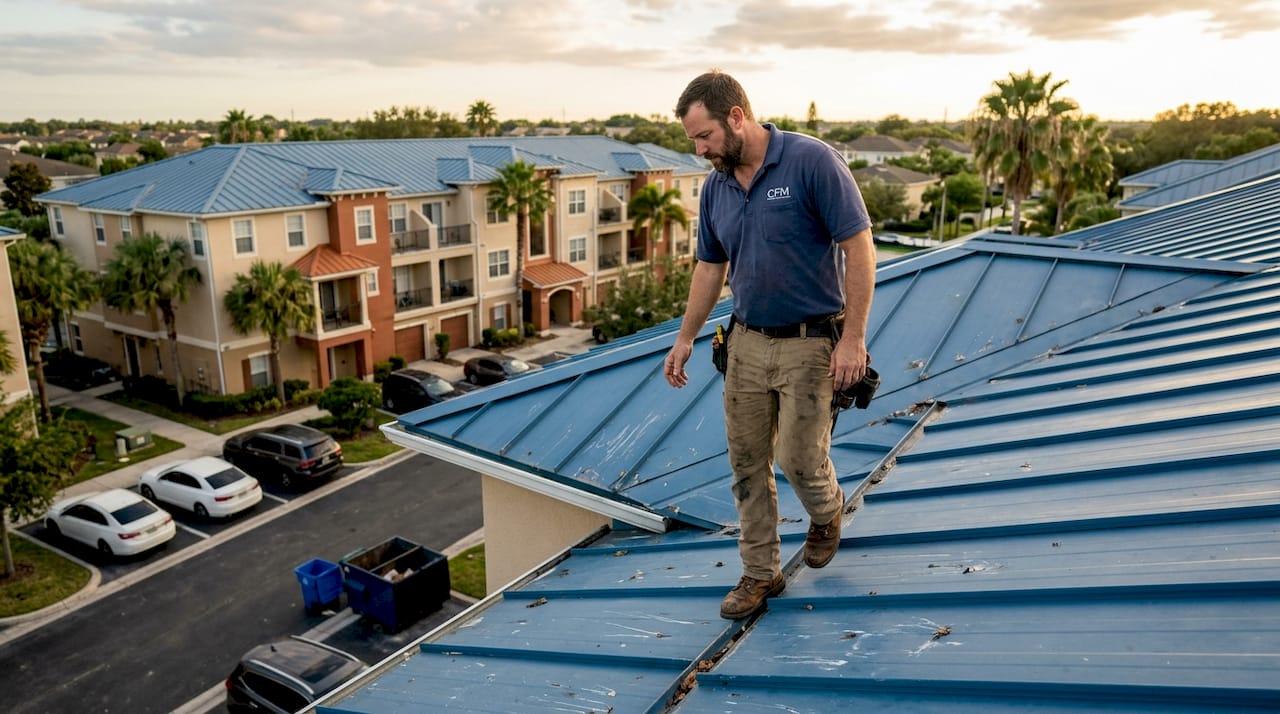
Reviewing the commercial roofing workflow helps you understand how each material integrates with inspection, permitting, and installation timelines on multi-family projects.
| Material | Best for | Avg. lifespan (FL) | Relative cost |
|---|---|---|---|
| Asphalt shingles | Pitched/townhouse roofs | 15 to 20 years | Low |
| TPO/PVC membrane | Large flat roofs | 20 to 30 years | Moderate |
| EPDM rubber | Low-slope, smaller sections | 20 to 25 years | Moderate |
| Metal roofing | All roof types, long-term hold | 40 to 50 years | High |
Pro Tip: For properties with both flat sections and pitched sections, consider a hybrid approach: metal for the pitched areas and TPO for the flat sections. This combination gives you strong storm performance everywhere while controlling overall cost.
Storm damage recovery: proven steps for multi-family roofs
No matter how prepared you are, storms pose special challenges; here’s exactly how to respond when your property is affected.
When a storm hits, the first instinct for many managers is to get on the roof and look for damage. Resist that impulse. A storm-damaged or saturated roof deck can be structurally compromised, and a fall injury on your property creates liability that no insurance policy covers cleanly.
The storm roof recovery process follows a clear sequence that protects both your residents and your claim:
- Ensure safety first. Keep residents away from areas below visible damage. Do not access the roof yourself. Wait for a licensed professional to assess structural safety before anyone goes up.
- Document everything. Walk the perimeter and photograph every visible sign of damage: missing shingles, displaced flashing, debris impact marks, and interior water stains on ceilings or walls. Video walkthroughs work better than photos alone for insurance purposes because they capture context and scale.
- Arrange emergency tarping through a licensed contractor. A properly installed tarp prevents additional water intrusion from secondary rain events. Improperly installed tarps can trap moisture or cause additional damage. Always use a licensed professional for this step.
- Obtain a written professional inspection and repair estimates. This documentation is the foundation of your insurance claim. A detailed written estimate from a licensed roofer gives your adjuster a professional scope to work from rather than an internal guess.
“For Central Florida multifamily properties, best-practice storm recovery involves ensuring safety, documenting damage with photos and video, performing licensed emergency tarping to prevent further water intrusion, and obtaining a professional inspection with written estimates to support insurance and permanent repair scope.”
Following this sequence protects your investment on two fronts. It limits physical damage from delayed response, and it gives your insurance carrier the documentation they need to process claims accurately. Skipping steps or rushing to permanent repairs before documentation is complete can result in partial claim denials. You can review additional context about responding to roof events on our storm damage overview page.
Comparing roofing solutions: cost, durability, and code compliance
Now that you know what’s available, here’s how leading solutions compare in the ways that matter most to Central Florida property managers.
When you’re managing multiple units under one roof, cost per square foot is important but it’s not the whole story. A material that costs 30% more upfront but lasts twice as long and carries lower maintenance costs is actually the cheaper option over time.
Understanding the 25% rule in context: Florida’s 25% roofing rule means that repairs covering less than a quarter of the total roof area may not trigger full code-upgrade requirements across the entire roof. For property managers, this is a meaningful protection. It limits the scope of mandatory upgrades when only a section of the roof is compromised, rather than forcing a full replacement to current code standards on a tight post-storm timeline.
Typical cost ranges and lifespan:
The roof replacement essentials for multi-family properties vary by system, but here are realistic benchmarks for Central Florida:
| Roofing system | Install cost (per sq ft) | Maintenance cost (annual) | Expected lifespan |
|---|---|---|---|
| Asphalt shingles | $3.50 to $6.00 | Low | 15 to 20 years |
| TPO/PVC membrane | $5.00 to $9.00 | Low to moderate | 20 to 30 years |
| EPDM rubber | $4.50 to $8.50 | Moderate | 20 to 25 years |
| Metal roofing | $9.00 to $16.00 | Very low | 40 to 50 years |
Code compliance made easier: TPO and metal systems generally carry wind uplift ratings that satisfy or exceed Central Florida’s building code requirements right out of the box. EPDM can meet code when installed properly, but requires close attention to attachment method. Asphalt shingles require specific underlayment systems and nail patterns to meet Florida’s wind codes.
For a full breakdown of what the replacement process looks like from permitting through final inspection, the roof replacement process guide is worth reviewing before you finalize contracts.
The bottom line: metal roofing wins on total cost of ownership for properties you plan to hold long-term. TPO wins on the balance of performance and upfront budget for mid-size apartment complexes. Asphalt remains viable only for properties with significant pitched roof areas and tighter near-term budgets.
Maintenance tips for long-lasting multi-family roofs
Solid roof maintenance isn’t just about reacting to problems; it’s about preventing them before they escalate.
In Central Florida, the gap between a roof that lasts 20 years and one that fails at 12 is almost always maintenance. Heat, humidity, organic growth, and storm debris take a steady toll on every roofing system. Proactive management extends lifespan and keeps small issues from becoming five-figure repair bills.
Key maintenance practices for multi-family roofs:
- Schedule professional inspections at least annually, plus after every named storm or significant weather event. Inspectors catch failing seams, lifted flashings, and minor punctures before they develop into active leaks.
- Keep gutters and downspouts clear year-round. In Florida, leaf buildup and organic debris accumulate fast. Clogged gutters cause water to back up under drip edge and into the roof deck, especially during heavy seasonal rain.
- Monitor seams, flashings, and sealants around all roof penetrations. On flat or low-slope roofs, this means HVAC curbs, vent pipes, drains, and parapet walls. The EPDM installation principles that apply at initial install remain relevant throughout the roof’s life: seam integrity, proper substrate adhesion, and flashing quality at penetrations are the most common sources of failure over time.
- Inspect interior spaces regularly for water intrusion signs. Ceiling stains, soft drywall, or mold near exterior walls often appear before the leak source is visible from outside.
- Prioritize small repairs immediately. A $200 seam repair left unaddressed becomes a $4,000 interior remediation project within two rainy seasons. The math always favors early intervention.
The roof maintenance process we follow accounts for Florida’s seasonal patterns, making sure your roof is assessed before hurricane season begins in June and again after it ends in November.
Pro Tip: Create a written maintenance log for each building in your portfolio. Note inspection dates, findings, repairs made, and contractor names. This record speeds up insurance claims and demonstrates due diligence if a claim is ever disputed.
Getting it right: what most property managers miss about multi-family roofing
Here’s something most roofing guides won’t tell you: the biggest mistakes we see from experienced property managers aren’t about choosing the wrong material. They’re about process gaps and assumptions.
The most common one is accepting a single bid. Property managers who receive one estimate and approve it are essentially accepting whatever scope and margin that contractor decides on. Getting at least three written bids from licensed contractors reveals the range of interpretations on a job and gives you negotiating leverage on scope, not just price.
The second gap is misunderstanding code obligations. Many managers assume any significant repair triggers a full-building code upgrade, which leads them to delay necessary fixes to avoid cost. Understanding Florida’s 25% rule properly, with guidance from a licensed contractor, often reveals that scoped repairs are code-compliant without a full retrofit.
The third and most expensive mistake is skipping thorough documentation after storm events. We’ve worked with property owners who lost significant portions of legitimate insurance claims because they started repairs before a licensed inspector documented the damage. Insurance adjusters work from what they can verify. Your documentation, meaning photos, video, written estimates, and inspection reports, is your only protection when a claim is reviewed.
Finally, don’t wait for a problem to find a good contractor. Building a relationship with a trusted roofing company before you need emergency service means faster response times and a crew that already knows your buildings. Review our storm repair essentials to understand what a thorough post-storm response should look like, and compare it against the process your current roofing contact follows.
Partner with Florida’s trusted roofing experts
If you manage multi-family properties in Central Florida and need reliable roofing support, Thomas Roofing and Repair works with property owners and managers across Brevard, Volusia, and Orange counties to handle everything from installation to post-storm recovery.

Whether you need emergency roof repair after a storm, are planning a full re-roof, or want to schedule a routine inspection before hurricane season, our team is licensed, insured, and experienced with the specific code and climate demands of this region. Explore our roof installation experts for multi-family work, or read through our storm damage repair guide to understand exactly what a professional recovery process looks like. Request your free estimate today.
Frequently asked questions
What’s the most durable roofing system for multi-family buildings in Central Florida?
Metal and TPO/PVC membrane roofs tend to offer the best durability and storm resistance for multi-family properties in this region, with metal lasting up to 50 years and TPO providing strong performance on flat roof sections.
What is Florida’s 25% roofing rule and how does it affect repairs?
Florida’s 25% roofing rule means that if repairs cover less than a quarter of the total roof area, you may not be required to bring the entire roof up to current code standards, which can reduce both project scope and overall cost significantly.
How soon should I tarp a damaged multi-family roof after a storm?
Tarping should happen as quickly as safely possible after a storm, using a licensed professional, because prompt emergency tarping prevents additional water intrusion during secondary rain events while you prepare for permanent repairs.
What are the most important maintenance steps for multi-family roofs in Florida?
Annual professional inspections, clearing gutters seasonally, and addressing seam and flashing integrity around penetrations are the most critical maintenance steps for keeping Florida multi-family roofs performing through their full expected lifespan.
Recommended
- Top roofing financing options for Central Florida
- Commercial Roofing Orlando, FL | Repairs, Replacement & Installation
- 7 Top Examples of Roofing Materials for Central Florida Homes
- Commercial Roofing – Thomas Roofing & Repair Inc.
- Roofing Company Orlando, FL
- Roofing Company Titusville, FL
- Roofing Company DeLand, FL