
TL;DR:
- A roofing scope of work is a detailed document outlining specific tasks, materials, timelines, and inspection requirements, unlike a simple estimate. It ensures clarity, protects homeowners from disputes, and improves project outcomes by setting precise expectations and accountability. Homeowners should demand specific details and review scopes carefully before signing to safeguard their investment.
Most homeowners think a roofing estimate and a scope of work are the same document. They are not, and mixing them up can cost you thousands of dollars. When a contractor hands you a single-page price sheet before a repair, you are looking at an estimate, not a scope. A scope of work is the detailed blueprint that tells every party exactly what will happen, when it will happen, and what materials will be used. In Central Florida, where hurricane season puts roofs through serious stress every year, having that clarity is the difference between a repair that lasts and one that fails at the worst possible moment.
Table of Contents
- What is a roofing scope of work?
- Essential elements of a quality roofing scope
- How scopes of work improve project outcomes
- Sample scopes for roof repairs and installations
- Why most scopes fall short, and how you can do better
- Get help reviewing or creating your scope
- Frequently asked questions
Key Takeaways
| Point | Details |
|---|---|
| Scope defines the job | A roofing scope of work details every task and material for your project. |
| Protects against disputes | A clear scope prevents misunderstandings and fights over project outcomes. |
| Not just an estimate | Unlike a bid, the scope lays out the entire process, not just the cost. |
| Improves comparison | Scopes let you compare contractors and proposals on equal terms. |
What is a roofing scope of work?
A roofing scope of work is a written document that describes every task, material, timeline, and requirement for a specific roofing project. Think of it as a recipe. An estimate tells you how much a meal will cost. The scope tells you every ingredient, every cooking step, and exactly how the finished dish should look. Without it, two contractors can quote the same job and deliver completely different results.
A scope of work answers several critical questions upfront:
- What specific areas of the roof will be worked on?
- What materials will be removed, and how will they be disposed of?
- What new materials will be installed, including specific brands and product lines?
- What is the sequence of tasks, and how long will each take?
- What inspections will be performed, and who performs them?
- What are the warranty terms for both labor and materials?
This is different from an estimate or a proposal, which focuses on price. Estimates rarely specify the brand of underlayment being used or whether the contractor will apply ice and water shield in valleys. Those details live in the scope. Brushing up on roofing terminology before reviewing any scope helps you catch gaps that most homeowners miss.
“A scope of work is your contract’s backbone. Every line item you add protects you from guesswork, disputes, and contractor shortcuts.”
Every project, whether a minor leak repair or a full roof replacement, needs a clear scope. Without one, you have no legal or contractual basis to demand specific work be done a specific way. That leaves you exposed.
Essential elements of a quality roofing scope
Not all scopes are created equal. A strong scope goes far beyond a paragraph of general descriptions. Here are the elements that separate a thorough scope from a document that protects no one.
Job description. The scope must state clearly what work will be performed. “Replace damaged shingles” is not adequate. “Remove and replace 14 three-tab shingles on the southeast slope, rows 4 through 7, matching existing GAF Timberline HDZ shingles in Charcoal” is a job description. The specificity matters because it leaves no room for interpretation.
Materials and product specifications. Every material should be named by brand, product line, and grade. This protects you from a contractor substituting a lower-cost underlayment or using off-brand flashing that degrades faster in Florida’s UV-heavy climate. Property managers overseeing multiple units can reference a commercial roofing checklist to confirm all materials meet commercial standards.
Timeline and sequencing. A quality scope identifies the start date, estimated completion date, and the logical order of tasks. Roofing in Florida requires paying attention to weather windows, especially from June through November. Sequencing also matters structurally. Flashing must be installed before shingles, not after.
Safety and cleanup provisions. Will tarps protect your landscaping? How will old shingles and nails be collected? A scope should state whether a magnetic roller sweep will be used to catch loose fasteners, where debris will be staged, and how it will be hauled away.
Warranty terms. Both the manufacturer’s material warranty and the contractor’s labor warranty should be spelled out. Vague language like “we stand behind our work” is not a warranty. You need terms, timeframes, and a clear process for making a claim.
Completion criteria. How do you know the job is done? A scope should define what “complete” means, whether that includes a final walkthrough, a post-installation inspection, or photographic documentation of the finished work.
| Element | Weak scope example | Strong scope example |
|---|---|---|
| Materials | “New shingles installed” | “GAF Timberline HDZ, Charcoal, 30-year architectural” |
| Timeline | “Job done within a few days” | “Start May 6, complete May 8, weather permitting” |
| Cleanup | “Area will be cleaned up” | “Magnetic sweep, full debris removal, haul-off included” |
| Warranty | “We guarantee our work” | “2-year labor warranty, 30-year manufacturer warranty on shingles” |
| Completion | “Job is finished when done” | “Final walkthrough with homeowner and photo documentation” |
Pro Tip: Before signing any scope, compare it against a roof maintenance guide to confirm no standard maintenance items were overlooked. Property managers can also use a roofing checklist to audit every scope before work begins.
How scopes of work improve project outcomes
A scope of work is not just paperwork. It is the single most powerful tool you have to ensure a roofing project runs smoothly, stays on budget, and meets your expectations.
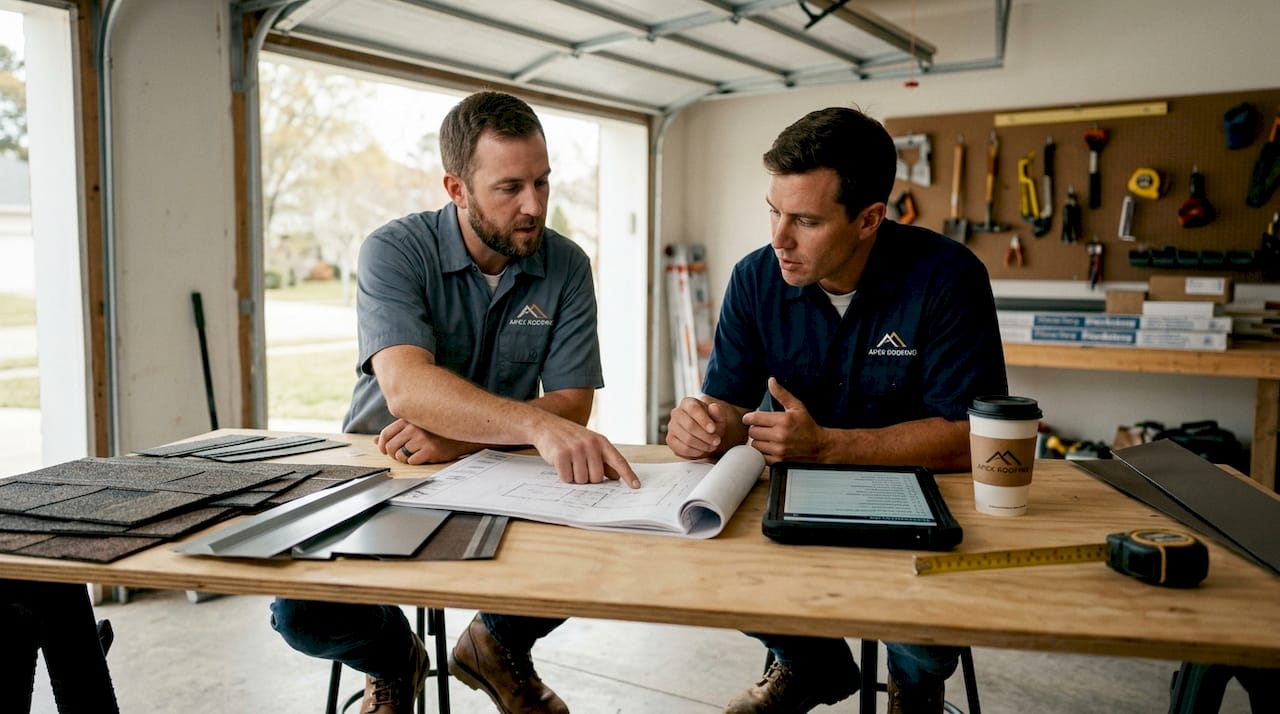
1. They eliminate disputes. When a scope clearly states what will be done, disagreements about what was promised simply disappear. If the scope says the contractor will install a fully adhered peel-and-stick underlayment over the entire deck, and they used a felt paper staple-down instead, you have documentation to demand corrections or withhold final payment.
2. They allow apples-to-apples comparisons. One of the most common mistakes Central Florida homeowners make is comparing two bids without a shared scope. Contractor A quotes $9,000 using premium synthetic underlayment and architectural shingles. Contractor B quotes $6,500 using felt underlayment and three-tab shingles. Without a matching scope, you think you are saving $2,500. In reality, you are buying an inferior product and a likely re-repair within five years.
3. They protect timelines. Projects without defined sequencing drift. A scope that breaks the work into clearly staged phases with completion checkpoints keeps crews accountable. Understanding the roof repair process helps you follow each phase and know when it should be done.
4. They reduce financial risk. Change orders are where roofing budgets explode. A well-written scope anticipates common variables, like the possibility of discovering rotted decking, and addresses how those discoveries will be handled and priced. Without that language, every surprise becomes an open-ended cost.
| Benefit | Without scope | With scope |
|---|---|---|
| Dispute rate | High, verbal agreements only | Low, all terms documented |
| Cost control | Subject to unlimited change orders | Variables addressed upfront |
| Comparison shopping | Comparing apples to oranges | Clear standard for all bids |
| Timeline adherence | Undefined, subject to drift | Phases defined with milestones |
Pro Tip: Ask your contractor to walk you through the roof maintenance process alongside the scope so you understand what post-project care looks like. That knowledge also helps you spot whether maintenance steps were accidentally left out of the scope.
5. They build accountability. When a scope is attached to the contract, both parties are bound to its terms. That accountability keeps crews focused, prevents scope creep (adding unrequested work and billing for it), and ensures the homeowner or property manager knows exactly what to inspect at the end of the project.
Sample scopes for roof repairs and installations
Understanding the theory is useful, but seeing what a scope actually looks like in practice makes everything click. Here are two real-world examples relevant to Central Florida conditions.
Storm damage shingle repair scope (residential):
- Remove and dispose of 22 damaged three-tab shingles on the north slope, rows 3 through 9
- Inspect underlying decking for water damage or soft spots; replace any damaged OSB (oriented strand board) at an agreed per-sheet rate
- Install new GAF Timberline HDZ architectural shingles, Weathered Wood color, to match existing roof as closely as possible
- Apply 6-inch ice and water shield in all valleys and along the eave edge of the repaired section
- Reseal all exposed nail heads with roofing cement
- Perform magnetic sweep of all ground areas around the home
- Haul away all removed materials within 24 hours of job completion
- Final walkthrough with homeowner; photos provided via email within 48 hours
Full roof replacement scope (residential installation):
- Remove all existing shingles, felt, and flashing; dispose of materials off-site
- Inspect and replace damaged or soft decking sections; price per sheet agreed in writing before work begins
- Install Owens Corning WeatherLock self-adhering underlayment along all eaves, valleys, and rake edges
- Install GAF FeltBuster synthetic underlayment over remaining deck area
- Install new step flashing, drip edge, and pipe boot flashings in galvanized steel
- Install GAF Timberline HDZ, 30-year architectural shingles per manufacturer’s installation specifications
- Install GAF Cobra ridge vent along the full ridge length
- Clean and inspect gutters after installation
- Schedule third-party post-installation inspection within five business days
- Provide manufacturer’s warranty documentation and 2-year contractor labor warranty in writing
Pro Tip: When reviewing a scope for practical repair examples, look for whether the scope includes a provision for hidden damage discovered mid-project. That one clause can save you from a budget ambush.
The detail level in both examples is intentional. Notice that both include material brands, addresses for potential surprises, cleanup terms, and an inspection step at the end. That is what a complete scope looks like.
Why most scopes fall short, and how you can do better
Here is a reality most roofing articles skip. The majority of scopes handed to Central Florida homeowners are copy-and-paste documents that a contractor modified in five minutes. They use vague phrases like “install shingles as needed” and “area to be cleaned upon completion.” These scopes protect the contractor, not you.
Generic scopes open the door to corner-cutting. If the scope says “install underlayment,” a contractor can legally install the cheapest product on the market. If it says “apply flashing as required,” you have no basis to dispute how or where it was installed. Vague language is not a neutral gray area. It is territory that tilts toward whoever wrote the document.
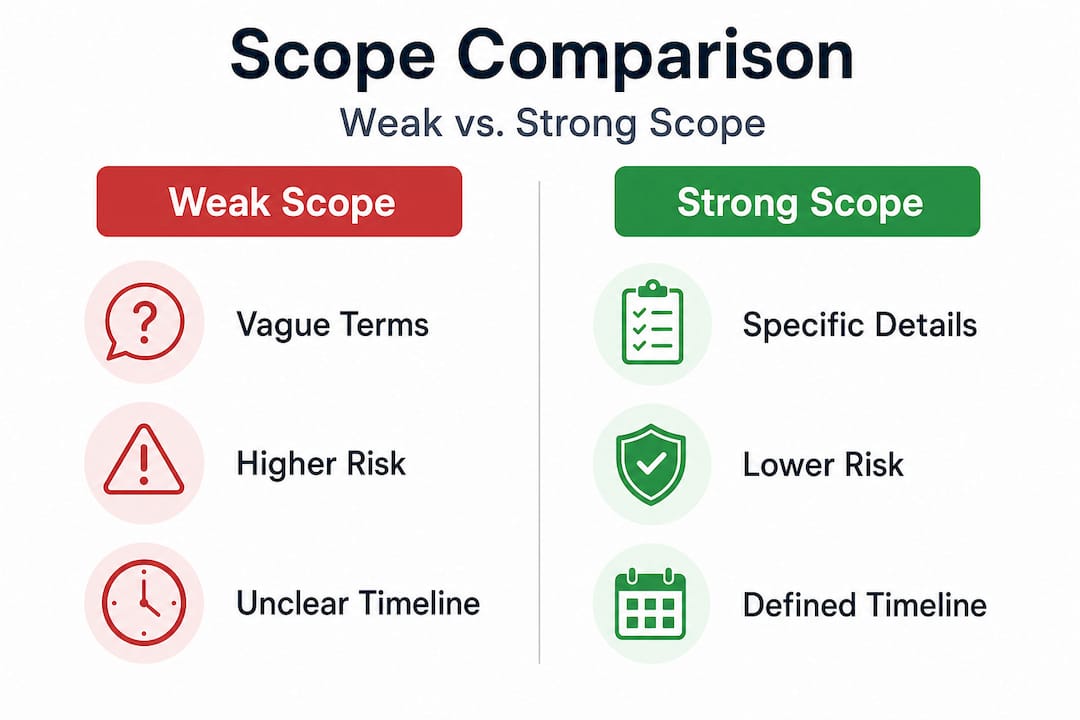
After years of working across Brevard, Volusia, and Orange counties, we have seen the pattern repeat. A homeowner gets a one-page scope with three bullet points, signs the contract, and ends up with a roof that technically complies with the document but falls far short of what they expected. When they call to complain, they have no written leverage.
The fix is straightforward. Before you sign, demand specifics on every line. What brand of underlayment? What type of flashing? How many nails per shingle? What is the nail pattern? These are not unreasonable questions. Any reputable contractor should answer them without hesitation and add the answers directly to the scope in writing.
One of the most overlooked sections is the 2026 roof maintenance requirements for Florida properties. Including post-installation maintenance requirements in your scope ensures the contractor sets the roof up for long-term performance, not just a clean finish on day one.
Do not settle for a scope that leaves key decisions unspecified. Push back. A contractor who resists adding specifics is telling you something important about how they plan to execute the job.
Get help reviewing or creating your scope
Knowing what belongs in a scope is half the battle. The other half is making sure the one in front of you actually covers your property’s specific situation, from storm damage vulnerabilities to material choices suited for Florida’s heat and humidity.

At Thomas Roofing and Repair, we help homeowners and property managers across Brevard, Volusia, and Orange counties build, review, and finalize scopes that hold up when it matters most. Whether you are dealing with storm damage repair after a hurricane or scheduling a planned installation, having the right scope protects your investment from day one. Explore our roof repair examples to see how detailed scopes play out in real projects, and if a storm has already caused damage, our emergency repair workflow outlines exactly how we respond and document the work. Contact us today for a free estimate and let us put our scope-building expertise to work for you.
Frequently asked questions
Does a roofing scope of work include pricing details?
No, a scope of work describes tasks, materials, timelines, and requirements, while pricing belongs in the estimate or proposal. The two documents work together but serve different purposes.
Can homeowners write their own scope of work?
Yes, homeowners can draft their own scope, but basing it on professional standards or contractor-provided templates prevents common omissions that create gaps in coverage or accountability.
How often should the scope of work be updated during a roofing project?
Update the scope any time conditions, materials, or project goals change during the job, and always confirm every change in writing before additional work begins.
What happens if a contractor doesn’t follow the scope?
You have the right to withhold payment, request corrective work, or use the written scope as evidence to resolve disputes through mediation or small claims court.
Recommended
- Essential Roofing Contractor Hiring Tips for Central Florida
- Master the commercial roofing workflow in Central Florida
- How to inspect commercial roofs: A 2026 guide for Central Florida
- Roof Inspection Steps: Central Florida Homeowner’s Guide
- Roofing Company DeLand, FL
- Roofing Company Titusville, FL
- Roofing Company Orlando, FL