
TL;DR:
- Homeowners in Central Florida should prioritize safety by checking for hazards before inspecting storm damage. Detailed documentation and prompt temporary repairs can significantly streamline insurance claims and reduce costs. Regular home maintenance and immediate post-storm action are essential for effective damage prevention and recovery.
Central Florida homeowners know the drill. A storm rolls through, and within hours you’re staring at missing shingles, flooded rooms, and yard debris that looks like a demolition site. This guide to storm damage repair walks you through every step you need to take, from the moment the wind stops to the day your insurance check clears. You’ll get concrete actions for safety, storm damage assessment, temporary fixes, permanent repairs, and prevention. No filler, no vague advice. Just what actually works.
Table of Contents
- Key takeaways
- What to do immediately after a storm hits
- Conducting your storm damage assessment
- Step-by-step storm damage repair and temporary mitigation
- Navigating insurance claims for storm repairs
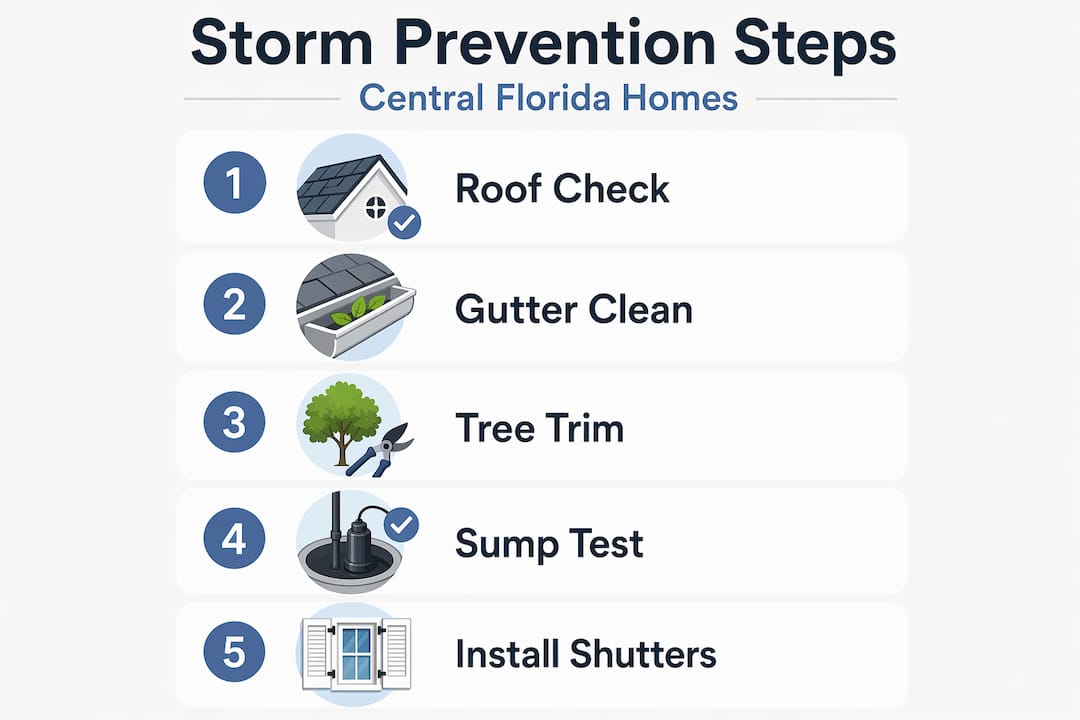
- Storm damage prevention for Central Florida homes
- What I’ve learned from years of storm damage repair in Florida
- Work with Central Florida’s trusted storm repair team
- FAQ
Key takeaways
| Point | Details |
|---|---|
| Safety before everything | Check for downed power lines, gas leaks, and structural hazards before touching anything on your property. |
| Document every detail | Photographs, videos, and written records dramatically increase your chances of a successful insurance claim. |
| Act fast on temporary repairs | Tarping a damaged roof promptly can cut your total repair costs by up to 30%. |
| Know your claim deadlines | Many Florida policies require storm damage notification within 30 to 90 days of the event. |
| Prevention pays off | Regular roof and drainage maintenance before hurricane season reduces the risk of serious storm damage. |
What to do immediately after a storm hits
The storm is over. Your instinct is to run outside and check the damage. Stop. The biggest post-storm injuries happen in the first 30 minutes when homeowners rush out before confirming it’s safe.
Walk through this checklist before setting foot outside:
- Look out windows and doors for downed power lines. Stay at least 30 feet away from any line on the ground. Even lines that aren’t sparking can be energized and lethal.
- Smell for gas inside your home before opening exterior doors. If you detect a gas odor, leave immediately and call your utility company from a safe distance.
- Check ceilings and walls for visible sagging or cracking that could indicate structural compromise.
- Put on thick-soled shoes, work gloves, and safety glasses before any outdoor inspection.
- Clear or confirm the front of your property is accessible for emergency responders if needed.
Pro Tip: The Red Cross recommends keeping a go kit stocked for three days and a home supply for two full weeks. If you don’t have one yet, use the post-storm downtime to build it before the next event hits.
“The first 30 minutes after a storm define how bad the recovery will be. Rushing in without checking for hazards turns one problem into two.”
Turn off utilities only if you have a confirmed leak or damage, and only if you know how to do it safely. If there’s any doubt, wait for professionals.
Conducting your storm damage assessment
Once you’ve confirmed the property is safe to enter, your next job is to document everything before you touch a single thing. This is where homeowners lose money. They clean up first and document second. Insurance companies rely on condition photos taken immediately after a storm. If you’ve already swept up debris or moved damaged items, you’ve weakened your claim.
Start with the exterior. Walk the full perimeter of your property slowly. Look for:
- Roof: Missing, cracked, or lifted shingles; damaged or separated flashing around chimneys, vents, and skylights; visible dents on metal components from hail.
- Siding and fascia: Cracks, holes, warped panels, and any areas where water can now get behind the surface.
- Windows and doors: Cracked glass, damaged frames, broken seals, or compromised weatherstripping.
- Yard and structures: Downed tree limbs, displaced gutters, damaged fences, and standing water near your foundation.
Move inside and check every room for water stains on ceilings and walls, new cracks in drywall, and wet flooring or baseboards. Check your attic if it’s safe to access. Water intrusion that isn’t visible from below often shows up as wet insulation or staining on rafters.
Pro Tip: When photographing storm damage, shoot both wide-angle shots for context and tight close-ups for detail. Photograph the same area from two or three angles. Video walkthroughs are especially useful because they capture context that still photos miss.

Here’s a simple framework for organizing your documentation:
| Documentation Type | What to Capture |
|---|---|
| Exterior photos | All sides of the home, roof, gutters, windows, and yard |
| Interior photos | Water stains, cracks, damaged flooring, and attic conditions |
| Video walkthrough | Full room-by-room sweep with verbal narration of what you’re seeing |
| Written log | Date, time, storm conditions, and a description of each damage item |
| Receipts | All materials and labor for any temporary repairs made |
Homeowners who invest in thorough documentation and early professional assessment consistently see faster claim resolutions and fewer disputes with insurers.
Step-by-step storm damage repair and temporary mitigation
Once you’ve documented everything, you can start protecting your home from further damage. Permanent repairs come after your insurance adjuster visits. Right now, the goal is mitigation.
Follow this sequence for common Central Florida storm damage scenarios:
- Tarp a damaged roof. Use a heavy-duty polyethylene tarp that extends at least four feet past the damaged area on each side. Secure it with 2×4 boards or roofing nails along the edges, never through the middle of the tarp where water can pool. Prompt tarping can reduce your total repair bill by up to 30% by stopping secondary water damage before it spreads.
- Board up broken windows. Use at least 5/8-inch plywood and secure it firmly into the window frame. This prevents rain intrusion and keeps animals and debris out.
- Redirect surface water. If water is pooling near your foundation, use sandbags, temporary berms, or a submersible pump to move it away from the structure.
- Remove small debris safely. Branches under four inches in diameter are generally manageable with a handsaw. Anything larger, especially limbs under tension or near power lines, requires a licensed tree service.
- Call licensed professionals for anything structural or electrical. Do not attempt to assess or repair load-bearing walls, roof decking, or any electrical component yourself. These repairs have direct implications for your safety and your insurance coverage.
For permanent roof repairs, the most common issues after Florida storms include lifted or missing shingles, damaged flashing, and compromised ridge caps. You can see detailed examples of storm roof damage to help you identify what needs professional attention versus what qualifies as cosmetic.
Pro Tip: Keep every receipt for temporary materials and labor, even small purchases like tarps and plywood. Insurance adjusters count these as covered mitigation expenses in most Florida homeowner policies.
Here’s a quick comparison to help you decide what’s DIY-appropriate and what isn’t:
| Repair Type | DIY Appropriate | Requires a Professional |
|---|---|---|
| Debris cleanup (small limbs) | Yes | No |
| Tarping a roof | Yes, with care | Recommended for safety |
| Boarding up windows | Yes | No |
| Shingle replacement | Limited (1-2 shingles) | Yes for widespread damage |
| Flashing repair | No | Yes |
| Electrical or structural work | Never | Always |
Navigating insurance claims for storm repairs
Filing a storm insurance claim in Florida is not complicated if you go in prepared. The biggest mistakes homeowners make are waiting too long to file and not understanding what their policy actually covers.
Start with these steps:
- Notify your insurer immediately. Many Florida policies require storm damage notification within 30 to 90 days of the event. Some allow up to a year, but earlier is always better.
- Request a copy of your declarations page if you don’t have it on hand. Know your deductible, your coverage limits for wind and flood, and any exclusions specific to your policy.
- Do not sign anything from a contractor who promises to “handle” your insurance claim. Assignment of benefits fraud is a real problem in Florida, and signing over your claim to a third party can complicate or void your coverage.
- Keep a running communication log. Write down every phone call with your insurer: date, time, representative name, and a summary of what was discussed.
- Consider a public adjuster if your claim is denied, underpaid, or unusually complex. A licensed public adjuster works for you, not the insurance company, and can make a substantial difference in disputed claims.
Pro Tip: Detailed damage records including close-up photos, wide shots, and written descriptions are exactly what adjusters need. The more organized your file, the faster your claim moves.
Storm damage prevention for Central Florida homes
The best home storm repair guide is the one you never have to use. Proactive maintenance before hurricane season is far cheaper than emergency repairs after one. Here’s where to focus your energy:
- Inspect your roof twice a year. Look for cracked or curling shingles, separated flashing, and clogged gutters. Flashing around chimneys, vents, and skylights is where most water intrusion begins because different materials age at different rates and pull apart over time.
- Clean and test your gutters and downspouts. Clogged gutters force water back under your roofline. Make sure downspouts discharge at least six feet from your foundation.
- Test your sump pump before storm season. Sump pump failures are a leading cause of post-storm flooding. Pour water into the pit to confirm the float trigger works. Consider a battery backup for power outage events.
- Trim trees near your home. Remove dead branches and any limbs that hang over your roof. Hire an arborist for large trees. A 60-foot oak coming through your ceiling costs far more than a $300 trim.
- Install storm shutters or impact-rated windows. If you’re in Brevard, Volusia, or Orange County, this is a long-term investment that pays off in both safety and insurance premiums.
- Add whole-house surge protection. Surge protectors guard appliances and electronics from power spikes that come with lightning strikes and grid restoration. Never run a generator indoors or in an attached garage.
Pro Tip: Follow a Florida-specific roof maintenance schedule built around the June to November hurricane season. Inspecting in April gives you time to address issues before storms arrive.
What I’ve learned from years of storm damage repair in Florida
I’ve seen homeowners lose tens of thousands of dollars in insurance claims not because of bad luck, but because of a 20-minute documentation mistake the morning after the storm. They cleaned up, they moved things, they tried to help. And then the adjuster arrived and had no baseline to work from.
The repairs themselves are almost always solvable. What I find genuinely difficult to recover is a claim that started without proper records.
The second thing I see repeatedly is homeowners underestimating flashing failures. A small gap where a pipe penetrates your roof or where a chimney meets the slope looks like nothing. During a 40 mph rain event, it becomes a half-inch waterfall running straight into your wall cavity. By the time you see staining on the drywall, you’ve already got a mold issue. These small vulnerabilities cause the majority of serious water damage, and they’re completely preventable with a single pre-season inspection.
My honest advice: stop treating storm preparation as a once-every-few-years task. In Central Florida, it’s an annual responsibility. Inspect before June. Fix what you find. Know your policy. And when a storm hits, document first and clean up second.
— Thomasroofingandrepair
Work with Central Florida’s trusted storm repair team

If your home took a hit from a recent storm, the fastest way to protect your investment is a professional inspection before problems compound. Thomas Roofing and Repair serves homeowners and property managers across Brevard, Volusia, and Orange counties, delivering licensed roofing repair, storm damage restoration, and full inspections built around your insurance timeline.
Whether you’re dealing with missing shingles, flashing failures, or water intrusion you can’t quite locate, the Thomasroofingandrepair team brings the expertise to assess, document, and repair it correctly the first time. Check out the storm damage repair guide built specifically for Central Florida homeowners, or get a fast response through the emergency repair workflow for urgent situations. Contact Thomasroofingandrepair today for your free estimate.
FAQ
What is the first thing to do after storm damage?
Before inspecting or cleaning, check for immediate hazards including downed power lines, gas leaks, and structural instability. Only proceed outside once you’ve confirmed it’s safe and you’re wearing protective gear.
How long do I have to file a storm damage insurance claim in Florida?
Most Florida homeowner policies require notification within 30 to 90 days of the storm event, though some allow up to one year. Filing early gives you the strongest position with your insurer.
Can I do my own storm damage assessment?
You can document visible exterior and interior damage yourself, and thorough photo and video records significantly strengthen your insurance claim. For roof, structural, or electrical damage, always follow up with a licensed professional inspection.
What storm damage prevention methods actually work in Central Florida?
Regular roof and gutter maintenance, pre-season tree trimming, sump pump testing, and installing storm shutters or impact windows are the most effective storm damage prevention methods for Florida homes. Flashing inspection is especially critical since it’s where most water intrusion starts.
When should I hire a public adjuster?
Hire a licensed public adjuster if your storm damage claim is denied, significantly underpaid, or involves complex structural damage. They work on your behalf and can negotiate a higher settlement than most homeowners achieve on their own.
Recommended
- Storm damage repair guide: protect your Central Florida home
- Storm damage roof guide: essential steps for fast recovery
- Storm Damage Repair: 30% Lower Costs When Fixed Fast
- How to Inspect Storm Roof Damage: A Central Florida Guide
- Roofing Company Orlando, FL
- Roofing Company Titusville, FL
- Roofing Company DeLand, FL