
 407-408-0577
TL;DR:
- Central Florida roofs face accelerated damage from hurricanes, UV rays, and humidity, requiring regular inspections.
- Documenting roof conditions and mitigation features benefits insurance claims and can lower premiums.
- Homeowners are advised to perform safe, visual inspections regularly and hire professionals for comprehensive assessments.
Roof Inspection Steps: Central Florida Homeowner’s Guide
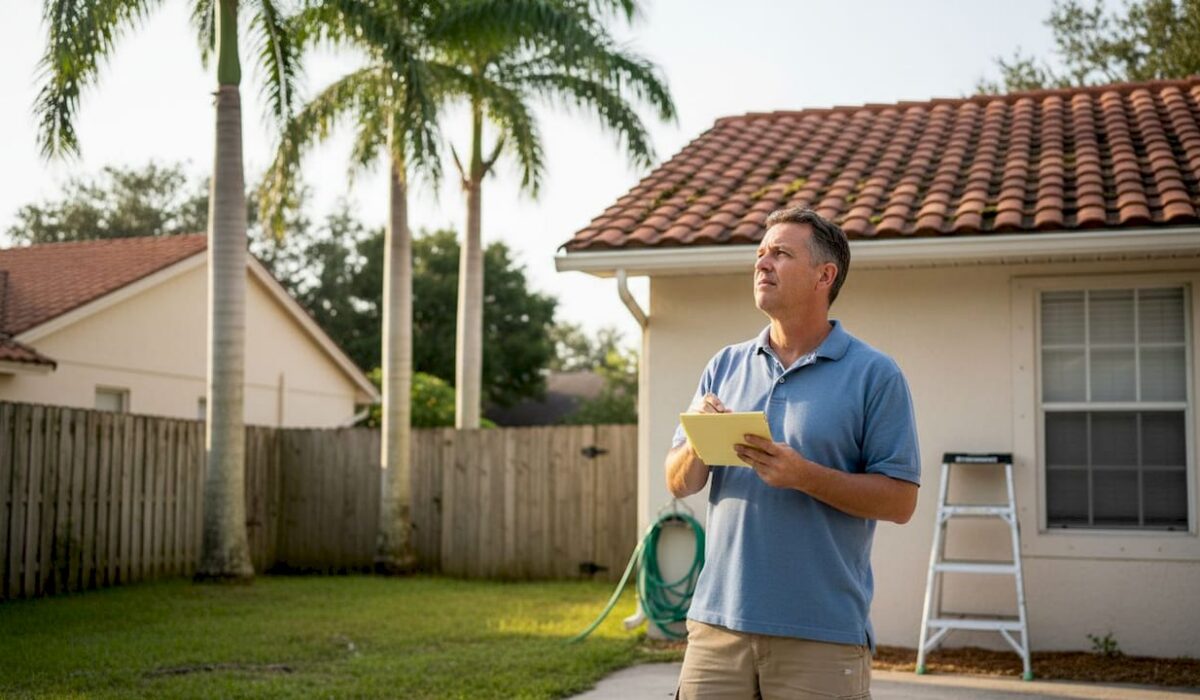
Living in Central Florida means your roof takes a beating that homeowners in most other states simply don’t experience. Between hurricanes, punishing UV rays, and near-constant humidity, your roof ages faster and faces unique threats year-round. Whether you’re checking for storm damage, getting ready to sell your home, or just staying ahead of costly repairs, knowing how to inspect your roof is one of the smartest things you can do. This guide walks you through exactly what to look for, what it means, and when to call in a licensed roofer to protect your home and your wallet.
Table of Contents
- Understand the importance of roof inspections in Central Florida
- Step-by-step roof inspection process
- Key damage signs and what they mean
- Comparison table: Common roof issues and recommended actions
- Our take: What most homeowners miss about roof inspections
- Get expert help for your next roof inspection
- Frequently asked questions
Key Takeaways
| Point | Details |
|---|---|
| Florida’s unique risks | Hurricanes, UV, and humidity make regular roof inspections non-negotiable for Central Florida homeowners. |
| Inspection checklist | Follow a clear, step-by-step process for exterior and interior checks to spot damage early. |
| Act fast on damage | Addressing problems right after storms and documenting findings helps maximize insurance benefits and home value. |
| Wind mitigation matters | Up-to-date wind mitigation features and documentation can lower your insurance premiums significantly. |
Understand the importance of roof inspections in Central Florida
Central Florida sits in one of the most weather-intense regions in the entire country. The combination of annual hurricane seasons, relentless UV exposure, and persistent moisture creates conditions that can shorten a roof’s lifespan by years compared to drier, milder climates. Understanding why inspections matter here is not just about keeping water out. It’s about protecting your insurance coverage, your home’s market value, and your family’s safety.
Florida’s insurance landscape makes regular roof documentation a financial necessity, not just a good habit. Carriers in this state regularly request proof of your roof’s condition before renewing or issuing a new homeowner’s policy. A roof that hasn’t been inspected or documented is a liability in negotiations, both with insurance companies and potential buyers during a real estate transaction. Learning the inspection benefits specific to this region gives homeowners a major advantage.
Here’s what’s working against your roof every single day in Central Florida:
- Hurricane-force winds can lift shingles, snap flashing, and stress roof decking even if your neighborhood only gets a glancing blow from a storm.
- UV radiation in Florida is extreme year-round, breaking down asphalt shingles and causing granule loss that degrades waterproofing.
- High humidity and standing moisture promote algae, mold, and moss growth, which can penetrate shingles and void manufacturer warranties.
- Thermal cycling (the constant expansion and contraction from Florida’s heat) loosens fasteners and causes sealants to crack over time.
- Heavy rainfall events dump inches of rain quickly, stress-testing drainage and exposing any vulnerable seams or flashings.
Statistic to know: Documented wind mitigation features such as hurricane clips, roof-to-wall straps, and hip roof designs can lead to significantly lower premiums and better insurance outcomes in Florida. Homeowners who document these features during inspections have a measurable financial edge.
From a real estate standpoint, a well-documented roof inspection can speed up closings and remove one of the most common negotiation points between buyers and sellers. Buyers and their agents often try to use unknown roof condition as leverage. Solid inspection records eliminate that leverage entirely. You can read more about why inspection matters when you’re getting ready to put your home on the market.
The bottom line is simple: Central Florida homeowners who inspect regularly and document what they find are in a far stronger position than those who wait until something goes visibly wrong. With this context, let’s break down the specific steps every homeowner should follow during a roof inspection.
Step-by-step roof inspection process
A proper roof inspection follows a logical sequence. Jumping around or skipping steps can lead to missed damage, especially the kind that hides in plain sight. Here’s how to do it right, from preparation through documentation.
-
Prioritize safety before anything else. Never go on a wet or slippery roof. Check the weather forecast and choose a clear, dry day. Wear rubber-soled shoes, use a sturdy extension ladder, and never work on the roof alone. If the pitch (the slope) is steep, stay on the ladder and use binoculars to view the surface instead.
-
Gather your tools beforehand. You’ll want a flashlight, a notepad or phone for notes, a camera or smartphone for photos, binoculars for steep areas, and a probe (like a screwdriver) to gently test for soft spots in decking.
-
Review your insurance policy before you start. Know what your policy requires in terms of roof age, condition standards, and inspection frequency. This helps you document findings in a way that aligns with your carrier’s expectations.
-
Start with the exterior from the ground. Walk the full perimeter of your home and look at the roofline from every angle. Check for sagging ridgelines, missing shingles or tiles, and visible storm debris stuck on the roof surface.
-
Move to a closer look at the roofing surface. From the ladder or roof edge (or using binoculars), look for cracked, curling, or buckled shingles. Check for areas with obvious granule loss, which shows up as bare, shiny patches on asphalt shingles. Look for dark streaks caused by algae, which is extremely common in Florida’s humid climate. Florida’s roofs should be inspected annually and after every major storm event.
-
Inspect flashing, gutters, and ventilation components. Flashing is the metal trim that seals joints around chimneys, skylights, and vents. Look for lifted, rusted, or separated flashing. Check gutters for granule buildup, which signals shingle degradation. Verify that vents are intact and not blocked.
-
Check for wind mitigation components. Look for visible hurricane straps or clips at the roof-to-wall connection, and verify the roof shape. Hip roofs (where all sides slope downward) perform better in high winds than gable roofs. Check out our guide on how to inspect storm roof damage for a closer look at post-hurricane checks.
-
Go inside to the attic. Turn off the lights and look for any daylight coming through the decking, which signals gaps or holes. Use your flashlight to check for water stains, mold, or dark discoloration on rafters and sheathing. These signs often point to slow leaks that haven’t yet shown up on ceilings below.
-
Document everything with photos and notes. Photograph each area of concern with clear, well-lit images. Note the location, size, and your observations. Good documentation supports insurance claims and gives any roofer you hire a head start on the assessment.
-
Decide on next steps. Minor issues like a single missing shingle might wait a short time. But leaks, structural concerns, or significant storm damage need immediate professional attention. Review our roof maintenance tips to understand which repairs you can schedule versus which ones need urgent action.
Pro Tip: After a named storm passes through Central Florida, do your inspection within 24 to 48 hours if it’s safe. Insurance carriers often require prompt reporting, and waiting too long can complicate or jeopardize your claim.
To truly protect your investment, let’s walk through each inspection step you can perform safely.
Key damage signs and what they mean
Once you’ve completed an initial walkthrough, you need to interpret what those signs and symptoms actually mean for your roof. Not every imperfection is a crisis, but some issues look minor on the surface and point to deeper structural problems underneath.
Missing, cracked, or curling shingles are among the clearest warning signs. Missing shingles leave decking exposed to rain and UV. Cracked shingles signal that the asphalt has dried out and become brittle, usually from prolonged UV exposure. Curling, where the edges of a shingle lift upward, means the shingle is near the end of its effective life and no longer lies flat enough to shed water properly. All three conditions create a water infiltration risk that compounds quickly in Florida’s rainy season.
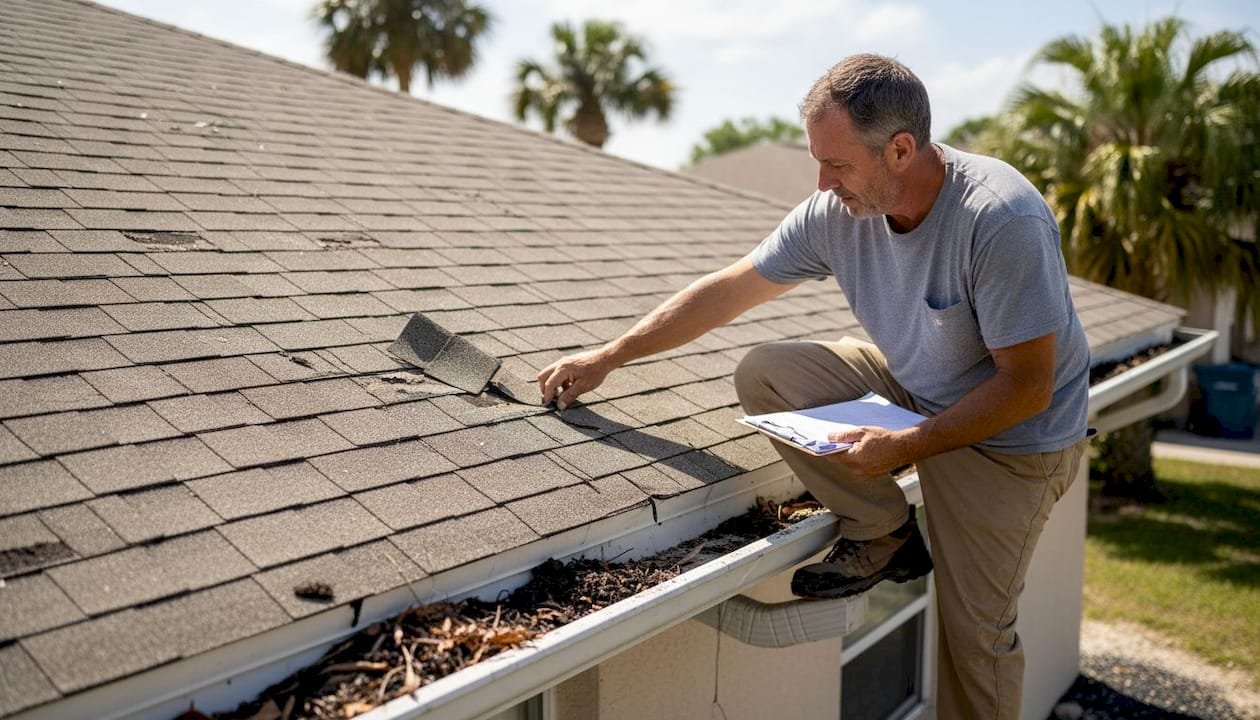
Granule loss is worth paying close attention to in this region. Granules are the small, gritty particles embedded in asphalt shingles that provide UV protection. Florida’s intense sun and humidity accelerate granule loss far faster than in northern climates. Once granules are gone, the asphalt below deteriorates rapidly. If you notice significant granule buildup in your gutters, that’s a sign your shingles are aging out.
Here’s a quick reference for the most common damage signs:
- Algae streaks (dark lines): Moisture-driven growth that can lift shingles and may void manufacturer warranties if left untreated.
- Moss growth: Holds moisture against the surface and accelerates decay, particularly common in shaded areas.
- Lifted or separated flashing: Creates open pathways for water at chimneys, vents, and valleys, leading to leaks at joints.
- Ceiling or attic stains: Brownish water marks on ceilings or along attic rafters indicate an active or past leak that needs tracing.
- Wind uplift damage: Shingles or tiles that have been partially lifted or displaced by wind require immediate repair to prevent water intrusion and further loss in the next storm.
“The weakest point in any roof system is usually a seam, joint, or penetration. Flashing is what protects those areas. When flashing fails, everything else around it follows quickly.”
If you’re unsure whether what you’re seeing crosses the line from normal wear to replacement territory, reviewing roof replacement signs specific to Central Florida can help you make that call with confidence.
Pro Tip: Take a photo of your gutters after a rainstorm. If you see heavy granule deposits collecting at the downspout outlet, bring that photo to your next professional inspection as evidence of shingle degradation.
Comparison table: Common roof issues and recommended actions
To simplify decision-making, review the following side-by-side comparison of typical damages and best practices. Understanding common storm damage in Central Florida and recognizing symptoms early saves significant money on repairs.
Florida roofs exhibit faster granule loss and recurring storm damage than roofs in most other U.S. states, making this kind of systematic decision framework especially valuable here.
| Damage Type | Common Cause | Urgency Level | Recommended Action |
|---|---|---|---|
| 1 to 2 missing shingles | Wind, storm impact | Moderate | Schedule repair within 1 to 2 weeks |
| Granule loss (widespread) | UV aging, age | High | Professional assessment; may indicate replacement need |
| Algae or moss growth | Humidity, shade | Moderate | Clean and treat; inspect for underlying lift |
| Cracked or curling shingles | UV damage, aging | High | Replace affected sections promptly |
| Lifted or loose flashing | Wind, sealant failure | High | Immediate repair to prevent leaks |
| Attic water stains | Active leak | Critical | Emergency inspection and repair |
| Sagging roofline | Structural damage | Critical | Do not delay; call a licensed roofer immediately |
| Blocked or damaged gutters | Debris, storm | Low to Moderate | Clean and realign; check fascia for rot |
| Wind uplift after hurricane | High winds | Critical | Document immediately and file insurance claim |
| Minor surface cracking on tiles | Thermal cycling | Moderate | Seal or replace individual tiles |
This table gives you a fast triage tool for deciding what needs immediate action versus what you can schedule. It’s especially useful right after a storm, when you may be looking at multiple issues at once and need to prioritize. When the urgency level is marked Critical, don’t wait on a professional call.
Our take: What most homeowners miss about roof inspections
After working with homeowners across Brevard, Volusia, and Orange counties, we’ve seen a consistent pattern. Most people know to look for missing shingles after a storm. Very few think to document their wind mitigation components in a systematic way before storm season even starts.
Here’s what separates proactive homeowners from reactive ones: the ones who save money take a checklisted, photographic approach to their roof twice a year and immediately after any major weather event. They don’t wait for a visible ceiling stain. They go into the attic, photograph the decking, and record the condition of their hurricane straps and clips.
Insurance companies may lower your premiums significantly when wind mitigation features are documented and maintained. That documentation has to be current and credible, which means you need photos with timestamps and ideally a professional inspection report to back it up.
The homeowners we see paying the most in the long run are those who only inspect when something already looks wrong. By then, a $300 repair has often turned into a $3,000 one, and the insurance conversation becomes much harder. Our maintenance guide lays out exactly how to build this proactive habit into your routine so it doesn’t feel overwhelming.
Beyond the checklist, here’s what really makes a difference in Central Florida: speed and documentation. The homeowners who fare best after storms are the ones who had photos from before the storm to compare against. That before-and-after record is gold when you’re dealing with an adjuster.
Get expert help for your next roof inspection
Knowing what to look for is a great first step, and armed with this guide, you can confidently walk through a basic inspection on your own. But there’s a meaningful difference between what an experienced eye can catch and what a first-time inspector might miss, especially when it comes to structural issues, concealed leaks, and wind mitigation documentation that insurance carriers will actually accept.

At Thomas Roofing and Repair, we’ve been serving Central Florida homeowners across Brevard, Volusia, and Orange counties with thorough inspections, honest assessments, and dependable repairs. Whether you need a routine check, post-storm documentation, or a full structural review, our team understands exactly what Florida weather demands from a roof. Our residential maintenance process is designed to keep your roof performing year after year. For urgent situations, our emergency roof repair team is ready to respond quickly and help you navigate the insurance process from start to finish.
Frequently asked questions
How often should I inspect my roof in Central Florida?
Inspect your roof after every major storm and at least once per year for routine maintenance, since Florida’s climate accelerates wear far faster than in most other states.
What signs of roof damage should I look for after a storm?
Look for missing or lifted shingles, granule buildup in gutters, exposed or separated flashing, and any new water stains on interior ceilings or attic surfaces.
Does documenting my roof inspection affect insurance claims?
Yes, photographic documentation of your roof’s condition and wind mitigation features can speed up claims and may lower premiums when reviewed by your carrier.
Can I perform my own roof inspection, or should I hire a pro?
You can safely handle a basic visual inspection from the ground or ladder, but hire a licensed roofer whenever you suspect structural damage, hidden leaks, or need documentation your insurance carrier will formally accept.
What is wind mitigation, and why does it matter?
Wind mitigation refers to structural features like hurricane clips, straps, and hip roof designs that reduce storm damage and can qualify you for notable insurance discounts in Florida.