
Most homeowners never think about their roof until water starts dripping through the ceiling. By then, what could have been a $400 fix has turned into a $15,000 nightmare. 70% of roof damage goes undetected without a professional inspection, and those hidden problems cost three to five times more to repair once they escalate. For homeowners and property managers across Central Florida, where hurricane season is a yearly reality, a professional roof inspection is not optional. It is the single most effective step you can take to protect your home, your wallet, and your peace of mind.
Table of Contents
- The hidden risks of skipping roof inspections
- What happens during a professional roof inspection?
- Top benefits of regular roof inspections
- Special considerations for Central Florida roofs
- When and how to schedule your roof inspection
- Connect with Central Florida’s inspection and repair experts
- Frequently asked questions
Key Takeaways
| Point | Details |
|---|---|
| Small issues become big costs | Undetected roof damage leads to much higher repair bills over time. |
| Inspections boost home safety | Regular checks prevent leaks, mold, and costly structural surprises. |
| Get insurance advantages | Documented inspections can give you sizeable discounts and better claim results. |
| Central Florida needs special care | Storms, salt air, and humidity make frequent inspections essential in this region. |
| Choose certified pros | Expert inspectors spot issues that general or DIY checks often overlook. |
The hidden risks of skipping roof inspections
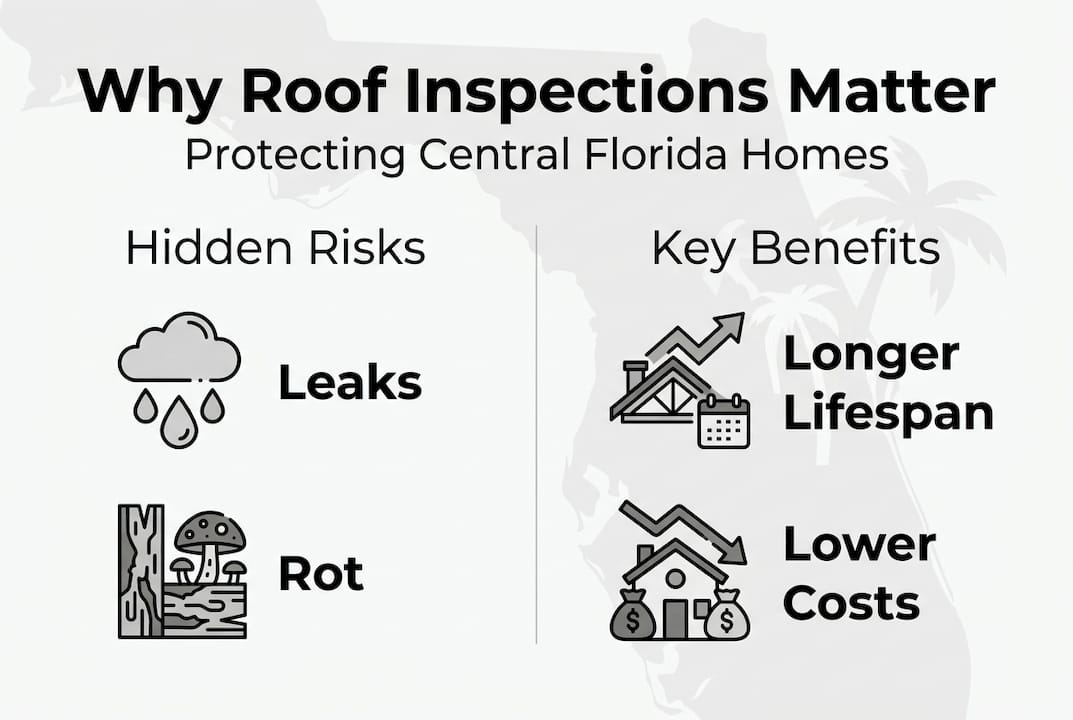
Your roof takes a beating every single year in Central Florida. Between tropical storms, intense UV exposure, and high humidity, damage builds up in ways you simply cannot see from the ground. The problem is that most of that damage stays invisible until it becomes catastrophic.
According to Florida roofing data, asphalt shingle roofs suffered a 52% damage rate during Hurricane Ian alone, and older roofs carry a 50% probability of sustaining significant damage in any major storm. That is not a small risk. That is a coin flip every hurricane season.
Skipping inspections means you are gambling with some of the most expensive real estate on your property. Here is what you are likely missing:
- Hidden micro-tears in shingles that let moisture seep into the decking
- Flashing failures around chimneys, vents, and skylights
- Granule loss that accelerates shingle deterioration
- Soft spots in the roof deck caused by trapped moisture
- Attic condensation that quietly rots structural wood over months
The financial math is stark. A professional inspection runs $200 to $400, while a full roof replacement costs $15,000 to $35,000. Early detection saves up to 60% on repair costs compared to waiting until damage worsens.
“Post-storm inspections performed within 72 hours detect hidden wind and micro-tear damage that standard visual checks completely miss.”
The Central Florida inspection benefits go beyond just finding damage. Inspections create a documented record of your roof’s condition, which becomes critical when filing insurance claims. Understanding the full range of roofing damage types helps you appreciate exactly what inspectors are trained to find. After a major storm, reviewing storm damage examples can help you understand what your inspector is looking for.
What happens during a professional roof inspection?
A professional roof inspection is far more thorough than a quick walk around your yard looking up. Certified inspectors follow a structured process that covers every component of your roofing system, including areas you cannot access safely or see clearly.
Here is what a complete inspection covers:
- Shingle condition check for cracks, curling, missing pieces, and granule loss
- Flashing inspection around all penetrations, edges, and valleys
- Gutter and drainage review to confirm water moves away from the structure
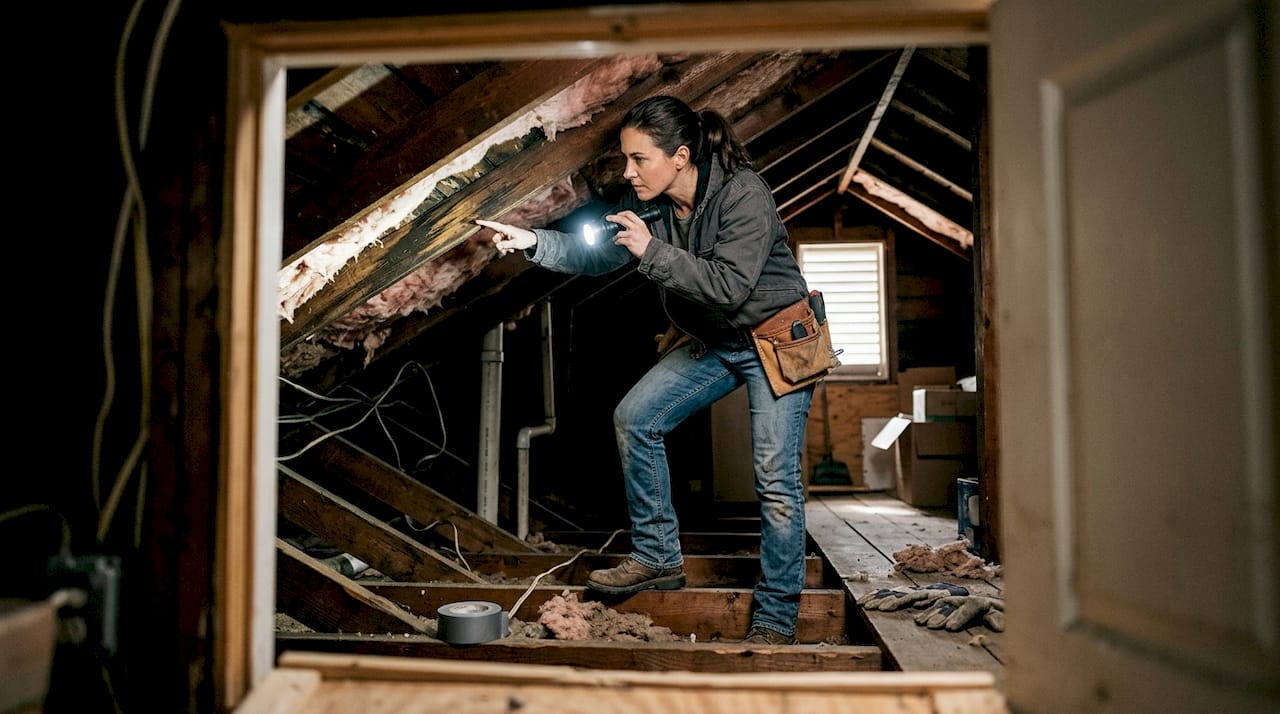
- Attic assessment for moisture, ventilation problems, and structural integrity
- Drone survey for steep or hard-to-reach roof sections
- Moisture probe testing to detect hidden wet spots in the decking
Professional inspections include visual checks of shingles, flashing, gutters, attic, and drone coverage for areas that are physically inaccessible. This is a level of detail that no DIY inspection can replicate.
DIY vs. professional inspection: what you actually get
| Inspection element | DIY check | Professional inspection |
|---|---|---|
| Visible shingle damage | Sometimes | Always |
| Flashing and sealant integrity | Rarely | Always |
| Attic moisture and rot | Never | Always |
| Drone coverage of hard-to-reach areas | Never | Standard practice |
| Insurance-ready documentation | No | Yes |
| Detection of micro-tears | Never | Yes |
Central Florida adds specific challenges that make professional inspections even more valuable. Salt air from coastal zones accelerates metal corrosion on flashing and fasteners. High humidity creates conditions where attic rot can develop within weeks of a leak. Storm patterns here are not like anywhere else in the country, and inspectors who specialize in Florida roof inspection facts understand these nuances deeply.
Pro Tip: Always ask your inspector whether they use a moisture meter and drone during the inspection. If the answer is no to both, you are not getting a complete picture of your roof’s condition.
Research on hurricane roof performance confirms that roofs inspected and maintained to current standards perform dramatically better in major storms. Booking professional roof inspections with certified specialists ensures you get that level of thoroughness.
Top benefits of regular roof inspections
Regular inspections do more than catch damage early. They actively extend the life of your roof, protect your insurance coverage, and keep your home safer year-round.
How inspections pay off over time
| Benefit | Impact |
|---|---|
| Extended roof lifespan | 10 to 15 additional years with regular maintenance |
| Insurance premium savings | 3% to 55% discount with wind mitigation documentation |
| Repair cost reduction | Up to 60% savings with early detection |
| Storm claim documentation | Required by many Florida insurers |
| Emergency repair avoidance | Prevents sudden $5,000 to $20,000 surprises |
Regular inspections can extend roof lifespan by 10 to 15 years. That is a massive return on a $300 annual investment. Think of it this way: a 20-year roof that gets inspected regularly can realistically last 30 years or more.
The insurance angle is just as compelling. Wind mitigation inspections can lead to premium discounts of 3% to 55%, depending on your roof’s construction and condition. In Florida, where homeowners insurance premiums are among the highest in the nation, that discount can save you hundreds of dollars every single year.
Here is what regular inspections protect you from:
- Sudden leak emergencies that damage ceilings, walls, and flooring
- Mold growth triggered by undetected moisture intrusion
- Insurance claim denials due to lack of maintenance documentation
- Forced roof replacements that could have been avoided with minor repairs
- Reduced home resale value from undisclosed roof issues
Pro Tip: Keep a folder with all your inspection reports, photos, and repair receipts. Insurance adjusters and home buyers both respond well to documented roof maintenance history.
Exploring the full range of roof inspection benefits for Central Florida homes shows just how much value a single inspection delivers. Pairing inspections with consistent roof maintenance tips is the most reliable strategy for extending roof lifespan well beyond its rated years.
Special considerations for Central Florida roofs
Central Florida is not a typical roofing environment. The combination of hurricane-force winds, intense sun, high humidity, and coastal salt air creates conditions that accelerate roof deterioration faster than almost anywhere else in the country.
Here is what makes this region uniquely demanding:
- Salt air corrosion eats through metal flashing and fasteners in coastal Brevard and Volusia counties
- Humidity-driven rot develops in attic spaces and roof decking after even minor leaks
- Granule loss from UV exposure weakens shingles faster than in northern climates
- Soft decking after heavy rain events creates structural vulnerability that is invisible from above
- Attic heat buildup degrades adhesives and accelerates shingle aging
These edge cases including salt corrosion, soft decking, and attic rot require inspectors who know exactly where to probe and what to look for in Florida’s specific climate.
“FORTIFIED roofs built to stricter inspection and material standards reduce insurance claims by 67% to 75% compared to standard construction.”
FORTIFIED roofs reduce claims by 67% to 75%, according to the Insurance Institute for Business and Home Safety. Newer roofs built to current Florida building codes perform significantly better in storms, and inspections verify that your roof meets those standards. Insurance carriers are increasingly requiring inspection documentation before issuing or renewing policies in high-risk Florida zip codes.
For property managers overseeing multiple units, the stakes are even higher. The benefits for Central Florida roofs apply across every property in your portfolio. A solid commercial roofing checklist helps property managers stay ahead of maintenance cycles. Consistent Florida roof maintenance tips keep both residential and commercial roofs performing at their best.
When and how to schedule your roof inspection
Timing your inspection correctly makes a real difference in what gets caught and how useful the results are for insurance purposes.
Here is the recommended inspection schedule for Central Florida homeowners:
- After every major storm within 72 hours to catch hidden wind and water damage before it spreads
- Every one to two years as a baseline maintenance inspection
- Before insurance policy renewals to ensure your documentation is current
- Before buying or selling a home to establish a clear condition baseline
- After any visible damage such as missing shingles, sagging areas, or interior water stains
Post-storm inspections within 72 hours are critical because hidden damage spreads fast once moisture enters the system. Waiting even a week can turn a $500 repair into a $5,000 problem.
When choosing an inspector, credentials matter more than price. General home inspectors miss 70% of roof-specific issues because they lack the specialized training to identify storm damage patterns, material failures, and code compliance issues. Always choose a certified roofing specialist.
What to look for when hiring:
- State roofing contractor license verified through Florida DBPR
- Experience with Florida-specific storm damage patterns
- Use of drones and moisture meters for complete coverage
- Written inspection report with photos for insurance use
- Familiarity with wind mitigation documentation requirements
You can book a Central Florida roof inspection directly with a certified specialist who knows the region. Understanding the full roof maintenance process helps you stay proactive rather than reactive with your roof care.
Connect with Central Florida’s inspection and repair experts
Knowing the risks is one thing. Acting on them before a storm hits is what separates homeowners who face $400 repairs from those facing $40,000 replacements.

At Thomas Roofing and Repair, we serve homeowners and property managers across Brevard, Volusia, and Orange counties with thorough, certified roof inspections built for Florida’s demanding climate. Whether you need a post-storm assessment, a routine maintenance inspection, or full documentation for your insurance carrier, our team delivers the detail and reliability you need. Our storm damage repair guide walks you through what to expect after a major weather event, and our emergency roof repair solutions are available when you need fast action. Every roof we inspect reflects our commitment to local roof craftsmanship built to last through Florida’s toughest seasons. Contact us today to schedule your inspection before the next storm season arrives.
Frequently asked questions
How often should I schedule a roof inspection in Florida?
Schedule professional roof inspections at least every one to two years and always within 72 hours after a major storm. Inspections before insurance renewals are also strongly recommended to keep your documentation current.
What types of damage can only a professional find?
Professionals detect hidden leaks, micro-tears, soft decking, attic rot, and salt corrosion using moisture meters, attic probes, and drones. These issues are almost always invisible during a standard DIY walkthrough.
Do roof inspections really help with insurance discounts?
Yes. Documented wind mitigation inspections can earn you premium discounts of 3% to 55% depending on your roof’s construction, age, and condition. In Florida’s high-premium market, that adds up fast.
How do roof inspections save money long-term?
Early inspections catch problems that cost up to 60% less to fix than if left to worsen. A $300 inspection can prevent a $15,000 to $35,000 full replacement.
What’s the difference between home inspectors and roofing specialists?
Roofing specialists focus exclusively on structural integrity, storm damage patterns, and material failures. General inspectors miss roughly 70% of roof-specific issues that a certified roofing contractor would catch immediately.
Recommended
- Roof inspection benefits for Central Florida properties
- Benefits of Roof Inspection for Central Florida Homes
- Roof Leak Detection: Protecting Central Florida Homes
- Roof Inspection Terminology – What Homeowners Must Know
- Roofing Company Orlando, FL
- Roofing Company Titusville, FL
- Roofing Company DeLand, FL